strawberry cheesecake cinnamon rolls
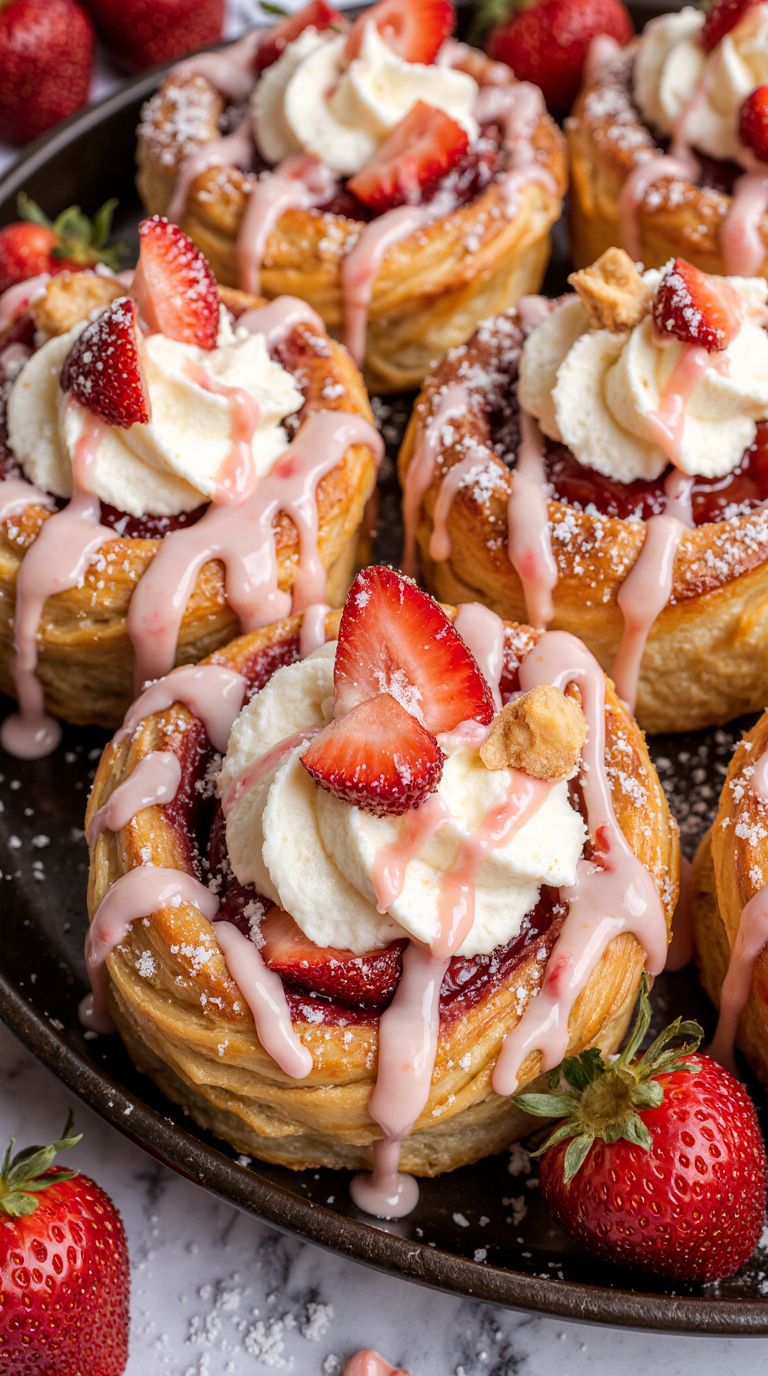
Strawberry Cheesecake Cinnamon Rolls
These strawberry cheesecake cinnamon rolls combine an enriched yeast dough with a triple-layer filling—cream cheese base, strawberry jam thickened to prevent sogginess, and fresh berries for brightness. The method focuses on proper yeast activation, gluten development through precise kneading, and filling distribution that bakes up distinct rather than muddled. The strawberry cream cheese glaze adds tang without overwhelming the delicate dough. All temperatures and timings are tested for home kitchen conditions.
Why this recipe works
Enriched dough balance. The milk, eggs, and butter create a tender, rich crumb that can support the substantial filling without becoming dense. The sugar feeds the yeast while ensuring proper browning. Too little fat and the dough tastes bread-like; too much and it becomes cakey. The ratio here achieves bakery-style texture—soft and pillowy but structured enough to hold its shape during rising and baking.
Layered filling approach. Separating the cream cheese from the strawberry components prevents the flavors from muddling during baking. The cream cheese layer acts as a barrier that protects the dough from the strawberry moisture while providing tangy contrast. The cornstarch in the jam layer absorbs excess liquid from fresh berries, preventing soggy bottoms and maintaining defined swirl patterns.
Temperature-controlled rises. Yeast activity peaks around 75-78°F. The first rise develops flavor through slow fermentation, while the second rise after shaping focuses on final volume. Rushing with higher temperatures creates off-flavors and weak gluten structure. The timing accounts for typical home kitchen conditions rather than professional proofing boxes.
Internal temperature doneness. Visual cues can be misleading with fruit-filled pastries. The 190°F internal temperature ensures the dough is fully cooked without overbaking the exterior. This is particularly important with the cream cheese layer, which can remain deceptively cool while the outside browns.
Glaze viscosity control. The strawberry puree provides both flavor and liquid, reducing the need for additional milk. The consistency should be thick enough to cling to the warm rolls but thin enough to drizzle. Too thin and it soaks in; too thick and it sits heavily rather than complementing the delicate crumb.
Ingredients (cups & tablespoons only)
Dough
- 1 cupwhole milk, warm (110°F)
- 2 1/4 tspactive dry yeast
- 1/2 cupgranulated sugar
- 2large eggs, room temp
- 1/3 cupunsalted butter, melted
- 4 1/2 cupsall-purpose flour
- 1 tspsalt
Cinnamon Sugar
- 1/2 cupbrown sugar, packed
- 2 tspcinnamon
- 1/4 cupunsalted butter, softened
Fillings & Glaze
- 8 ozcream cheese, room temp
- 1/4 cupgranulated sugar
- 1egg yolk
- 1 tspvanilla extract
- 1 cupstrawberry jam
- 2 tbspcornstarch
- 1 cupfresh strawberries, diced
- 4 ozcream cheese, room temp
- 1 cuppowdered sugar
- 1/4 cupstrawberry puree
- 1-2 tbspmilk
- 1/2 tspvanilla extract
Recipe
- Activate yeast: Heat milk to 110°F (warm to touch but not hot). Stir in yeast and 1 tablespoon sugar. Let stand 5-10 minutes until foamy. If mixture doesn’t foam, start over—yeast is inactive.
- Make dough: In mixer bowl, combine yeast mixture, remaining sugar, eggs, melted butter, and 2 cups flour. Mix on low until combined. Add salt and remaining flour 1/2 cup at a time until dough pulls away from bowl sides.
- Knead: Knead on medium speed 5-7 minutes until smooth and elastic. Dough should be slightly tacky but not sticky. If too sticky, add 1 tbsp flour; if too dry, add 1 tbsp milk.
- First rise: Place dough in greased bowl, turn to coat. Cover with plastic wrap. Let rise in warm place until doubled, 1-1.5 hours. Ideal temperature: 75-78°F.
- Make fillings: Beat 8 oz cream cheese with 1/4 cup sugar, egg yolk, and 1 tsp vanilla until smooth. In separate bowl, mix strawberry jam with cornstarch. Dice strawberries.
- Roll dough: Punch down risen dough. On floured surface, roll to 16×12-inch rectangle. Spread evenly with 1/4 cup softened butter.
- Layer fillings: Spread cream cheese mixture over butter, leaving 1/2-inch border. Spread jam mixture over cream cheese. Sprinkle with diced strawberries. Evenly sprinkle cinnamon sugar mixture over everything.
- Roll and cut: Starting from long side, roll tightly into log. Pinch seam to seal. Using dental floss or serrated knife, cut into 12 equal pieces.
- Second rise: Place rolls in greased 9×13 pan. Cover with plastic wrap. Rise until puffy and nearly doubled, 45-60 minutes.
- Bake: Preheat oven to 350°F. Bake rolls 22-26 minutes until golden brown and internal temperature reaches 190°F. Rotate pan halfway through.
- Make glaze: While rolls bake, beat 4 oz cream cheese until smooth. Add powdered sugar, strawberry puree, 1 tbsp milk, and vanilla. Add more milk if needed for drizzling consistency.
- Finish: Cool rolls in pan 15 minutes. Drizzle with glaze while slightly warm. Serve immediately or cool completely.
The second rise is complete when rolls look puffy and fill the pan. If you gently press the side, the indentation should slowly fill back in.
Yeast techniques & temperature control
Yeast proofing
Active dry yeast must be activated in warm liquid. Instant yeast can be mixed with dry ingredients but benefits from proofing for reliability. The foam indicates live, active yeast ready for fermentation.
Ideal rise temperatures
First rise: 75-78°F for flavor development. Second rise: 80-85°F for faster proofing. Too cold slows yeast; too hot kills it or creates off-flavors. Use oven with light on or warm water bath for consistent temperature.
Troubleshooting rises
No foam: yeast dead or liquid too hot. Slow rise: kitchen too cold. Collapsed dough: over-proofed. Dense rolls: under-proofed. The windowpane test determines proper gluten development before first rise.
Dough development & gluten structure
Flour protein content. All-purpose flour with 10-12% protein creates the ideal balance between tenderness and structure. Bread flour develops too much gluten, making rolls tough; cake flour lacks sufficient structure. The spoon-and-level measuring method prevents adding too much flour, which is the most common cause of dense cinnamon rolls.
Kneading techniques. Proper kneading develops the gluten network that traps CO2 from yeast fermentation. Under-kneaded dough tears easily and rises poorly; over-kneaded dough becomes tough. The 5-7 minute mixer kneading time creates the ideal windowpane effect—when stretched thin, the dough should be translucent without tearing immediately.
Enrichment ratio. The butter, eggs, and milk tenderize the gluten strands, creating a soft crumb. Too much enrichment and the dough becomes cake-like with poor oven spring; too little and it’s bread-like. The specific ratios here allow for both good rise and tender eating quality.
Hydration balance. The dough should be slightly tacky but not sticky. In humid environments, you may need an additional 1-2 tablespoons flour; in dry climates, 1-2 tablespoons extra milk. The dough should clean the bowl but still feel soft and pliable.
Filling structure & moisture control
The triple-layer filling approach serves both flavor and functional purposes. Each component has a specific role in the final texture and taste profile.
Component functions
- Cream cheese base: Provides tangy contrast, acts as moisture barrier between dough and fruit, adds richness without making dough soggy
- Thickened jam layer: Cornstarch absorbs berry juices during baking, prevents leaking, maintains swirl definition, concentrates strawberry flavor
- Fresh strawberries: Add texture contrast, fresh fruit flavor, visual appeal. Diced small to distribute evenly without creating gaps in the swirl
- Cinnamon sugar: Traditional flavor complement, creates caramelization, balances fruit acidity with warmth
If strawberries are very juicy, toss with 1 teaspoon cornstarch before adding to prevent excess moisture. Frozen strawberries should be thawed and thoroughly drained.
Shaping & cutting techniques
Proper rolling and cutting ensure even baking and attractive presentation. The goal is tight, concentric swirls that hold their shape during the second rise and baking.
Key techniques
- Rectangle dimensions: 16×12 inches provides the ideal surface area for filling distribution and roll size. Too small and rolls are thick with less swirl; too large and they’re thin with too much filling.
- Rolling tightness: Start tightly from the beginning, using both hands to maintain even pressure. A loose roll creates gaps and uneven baking.
- Seam sealing: Pinch the final seam firmly to prevent unrolling during rising. Place seam-side down in the pan.
- Cutting methods: Dental floss gives clean cuts without compressing the rolls. Place under log, cross over top, and pull tight. Serrated knife works if very sharp and used with gentle sawing motion.
- Pan arrangement: Place rolls cut-side up in greased 9×13 pan with slight space between for expansion. They should fill the pan after second rise but not be crammed.
Baking science & doneness testing
Cinnamon rolls with fruit and cheese fillings require different doneness indicators than plain rolls. Visual cues can be misleading due to the various components cooking at different rates.
Internal temperature
The most reliable method. Insert instant-read thermometer into center of center roll—190°F indicates fully cooked dough. Below 185°F and the dough is still raw; above 200°F and it’s overbaked.
Visual indicators
Golden brown tops, filling bubbling at edges, rolls pulling away slightly from pan sides. The cream cheese filling should be set but not browned. Strawberry jam should be bubbling vigorously.
Oven positioning
Center rack for even heating. Rotate pan front-to-back halfway through baking. Convection ovens may require temperature reduction to 325°F or shorter baking time.
Common mistakes (and quick fixes)
- Dense, heavy rolls: Under-proofed, over-kneaded, or too much flour. Ensure proper rise times; measure flour correctly; knead just until windowpane stage.
- Filling leaks out: Overfilled, rolled too loosely, or jam too thin. Leave 1/2-inch border; roll tightly; thicken jam with extra cornstarch if needed.
- Soggy bottoms: Underbaked, too much fruit moisture, or pan too crowded. Use internal temperature test; thicken jam properly; ensure space between rolls.
- Tough dough: Over-kneaded, too much flour, or overbaked. Knead just until smooth; measure flour properly; watch baking time carefully.
- Pale tops: Oven too cool, insufficient sugar, or underbaked. Verify oven temperature; ensure proper sugar measurement; use internal temperature test.
- Uneven baking: Pan overcrowded, oven hot spots, or uneven rolling. Leave space between rolls; rotate pan; roll to consistent thickness.
- Yeast doesn’t foam: Liquid too hot, old yeast, or chlorinated water. Check temperature; use fresh yeast; use bottled water if tap water is heavily chlorinated.
Substitutions & variations
Different berries
- Raspberry: use seedless jam + fresh berries
- Blueberry: mix jam with fresh berries + lemon zest
- Mixed berry: combination of strawberries, raspberries, blueberries
- Peach: peach preserves + diced fresh peaches
Holiday versions
- Cranberry-orange: cranberry sauce + orange zest
- Apple cinnamon: apple butter + diced apples
- Pumpkin: pumpkin butter + pumpkin spice
- Cherry almond: cherry preserves + almond extract
Allergy-friendly
- Gluten-free: use 1:1 GF flour blend
- Dairy-free: plant-based butter & cream cheese
- Vegan: plant-based ingredients + egg replacer
- Lower sugar: reduce sugar by 25%, sugar-free jam
Enhanced profiles
- Lemon: add zest to dough and cream cheese
- Almond: replace vanilla with almond extract
- White chocolate: add chips to filling
- Cardamom: add to cinnamon sugar mixture
Different dairy
- Mascarpone: richer, creamier texture
- Ricotta: lighter, grainier texture
- Greek yogurt: tangier, lower fat
- Neufchâtel: lower fat cream cheese
Different glazes
- Cream cheese glaze (classic)
- Strawberry cream cheese (recipe)
- Vanilla bean: seeds scraped into glaze
- Citrus: lemon or orange juice in glaze
Any substitution may affect rise time, baking time, and final texture. When making multiple substitutions, test one roll first before committing full batch.
Glaze techniques & consistency
The ideal glaze should complement rather than overwhelm the rolls. The strawberry cream cheese version here provides both flavor and visual appeal while maintaining proper viscosity for application.
Consistency guidelines
- Too thick: Clumps rather than drizzles, sits heavily on rolls. Fix: add liquid 1 tsp at a time until proper consistency.
- Too thin: Soaks into rolls immediately, makes them soggy. Fix: add powdered sugar 1 tbsp at a time or refrigerate 10 minutes to thicken.
- Lumpy: Cream cheese not properly softened or insufficient mixing. Fix: ensure room temperature ingredients; sift powdered sugar; mix thoroughly.
- Perfect: Ribbons off spoon, holds lines briefly before settling, clings to rolls without soaking in.
Apply glaze to warm rolls (not hot) for optimal absorption and setting. The residual heat helps the glaze melt slightly into the surface while maintaining its definition.
Make-ahead methods
Overnight rise
Complete through shaping step. Cover pan tightly with plastic wrap. Refrigerate 8-24 hours. Remove from refrigerator 1 hour before baking. Proceed with second rise and baking.
Freeze before baking
Shape rolls and place in pan. Freeze until solid, then transfer to freezer bags. To bake: thaw overnight in refrigerator, then proceed with second rise and baking. Add 5-10 minutes to baking time.
Freeze after baking
Bake and cool completely without glaze. Freeze in single layer, then package. To serve: thaw at room temperature, warm in 300°F oven 10 minutes, then glaze.
Overnight rises develop more flavor through slow fermentation. Frozen unbaked rolls keep 2 months; frozen baked rolls keep 3 months. Glaze should always be made fresh.
Equipment notes
- Stand mixer: Recommended for proper kneading. Use dough hook attachment on medium speed. Hand mixing possible but requires 10-12 minutes vigorous kneading.
- Instant-read thermometer: Essential for milk temperature and doneness testing. Digital models are most accurate. Calibrate periodically in ice water (should read 32°F).
- Rolling pin: French-style without handles provides best control. Roll from center outward, maintaining even pressure. Use ruler for precise dimensions.
- 9×13 baking pan: Metal conducts heat best for proper browning. Glass or ceramic may require temperature adjustment. Dark pans bake faster—reduce temperature by 25°F.
- Bench scraper: Useful for portioning dough, cleaning work surface, and transferring rolls to pan. Metal blade works best for cutting and scraping.
- Parchment paper: Line pan for easy cleanup and prevention of sticking. Do not use wax paper—it melts at baking temperatures.
Nutrition (estimated per roll)
| Nutrient | Amount |
|---|---|
| Calories | ~420 kcal |
| Total Fat | 18 g |
| Saturated Fat | 11 g |
| Trans Fat | 0 g |
| Cholesterol | 85 mg |
| Sodium | 280 mg |
| Total Carbohydrates | 58 g |
| Dietary Fiber | 2 g |
| Total Sugars | 32 g |
| Added Sugars | 28 g |
| Protein | 7 g |
| Vitamin D | 0.2 mcg |
| Calcium | 65 mg |
| Iron | 2 mg |
| Potassium | 125 mg |
Nutrition calculated with full-fat ingredients. Values are estimates and will vary based on specific brands and exact measurements used. Using reduced-fat cream cheese decreases calories by approximately 25 per roll and fat by 3g.
Storage & reheating
- Room temperature: Unglazed rolls keep 2 days in airtight container. Glazed rolls keep 1 day. Store in single layer or with parchment between layers.
- Refrigeration: Up to 5 days covered. Bring to room temperature or warm before serving. The refrigerator dries out baked goods—only refrigerate if necessary.
- Freezing (unbaked): Shape rolls, freeze on pan, then transfer to freezer bags. Keeps 2 months. Thaw overnight in refrigerator before second rise and baking.
- Freezing (baked): Cool completely without glaze. Freeze in single layer, then package. Keeps 3 months. Thaw at room temperature or warm from frozen.
- Reheating: Warm in 300°F oven 8-12 minutes until heated through. Microwave makes rolls rubbery—use only if necessary (15-20 seconds per roll).
- Glaze storage: Make fresh for best results. Can be refrigerated up to 3 days—whisk before using as it separates. Bring to room temperature for proper consistency.
FAQ
Can I use frozen strawberries?
Yes, but thaw completely and drain thoroughly. Frozen berries release more liquid. You may need to increase cornstarch to 3 tablespoons to compensate for extra moisture.
Why do my rolls taste yeasty?
Over-proofing or water too warm during activation. Follow rise times precisely and maintain proper temperatures. A slight yeast flavor is normal in enriched doughs.
Can I make these without a stand mixer?
Yes, but kneading will take 10-12 minutes by hand. The dough is sticky initially but becomes smooth with continued kneading. Use a bench scraper to help manage the dough.
My filling all squished out—what happened?
Overfilled, rolled too loosely, or second rise too long. Leave 1/2-inch border, roll tightly, and watch the second rise—rolls should be puffy but not overflowing the pan.
Can I use quick-rise yeast?
Yes, but reduce first rise to 30-45 minutes and second rise to 30 minutes. The flavor may be slightly less developed with quicker rises.
Why are my rolls dry?
Overbaked, too much flour, or not enough butter in dough. Use internal temperature test, measure flour correctly, and ensure proper enrichment ratios.
Can I double the recipe?
Yes, but mix in two batches if your mixer bowl is small. The rises may take slightly longer with larger quantities. Use two 9×13 pans or one half-sheet pan.
Baker notes
- Temperature is everything. Use instant-read thermometer for milk, kitchen thermometer for rise environment, and internal thermometer for doneness.
- Patience with rises. Don’t rush the fermentation—flavor develops during slow rises. The second rise is complete when rolls are puffy and fill the pan.
- Measure flour correctly. Spoon into measuring cup and level with knife. Packed flour is the most common cause of dense rolls.
- Roll evenly. Consistent thickness ensures even baking. Use ruler to check dimensions and watch corner thickness.
- Clean cuts. Use dental floss or very sharp serrated knife. Don’t compress the rolls when cutting—this deflates the rise.
- Cool before glazing. Warm rolls absorb glaze properly; hot rolls melt it completely. The 15-minute cooling window is ideal.
- Fresh is best. These rolls are optimal the day they’re made. If storing, refresh in warm oven before serving.
