Sticky Gochujang Chicken Meatballs over Sesame Rice
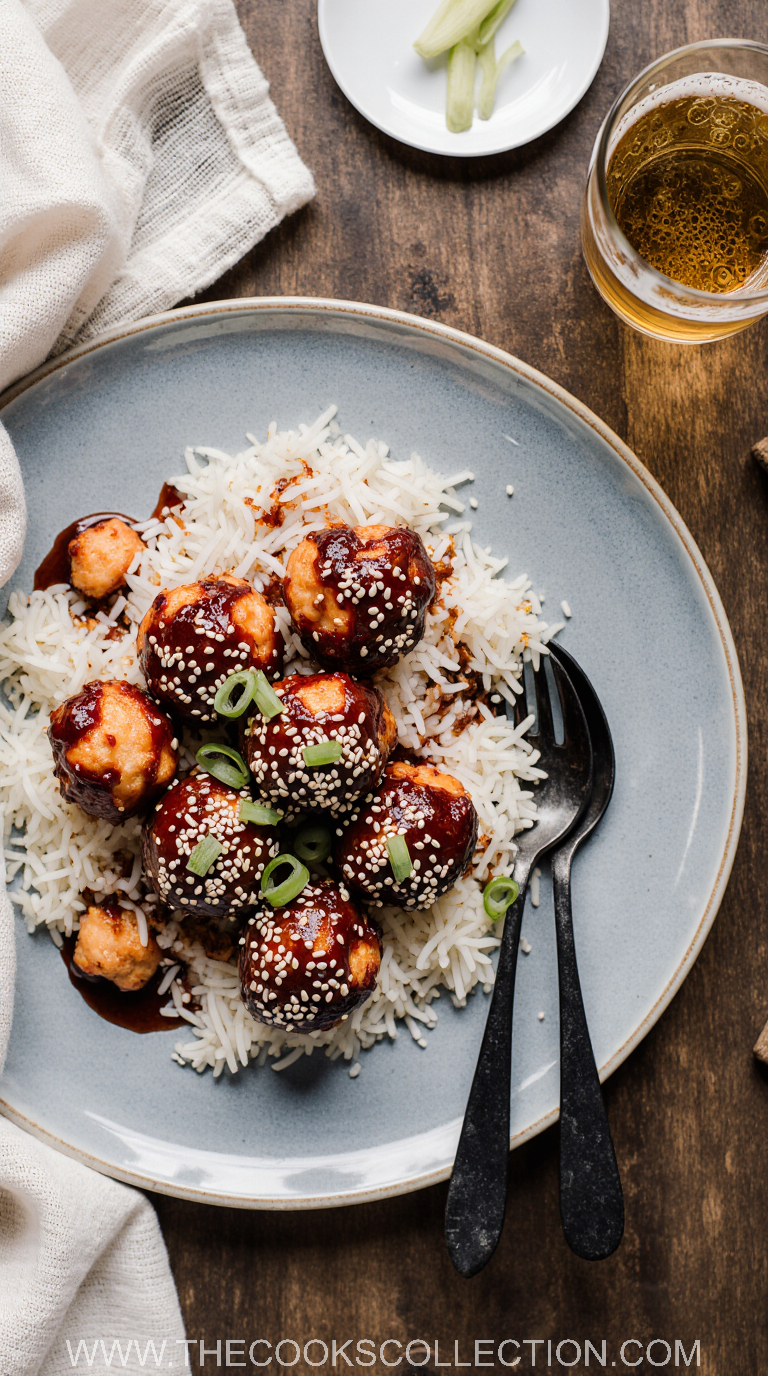
Sticky Gochujang Chicken Meatballs over Sesame Rice
These meatballs are engineered to be weeknight-proof and dinner-party shiny. The chicken stays tender because it’s built on a quick panade—panko and milk that trap moisture. The glaze is a short list that nails sweet–salty–heat without turning cloying: gochujang for depth, soy for savor, honey for sheen, vinegar for cut, and a touch of starch for that lacquer you see in the photo. We bake hot for speed and clean browning, then finish in the pan so the sauce clings instead of puddling. A scoop of sesame rice under the pile gives you a complete plate and soaks up whatever drips off the fork.
Why this recipe works
Panade = moisture insurance. Breadcrumbs and milk hydrate into a paste that holds fat and juices as the meat cooks, so chicken—leaner than beef—stays soft. It also acts like a gentle binder so you can mix less.
High heat, short time. 450°F sets the exterior quickly and renders just enough fat to prevent greasiness. Overbaking dries lean meat; under a hot oven you hit temperature before moisture escapes.
Two-stage sauce. The glaze thickens separately, then the meatballs finish in it for 60 seconds. That timing prevents broken sauce and ensures every piece gets a glossy coat instead of a thin tint.
Sesame rice is not an afterthought. Butter (or oil) and a little sesame oil on fluffy rice bring toasted aroma that balances the sweet heat of the meatballs. It makes the plate read complete, not just protein on starch.
Balanced glaze. Gochujang brings fermented chile depth without aggressive heat; honey gives body and shine; soy supplies salt and umami; rice vinegar lifts. The cornstarch slurry locks it in place so it clings for the photo and the fork.
Ingredients (cups & tablespoons only)
Chicken Meatballs
- 1 1/2 lbground chicken, 93% lean
- 1/2 cuppanko breadcrumbs
- 1/4 cupwhole milk
- 1large egg
- 2 tbspfinely grated onion (or 1 tbsp onion powder)
- 2 tspsoy sauce
- 1 tsptoasted sesame oil
- 1 tspkosher salt
- 1/2 tspblack pepper
- 1 tspgrated fresh ginger
- 1 smallgarlic clove, minced
Sticky Gochujang Glaze & Sesame Rice
- 3 tbspgochujang
- 3 tbspsoy sauce
- 1/4 cuphoney
- 1 tbsprice vinegar
- 1/2 cupwater
- 1 tspcornstarch + 1 tsp water (slurry)
- 1 1/2 cupsjasmine or basmati rice, rinsed
- 2 cupswater for rice
- 1 tbspbutter or neutral oil
- 1/2 tspkosher salt for rice
- 1 tsptoasted sesame oil (stir into rice after cooking)
- 2 tbspsesame seeds + 2 tbsp sliced scallions for serving
Recipe
- Prep the pan: Heat oven to 450°F. Line a sheet pan with foil for easy cleanup. Set a wire rack on the pan and spray or oil it lightly; this encourages browning all around. No rack? Use parchment and flip the meatballs halfway.
- Make the panade: In a large bowl, stir 1/2 cup panko with 1/4 cup milk. Let sit 2 minutes until the crumbs are hydrated and pasty.
- Mix the meat: Add 1 1/2 lb ground chicken, 1 egg, 2 tbsp grated onion, 2 tsp soy sauce, 1 tsp sesame oil, 1 tsp salt, 1/2 tsp pepper, 1 tsp grated ginger, and 1 minced garlic clove. Using a fork or your hand like a claw, fold just until combined. Stop when you no longer see dry patches—overmixing makes dense meatballs.
- Shape: Oil your hands. Scoop heaping tablespoon portions (a #40 disher is perfect) and roll into 20–22 meatballs. Place on the rack or parchment with a little space between each.
- Bake: Cook 12–14 minutes until the centers reach 165°F. For deeper color, broil 1–2 minutes. While they bake, cook the rice and glaze.
- Sesame rice: Combine 1 1/2 cups rinsed rice, 2 cups water, 1 tbsp butter, and 1/2 tsp salt in a saucepan. Bring to a boil, cover, reduce to low, and cook 12 minutes. Turn off heat; rest covered 5 minutes. Fluff and stir in 1 tsp sesame oil.
- Glaze: In a wide skillet, whisk 3 tbsp gochujang, 3 tbsp soy sauce, 1/4 cup honey, 1 tbsp rice vinegar, and 1/2 cup water. Simmer over medium heat 2 minutes. Stir together 1 tsp cornstarch + 1 tsp water; whisk into the skillet and simmer until the sauce turns glossy and thick enough to coat a spoon, 30–60 seconds.
- Sauce: Add baked meatballs to the skillet and toss to coat. Cook 1 minute so the glaze clings. If it ever gets too thick, splash in 1–2 tbsp water.
- Serve: Spoon meatballs over sesame rice. Sprinkle with sesame seeds and sliced scallions. Eat immediately.
Target texture: meatballs springy with clear juices; glaze shiny and syrupy, not stiff.
Visual cues & doneness
Right mix
The raw mixture should be soft and slightly sticky but hold a ball. If it slumps flat, fold in 1 tablespoon panko. If stiff, splash 1 tablespoon milk.
Baked color
Look for light golden spots and a faint crust on the bottoms. Chicken doesn’t brown like beef—don’t chase deep color or you’ll dry them out.
Glaze body
Drag a spoon through the sauce: it should leave a brief trail that slowly fills in. If it runs like broth, simmer 30 seconds more. If it mounds like jam, loosen with water a teaspoon at a time.
Mixing science (why the order matters)
Hydrate first. Breadcrumbs absorb milk in minutes. If you add them dry, they’ll pull moisture from the meat during baking and you’ll lose juiciness.
Gentle folding protects texture. Overworking develops myosin strands in the protein, which is great for bouncy sausages and terrible for tender meatballs. Stop mixing as soon as the seasoning is evenly distributed.
Small aromatics, big payoff. Grated onion dissolves into the meat as it cooks, adding moisture and light sweetness without chunks. A tiny amount of ginger/garlic perfumes the meatballs without overpowering the glaze.
High heat + rack. Elevation allows hot air to circulate for even browning. If you don’t have a rack, give the pan extra airflow by leaving gaps between meatballs and flipping once.
Glaze tuning (sweetness, heat, salt)
Sweetness: The honey amount lands in balanced territory. If your gochujang is already sweet, reduce honey to 3 tablespoons and simmer a touch longer for body. For a glossy but less-sweet finish, replace 1 tablespoon honey with 1 tablespoon light corn syrup—it adds sheen with less perceived sweetness.
Heat: Gochujang varies. Taste your brand on a spoon. If it’s mild, add a pinch of red pepper flakes to the simmering glaze. If it’s fiery and you’re spice-shy, swap 1 tablespoon gochujang for ketchup or hoisin to soften the edges.
Salt: Low-sodium soy works; regular soy is what the ratios assume. If you used low-sodium and the sauce tastes flat, add 1/2 teaspoon soy at a time until it pops. If it tastes salty, stir in a teaspoon of honey and a squeeze of lemon or a teaspoon of water-vinegar blend to rebalance.
Common mistakes (and quick fixes)
- Dry meatballs: Overbaked or overmixed. Fix with a splash of water into the glaze, simmer, then toss meatballs longer to rehydrate the exterior.
- Glaze won’t stick: Sauce too thin. Simmer 30 seconds more or add 1/2 teaspoon cornstarch mixed with 1 teaspoon water and bubble for 20 seconds.
- Glaze too thick: Off heat, whisk in 1–2 tablespoons water until it flows again.
- Bland rice: Didn’t salt the water. Finish with a pinch of salt and a drizzle of soy at the table.
- Falling-apart meatballs: Mixture too wet. Next time, hydrate the panko fully, then fold in 1 extra tablespoon panko. For now, chill the mixture 15 minutes before shaping.
Substitutions & variations
Turkey or pork
- Use ground turkey (93% lean) 1:1. For pork, use 85–90% lean and reduce milk to 3 tablespoons.
GF breadcrumb + tamari
- Use gluten-free panko and tamari instead of soy. Everything else stays the same.
Quick “teriyaki-hot”
- Mix 2 tbsp ketchup + 1 tbsp chili-garlic sauce + 2 tbsp soy + 3 tbsp honey + 1 tbsp rice vinegar + 1/2 cup water.
Fast cook
- Air fry meatballs at 400°F for 9–11 minutes, shaking once, to 165°F; glaze as written.
Mushroom–tofu balls
- Use 14 oz firm tofu (pressed), crumbled, + 2 cups finely chopped sautéed mushrooms, 3/4 cup panko, 1 egg (or flax egg), same seasonings. Bake to set; glaze as written.
Sticky bowls
- Add steamed broccoli, snap peas, or roasted carrots to the bowls. Toss a spoon of glaze with the veg so nothing eats plain.
Any swap shifts salt and sweetness. Taste the glaze and adjust before tossing with the meatballs.
Serving & garnishes
- Sesame finish: Toast sesame seeds in a dry pan for 60 seconds for better aroma.
- Acid bump: A squeeze of lime over the plated bowl brightens everything without changing the glaze recipe.
- Creamy contrast: A spoon of kewpie mayo or plain Greek yogurt mixed with lime zest makes a quick drizzle for spice-sensitive eaters.
- Crunch: Thinly sliced cucumbers or radishes tossed with a pinch of salt and rice vinegar counter the sticky sauce.
Batching, make-ahead & freezing
Make-ahead meatballs
Shape up to 24 hours ahead. Cover tightly and refrigerate. Bake straight from cold, adding 1–2 minutes as needed to hit temperature.
Freeze raw
Freeze shaped meatballs on a sheet until solid, then bag for up to 2 months. Bake from frozen at 425°F for 16–18 minutes, then glaze.
Freeze cooked
Bake, cool, and freeze meatballs without sauce. Reheat covered at 350°F for 10–12 minutes, then toss in fresh glaze.
Equipment notes
- Sheet pan + rack: Promotes even browning and fat drip-off. Foil under the rack saves cleanup.
- Skillet size: Use a 10–12 inch skillet for the glaze so the sauce reduces quickly without boiling over.
- Disher: A #40 scoop turns portioning into a 60-second job and keeps cook times consistent.
Nutrition (estimated)
| Nutrient | Amount |
|---|---|
| Calories | ~720 kcal |
| Total Fat | 24 g |
| Saturated Fat | 5 g |
| Carbohydrates | 88 g |
| Total Sugars | 24 g |
| Fiber | 2 g |
| Protein | 38 g |
| Sodium | ~1100 mg |
| Serving Size | 5–6 meatballs + 1 cup rice |
Numbers vary with brand of gochujang and soy, rice choice, and exact glaze amount eaten. Use as a guide.
Storage & reheating
- Fridge: Meatballs and rice keep 3 days in separate containers.
- Microwave: Reheat meatballs covered at 70% power so the glaze doesn’t scorch. Splash with water if needed.
- Skillet: Warm meatballs over low heat with 1–2 tablespoons water, tossing until the glaze loosens and turns glossy again.
- Rice: Sprinkle with water, cover, and microwave until steamy; fluff and add a drip of sesame oil.
FAQ
Can I simmer the meatballs entirely in the sauce?
You can, but they’ll release juices and dilute the glaze. Baking first sets the proteins and preserves sauce body. If you do simmer, reduce the glaze a little longer afterward.
What if I don’t have panko?
Use 1/3 cup plain breadcrumbs or 1/2 cup torn soft bread. Hydrate with milk as written.
How spicy are these?
Medium. For mild, reduce gochujang to 2 tablespoons and increase honey by 1 teaspoon; for hot, add 1/2 teaspoon crushed red pepper to the simmering glaze.
Can I double it?
Yes. Bake on two pans, rotating racks halfway. Double the glaze in a 12-inch skillet or a saucepan to prevent overflow.
Brown sugar instead of honey?
Yes—use 3 tablespoons packed brown sugar and add 1 extra tablespoon water.
Cook notes
- Season the rice water. It’s the difference between plain and craveable. Sesame oil goes in after cooking so the aroma stays bright.
- Measure gochujang by the tablespoon, not a guess. Brands vary; starting with a precise base helps you dial sweetness and salt cleanly.
- Do not walk away from the glaze. It goes from perfect to too thick in a minute. Keep a splash of water ready.
- Serve hot. The glossy finish is best right off the stove. Have rice ready before you sauce the meatballs.
- Garnish like you mean it. Fresh scallions and toasted sesame at the end add texture and a clean finish that balances the sticky sauce.