Roasted Sweet Potatoes with Warm Brie & Maple–Thyme Pecan Crunch
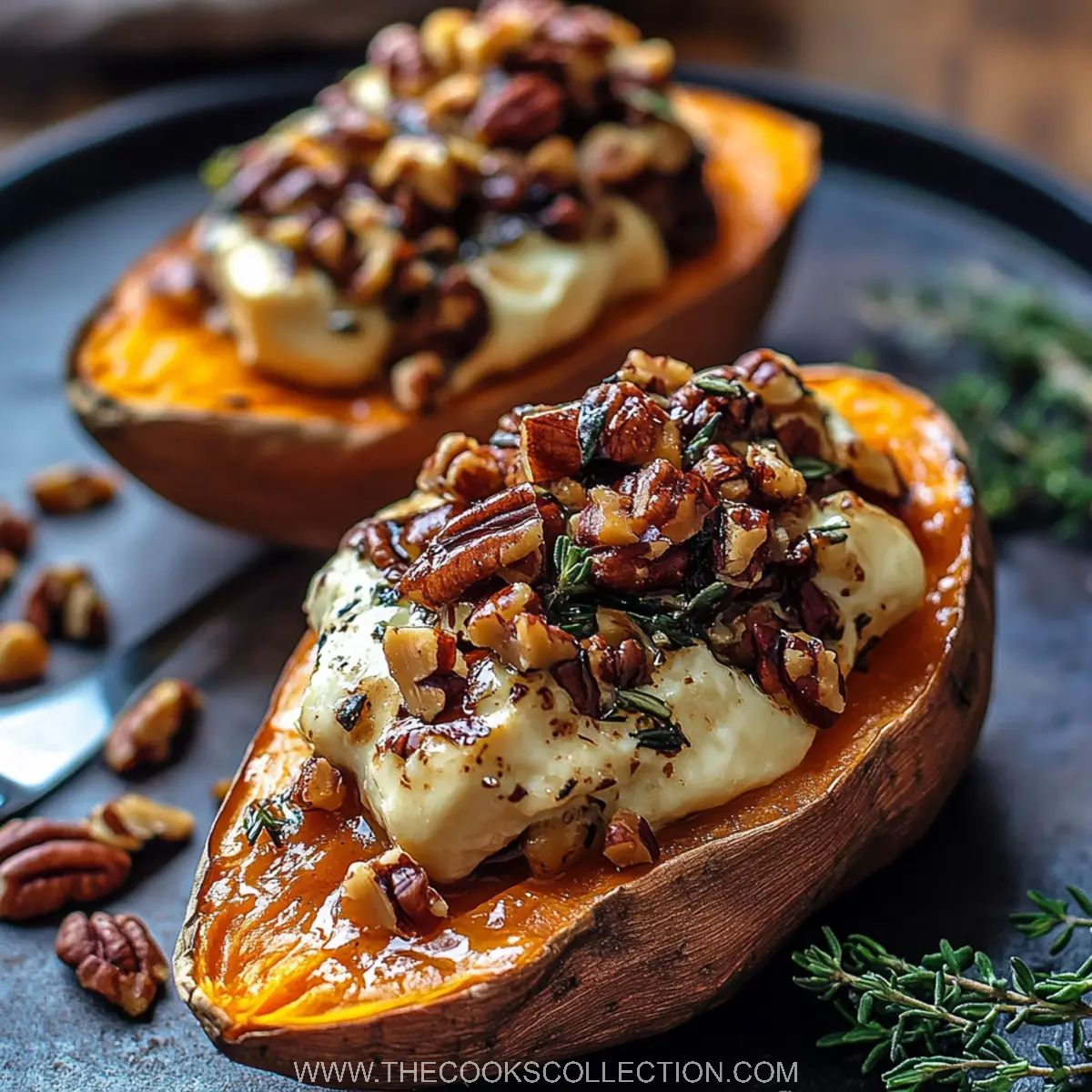
Roasted Sweet Potatoes with Warm Brie & Maple–Thyme Pecan Crunch
This plate hits three targets at once: the sweet potato’s natural caramel notes, a creamy cheese layer that melts instead of weeping, and a shiny, nutty topping that keeps its crunch even after it meets heat. The routine is basic—hard roast, fast glaze, quick melt—but each step is tuned so the flavors stack without turning cloying. Dijon and cider vinegar pull the maple back from dessert territory; thyme and pecans add structure and warmth; flaky salt at the end locks it in. Serve as a meatless main with a salad, stretch it into four smaller plates for a richer side, or plant it in the middle of a holiday spread and let everyone steal bites of the syrupy corners.
Why this recipe works
High heat, cut side down. Roasting the potatoes face-down traps steam, softening the interior while the edges that kiss the pan caramelize. The contrast is what makes each bite feel buttery without drowning it in fat.
Balanced maple glaze. Butter carries flavor and gives shine, maple adds round sweetness, and a little Dijon and cider vinegar cut through. The goal isn’t sticky candy—it’s a thin, glossy coat that seeps into the potato and clings to the pecans.
Right cheese, right moment. Brie (or soft goat cheese) melts at low heat. You slide it on at the end so it softens into a spoonable layer instead of breaking. A short broil slumps the edges for the restaurant look without oiling out the center.
Textural pecan finish. Chopped pecans are tossed into the warm glaze off heat so they keep bite. The thyme perfumes the fat while staying bright, and a last-second scatter of flaky salt makes the maple pop instead of reading flat.
Modular build. Roast ahead, glaze on the fly, cheese at the last minute. That order makes it weeknight-friendly and holiday-proof—no scrambling while guests hover around the kitchen asking if they can help. (They can’t.)
Ingredients (cups & tablespoons only)
Roasted Sweet Potatoes
- 2large sweet potatoes (10–12 oz each), halved lengthwise
- 1 tbspolive oil
- 1/2 tspkosher salt
Brie & Maple–Thyme Pecan Crunch
- 8 ozdouble-cream brie, cut into 4 slabs (or 8 oz soft goat cheese)
- 2 tbspbutter
- 2 tbsppure maple syrup
- 1 tspDijon mustard
- 1 tspapple cider vinegar
- 3/4 cupchopped pecans
- 1 tspfresh thyme leaves (or 1/4 tsp dried)
- pinchred pepper flakes, optional
- 1/4 tspkosher salt + 1/8 tsp black pepper
Recipe
- Roast the potatoes: Heat oven to 425°F. Line a sheet pan with parchment. Halve potatoes and rub the cut faces with olive oil and salt. Set cut side down and roast 35–45 minutes, until a knife slides through the thickest part with no resistance and the edges caramelize.
- Make the maple glaze: In a small skillet over medium heat, melt butter. Whisk in maple syrup, Dijon, vinegar, salt, and pepper. Simmer 60–90 seconds until lightly thickened and glossy. Pull off heat.
- Coat the nuts: Stir pecans, thyme, and a pinch of red pepper flakes into the warm glaze. Toss to coat and keep the pan off the heat—the nuts should stay crisp.
- Melt the cheese: Flip potatoes cut side up. Use a fork to rough up the centers to form a shallow well. Lay a slab of brie on each half. Return to the oven for 3–5 minutes (or broil 30–60 seconds) until edges of the cheese soften and slump but the center still holds.
- Top & serve: Spoon the maple–thyme pecans over the brie, letting the syrup run down into the crevices. Finish with flaky salt and extra thyme. Serve immediately while the cheese is warm and the nuts are crunchy.
If holding for service, keep potatoes hot at 200°F, then add cheese and topping right before plating.
Visual cues & doneness
Potatoes
Surface should be blistered with caramelized edges where the cut face met the pan. When pressed with a spoon, the flesh should give easily and glisten—not dry or floury.
Glaze
Look for a thin, glassy coat that clings to the spoon. If it looks watery, simmer 20–30 seconds more; if it turns thick like taffy, whisk in 1–2 teaspoons water to loosen.
Cheese
Edges slumped, center creamy. If brie starts to oil out or collapse completely, it went a bit long—still tasty, just slightly less elegant. Pull earlier next time.
Glaze logic (why the order matters)
Fat first, sugar second. Butter melts and carries thyme’s aroma into the syrup. Adding maple to already hot fat dissolves quickly and prevents crystalline bits.
Acid + mustard for shape. Vinegar and Dijon don’t make the glaze sour; they give it shape, so a sweet dish stays savory. Mustard also helps emulsify, making the glaze coat the nuts instead of pooling at the bottom of the pan.
Add nuts off heat. Pecans absorb heat fast and can go bitter if fried in syrup. Tossing in after the simmer coats them without softening their crunch.
Common mistakes (and quick fixes)
- Potatoes are dry: They were under-seasoned or overbaked. Brush cut faces with 1 teaspoon olive oil and a spoon of warm glaze before topping; next time, roast cut side down and pull when just tender.
- Glaze tastes flat: Add a pinch of salt and 1/4 teaspoon vinegar; simmer 10 seconds. Maple without acid reads one-note.
- Cheese oiled out: Heat was too high for too long. Swap oven for a brief broil or set the sheet on the lowest rack to reduce direct heat. You can also slice brie thicker so it melts slower.
- Mushy nuts: They sat in hot syrup on heat. Remove pan from burner before stirring in pecans. To salvage, spread nuts on parchment and cool 5 minutes; they’ll crisp back up.
- Too sweet overall: Add a grind of black pepper and a thin drizzle of olive oil over the finished dish; serve with a lemony salad to reset the palate.
Substitutions & variations
Goat cheese or burrata
- Use 8 oz soft goat cheese, divided among halves; it won’t “slump” like brie but spreads beautifully.
- For burrata, add after roasting and skip the broil; warm glaze over top.
Walnut or almond crunch
- Walnuts: same volume; add 1/8 tsp cinnamon for warmth.
- Almonds: toast lightly first; add 1/4 tsp soy sauce to the glaze to deepen flavor.
Herb–pepper glaze
- Replace maple with 1 tbsp honey + 1 tbsp stock; add 1 tsp chopped rosemary and extra black pepper.
Crispy bacon or chickpeas
- Fold 1/3 cup crumbled crisp bacon into the nuts off heat.
- Or pan-crisp 1 cup drained chickpeas in 1 tbsp oil; salt, then toss with half the glaze and scatter over the top.
Maple–chili finish
- Add 1/2 tsp Calabrian chili paste to the glaze or dust finished potatoes with Aleppo pepper.
Any swap changes sweetness and salt perception. Taste the glaze warm and tune with a pinch of salt or a few drops of vinegar before it hits the potatoes.
Serving ideas
- Plate on baby arugula dressed with lemon and olive oil to balance the richness.
- Add thin ribbons of prosciutto for a salty contrast.
- Finish with orange zest instead of thyme for a brighter profile.
- Turn into a board: halves on a platter with extra nuts, apple slices, and crackers for scooping the cheesy centers.
Batching & make-ahead
Roast ahead
Roast potatoes up to 2 days in advance. Cool, cover, and refrigerate. Reheat cut side down at 400°F for 10–12 minutes until hot before adding cheese.
Glaze ahead
Make glaze without nuts up to 3 days ahead. Refrigerate. Warm gently and toss in pecans and thyme right before serving so they stay crisp.
Service timing
For parties, hold roasted halves on a rack at 200°F. When ready to serve, add brie, melt briefly, spoon on nuts, and send out hot. The active window is 3–4 minutes.
Equipment notes
- Parchment-lined sheet pan: Prevents sticking and encourages even browning on the cut face.
- Small stainless skillet: Makes a quick, clean glaze and cools fast so the nuts don’t over-soften.
- Thin spatula: Easiest way to lift roasted halves without tearing the caramelized underside.
Nutrition (estimated)
| Nutrient | Amount |
|---|---|
| Calories | ~480 kcal |
| Total Fat | 27 g |
| Saturated Fat | 12 g |
| Carbohydrates | 53 g |
| Total Sugars | 17 g |
| Fiber | 7 g |
| Protein | 10 g |
| Sodium | ~540 mg |
| Serving Size | 1 stuffed half |
Numbers vary with potato size and cheese choice. Use as a guide.
Storage & reheating
- Fridge: 2 days, covered. The nuts soften slightly—reserve a handful to add fresh if texture matters.
- Reheat: 350°F oven 8–10 minutes. Add a spoon of fresh glaze and a few new pecans to restore gloss and crunch.
- Freeze: Not recommended. Cheese changes texture and potatoes weep as they thaw.
FAQ
Do I have to peel the sweet potatoes?
No. The skin helps hold shape and gets pleasantly chewy. If you prefer peeled, roast whole, then scoop and mound flesh into ramekins before topping (treat like twice-baked potatoes).
Can I make this without cheese?
Yes. Swap the brie for a layer of garlicky whipped ricotta or simply go heavy on the nut topping and finish with a dollop of thick Greek yogurt at the table.
What if my syrup is very runny?
Simmer the glaze an extra 30–60 seconds to reduce. You want it to cling thinly, not puddle.
How spicy should the flakes be?
Just enough to wake up the maple. Start with a pinch; you can always dust the finished dish with more.
Best way to scale for a crowd?
Use two sheet pans. Rotate halfway for even browning. Double glaze in a 1-quart saucepan and toss nuts in batches so they stay crisp.
Cook notes
- Size matters. Choose potatoes similar in weight so they roast evenly. Wide potatoes give more surface area for brie and nuts, which is what you want.
- Salt each layer. A light pinch on the roasted flesh before the cheese makes the maple flavor brighter and keeps the dish from reading sweet.
- Mind the broiler. If you broil to melt the brie, stay close. Thirty seconds is the difference between perfect slump and oily puddle.
- Contrast wins. Serve with something bitter or sharp on the table—arugula salad, pickled red onions, or crisp apples. Sweet on sweet dulls quickly.
- Leftover play. Chop any remaining halves and warm in a skillet; fold in extra nuts and a splash of cream for a five-minute hash to top with eggs.
