Roasted Sweet Potato with Crispy Chickpeas
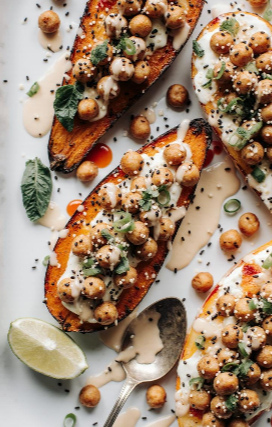
Roasted Sweet Potato with Crispy Chickpeas
This roasted sweet potato with crispy chickpeas transforms humble ingredients into a spectacular vegetarian main course through strategic roasting techniques and thoughtful flavor layering. The method focuses on achieving perfect caramelization on the sweet potatoes while creating exceptionally crispy chickpeas, then bringing everything together with a bright, creamy tahini sauce that balances the natural sweetness and savory spices. The result is a nutritionally complete meal that delivers restaurant-quality presentation with straightforward preparation, offering the satisfying comfort of baked sweet potatoes with the sophisticated textures and flavors of Mediterranean-inspired toppings in a dish that feels both wholesome and indulgent.
Why this recipe works
Sweet potato roasting technique. Starting the sweet potatoes cut-side down serves multiple crucial purposes: it creates direct contact with the hot baking surface for maximum caramelization, protects the delicate flesh from drying out too quickly, and allows the natural sugars to concentrate and intensify through Maillard reaction. The 400°F oven temperature is ideal for developing that beautiful browned exterior while ensuring the interior becomes perfectly tender and creamy. This method transforms the simple sweet potato from plain baked vegetable to a deeply flavorful, complex base that can stand up to bold toppings without becoming mushy or losing its structural integrity.
Chickpea crispiness science. The key to exceptionally crispy chickpeas lies in three factors: thorough drying after rinsing, adequate oil coating, and proper spacing on the baking sheet. Rinsing removes the starchy aquafaba liquid that would steam rather than roast, while patting dry ensures the oil can properly coat each chickpea. The spice blend—smoked paprika for depth, garlic powder for savory notes, cumin for warmth, and optional cayenne for heat—adheres perfectly to the oiled surface. Roasting alongside the sweet potatoes at the same temperature creates perfect harmony: the chickpeas become crunchy and flavorful while the sweet potatoes achieve their ideal texture, all in one pan.
Tahini sauce balance. The creamy tahini sauce provides the essential element that ties everything together, acting as both sauce and dressing. The combination of rich tahini with bright lemon juice creates a perfect balance that cuts through the sweetness of the potatoes and the richness of the roasted chickpeas. The garlic adds savory depth, while the water thins the sauce to perfect drizzling consistency. This sauce not only adds moisture and creaminess but also brings all the components together into a cohesive dish rather than separate elements on a plate.
Texture contrast principle. This recipe excels because of its masterful textural interplay: the creamy, soft sweet potato flesh contrasts beautifully with the crunchy, crisp chickpeas. The smooth tahini sauce provides lubrication, while the fresh parsley adds brightness and the pumpkin seeds contribute another layer of crunch. Each bite delivers multiple textures that keep the eating experience interesting and satisfying, moving beyond simple roasted vegetables into the realm of composed dishes where texture is as important as flavor.
Nutritional completeness. Beyond just tasting incredible, this dish provides complete nutrition in one simple preparation. The sweet potatoes offer complex carbohydrates, fiber, and vitamin A; the chickpeas contribute plant-based protein and additional fiber; the tahini provides healthy fats and minerals; and the fresh herbs and seeds add micronutrients and antioxidants. This makes the dish satisfying enough to serve as a main course while remaining entirely plant-based, gluten-free, and easily adaptable for various dietary needs.
Ingredients
Main Components
- 2 largesweet potatoes (2 lbs total)
- 1 canchickpeas (15 oz)
- 2 tbspolive oil, divided
- 1 tspsea salt, divided
- ¼ cupfresh parsley, chopped
- 2 tbsppumpkin seeds
Spices & Sauce
- 1 tspsmoked paprika
- ½ tspgarlic powder
- ½ tspcumin
- ¼ tspcayenne pepper
- ¼ cuptahini
- 3 tbsplemon juice
- 2 tbspwater
- 1 clovegarlic, minced
Recipe
- Preheat and prepare: Preheat oven to 400°F (200°C). Line a large baking sheet with parchment paper for easy cleanup and to prevent sticking. This also helps with even browning.
- Prepare sweet potatoes: Scrub sweet potatoes thoroughly and pat dry. Slice in half lengthwise. Brush cut sides with 1 tablespoon olive oil and sprinkle with ½ teaspoon salt. Place cut-side down on prepared baking sheet.
- Prepare chickpeas: Rinse and drain chickpeas thoroughly. Spread on clean kitchen towel or paper towels and pat very dry—this is crucial for crispiness. Transfer to medium bowl.
- Season chickpeas: Add remaining 1 tablespoon olive oil to chickpeas along with smoked paprika, garlic powder, cumin, cayenne (if using), and remaining ½ teaspoon salt. Toss until evenly coated.
- Arrange for roasting: Spread seasoned chickpeas in single layer around sweet potatoes on baking sheet. Avoid overcrowding—chickpeas need space to crisp properly.
- Roast: Place in preheated oven and roast 35-40 minutes. Sweet potatoes are done when easily pierced with fork and bottoms are caramelized. Chickpeas should be crispy and lightly browned.
- Make tahini sauce: While vegetables roast, whisk together tahini, lemon juice, water, minced garlic, and pinch of salt in small bowl. Sauce will thicken at first, then smooth out as you whisk.
- Assemble: Remove baking sheet from oven. Flip sweet potatoes cut-side up. Use fork to fluff and slightly mash the flesh. Divide among plates and top generously with crispy chickpeas.
- Finish and serve: Drizzle tahini sauce over each sweet potato half. Garnish with chopped parsley and pumpkin seeds. Serve immediately while everything is warm and chickpeas are crispy.
The sweet potatoes are done when you can easily pierce them with a fork and the cut sides have developed beautiful caramelized spots. The chickpeas should be crispy and lightly browned—they’ll continue to crisp as they cool. If chickpeas aren’t as crispy as you’d like, you can return them to the oven for 5-10 additional minutes while the sweet potatoes rest.
Nutrition (estimated)
| Nutrient | Amount |
|---|---|
| Calories | ~420 kcal |
| Total Fat | 18 g |
| Saturated Fat | 2 g |
| Trans Fat | 0 g |
| Cholesterol | 0 mg |
| Sodium | 480 mg |
| Total Carbohydrates | 58 g |
| Dietary Fiber | 12 g |
| Total Sugars | 16 g |
| Added Sugars | 0 g |
| Protein | 12 g |
| Vitamin A | 1840 mcg |
| Vitamin C | 12 mg |
| Calcium | 120 mg |
| Iron | 4 mg |
Nutrition calculated with standard ingredient measurements. Values are estimates and will vary based on specific brands and exact measurements. Using low-sodium chickpeas and reducing added salt will lower sodium content significantly.
Roasting science & caramelization
Understanding the chemical transformations that occur during roasting helps achieve perfect sweet potatoes every time, with ideal texture and maximum flavor development.
Caramelization stages
- Initial moisture release (0-15 minutes): Oven heat penetrates potato flesh. Internal moisture begins to steam. Starches start to break down. Surface begins to dry out. Natural sugars start to concentrate.
- Maillard reaction begins (15-25 minutes): Surface temperatures reach 300°F+. Amino acids and reducing sugars react. Brown compounds develop. Complex flavors emerge. Aromas become noticeable. Texture begins to soften.
- Full caramelization (25-35 minutes): Natural sugars caramelize fully. Deep golden-brown color develops. Sweetness intensifies significantly. Flesh becomes tender throughout. Starches convert to simpler sugars.
- Final texture development (35-40 minutes): Interior becomes creamy and fluffy. Caramelized crust forms on cut surface. Cell walls break down completely. Maximum sweetness achieved. Perfect eating texture reached.
- Carryover cooking: Residual heat continues working after removal from oven. Interior becomes slightly more tender. Flavors meld and deepen. Ideal serving temperature reached. Texture perfects during brief rest.
The cut-side down method is crucial because it creates direct contact with the hot surface, allowing the Maillard reaction to occur more efficiently. This reaction between amino acids and reducing sugars creates hundreds of flavor compounds that make roasted foods taste so much more complex and delicious than steamed or boiled versions. The 400°F temperature provides the ideal environment for both thorough cooking and proper browning.
Crispy chickpea technique
Achieving perfectly crispy chickpeas requires attention to preparation details that many recipes overlook, transforming them from merely roasted to truly crunchy.
Drying method
Rinse thoroughly to remove starchy liquid. Drain completely in colander. Spread on clean kitchen towel. Pat dry vigorously. Roll in towel to absorb moisture. Let air dry 10 minutes if time allows. Completely dry surface is non-negotiable.
Oil and spice application
Use enough oil to coat every chickpea. Toss thoroughly before adding spices. Spices adhere better to oiled surface. Mix until every chickpea has visible spice coating. Don’t skip the tossing step—even distribution is key.
Spacing and airflow
Single layer is essential. Crowding causes steaming. Space allows moisture evaporation. Rotate pan halfway if oven has hot spots. Shake pan gently during cooking. Proper spacing makes the difference between crispy and chewy.
Tahini sauce mastery
The tahini sauce seems simple but requires understanding its unique properties to achieve perfect consistency and balanced flavor every time.
Sauce development stages
- Initial mixing: Tahini and lemon juice combine. Mixture thickens dramatically and may seize. This is normal—continue whisking. The acid causes proteins in sesame paste to tighten.
- Liquid incorporation: Add water gradually while whisking. Sauce will thin and become creamy. Emulsion forms between oil and water. Consistency becomes pourable but still coats spoon.
- Flavor balancing: Taste and adjust seasoning. More lemon for brightness. More salt for enhancement. Garlic for savory depth. Water for thinner consistency. Perfect balance should be neither too sharp nor too flat.
- Resting period: Flavors meld as sauce rests. Garlic flavor infuses throughout. Consistency may thicken slightly. Always taste again before serving. Can be thinned with more water if needed.
- Troubleshooting: If sauce breaks, whisk vigorously. If too thick, add more water. If too thin, add more tahini. If too sharp, add pinch of sugar. If bland, add more salt and lemon.
The seeming “seizing” of tahini when first mixed with lemon juice frightens many cooks, but this is completely normal and actually indicates you’re using good-quality tahini. Just continue whisking and adding liquid gradually—the sauce will smooth out beautifully into a creamy, luxurious consistency that’s perfect for drizzling. This emulsion principle is the same one used in making mayonnaise or vinaigrettes.
Common mistakes (and quick fixes)
- Soggy chickpeas: Insufficient drying or overcrowding. Pat drier next time, spread in single layer. Refresh in hot oven 5 minutes to crisp up.
- Undercooked sweet potatoes: Wrong size or temperature. Choose similar-sized potatoes, test with fork. Microwave 2-3 minutes to finish cooking if needed.
- Burned chickpeas: Too high heat or thin baking sheet. Use middle oven rack, check earlier. Remove burned ones, use remaining.
- Too-thick tahini sauce: Not enough liquid or improper mixing. Add water gradually while whisking. Sauce can always be thinned to preference.
- Bland overall flavor: Underseasoned or poor quality ingredients. Season each component separately. Add extra salt, lemon, or spices at table.
- Uneven cooking: Different potato sizes or oven hot spots. Choose uniform potatoes, rotate pan. Smaller pieces cook faster—adjust timing accordingly.
Substitutions & variations
Protein variations
Black beans for different texture. Lentils for quicker cooking. White beans for creamier result. Edamame for fresh crunch. Tempeh cubes for meaty texture. Tofu cubes for protein boost.
Sauce alternatives
Yogurt sauce with lemon and herbs. Avocado crema for creaminess. Romesco for Spanish twist. Peanut sauce for Asian influence. Green goddess for herbal freshness. Chipotle mayo for smoky heat.
Topping ideas
Toasted walnuts or almonds. Sunflower seeds for crunch. Pomegranate seeds for brightness. Fried shallots for savory crunch. Pickled onions for tang. Chili oil for heat.
Serving & presentation
Beautiful presentation elevates this humble dish into restaurant-worthy fare that delights both the eyes and palate.
Plating techniques
- Composition: Place sweet potato cut-side up in center of plate. Fluff flesh with fork to create textured base. Spoon chickpeas over center rather than scattering. Create height and dimension.
- Sauce application: Drizzle tahini sauce in zigzag pattern. Use spoon for controlled application. Leave some potato showing through. Reserve extra sauce for passing at table.
- Garnish placement: Sprinkle parsley for color contrast. Scatter pumpkin seeds for texture. Add microgreens for sophistication. Lemon wedges for optional brightness. Edible flowers for special occasions.
- Color consideration: Orange sweet potatoes against white plates. Green parsley for freshness. Brown chickpeas for earthiness. White sauce for creaminess. Consider plate color for maximum contrast.
- Family style option: Arrange sweet potatoes on large platter. Pile chickpeas in center. Drizzle sauce generously. Let guests serve themselves. More casual but equally impressive.
The natural beauty of this dish makes presentation easy—the vibrant orange sweet potatoes, golden brown chickpeas, green herbs, and creamy white sauce create their own beautiful color palette. Focus on clean plating with defined elements rather than mixing everything together, which preserves the textural contrasts that make this dish so satisfying.
Equipment notes
Essential tools
Large baking sheet for even roasting. Parchment paper for easy cleanup. Sharp knife for clean cuts. Mixing bowls for prep. Whisk for sauce. Measuring spoons for accuracy.
Helpful additions
Rimmed baking sheet contains spills. Kitchen scale for accuracy. Microplane for garlic. Salad spinner for drying herbs. Baking rack for air circulation. Squeeze bottle for sauce.
Alternative methods
Air fryer for quicker chickpeas. Cast iron for better browning. Toaster oven for small batches. Grill for smoky flavor. Microwave for quick sweet potatoes (less caramelization).
Storage & reheating
Proper storage maintains quality while understanding reheating limitations helps manage expectations for leftovers.
Storage guidelines
- Refrigeration: Store components separately for best results. Sweet potatoes 4-5 days in airtight container. Chickpeas 3-4 days (lose crispiness). Sauce 5-7 days, may thicken. Assemble just before serving.
- Freezing: Sweet potatoes freeze well for 2-3 months. Chickpeas become mushy when frozen. Sauce may separate but can be rewhisked. Freeze sweet potatoes individually on tray before bagging.
- Reheating methods: Oven at 375°F for 10-15 minutes preserves texture. Air fryer excellent for recrisping chickpeas. Microwave quick but makes chickpeas soft. Stovetop with little oil works well.
- Leftover transformations: Chop and mix for sweet potato hash. Mash for breakfast bowls. Add to salads for lunch. Blend into soup base. Stuff into wraps or pitas. Top grain bowls.
- Meal prep adaptation: Roast sweet potatoes and chickpeas Sunday. Make sauce ahead. Assemble quickly throughout week. Components keep well 4-5 days. Perfect for healthy lunches.
The chickpeas will lose their crispy texture when stored, but they still taste wonderful in the assembled dish or repurposed in other meals. For best results, store components separately and reheat sweet potatoes and chickpeas in oven or air fryer to restore some crispiness before assembling with fresh sauce and garnishes.
Frequently asked questions
Can I use canned sweet potatoes?
Not recommended. Canned sweet potatoes are already cooked and packed in syrup, which prevents proper roasting and caramelization. They become mushy rather than developing the crispy edges and creamy interior that make this dish special. Fresh sweet potatoes are essential for the proper texture and flavor development.
My tahini sauce is too bitter—what happened?
Some tahini brands, particularly those made from unhulled sesame seeds, can be naturally bitter. The bitterness usually mellows with the addition of lemon juice and salt. If it remains too bitter, try a different brand next time—look for tahini made from hulled sesame seeds, which tends to be milder and creamier.
Can I make this oil-free?
Yes, though results will differ. For sweet potatoes, roast on parchment without oil—they’ll still soften but won’t caramelize as deeply. For chickpeas, use aquafaba (the liquid from the can) or vegetable broth instead of oil. The spices won’t adhere as well, and crispiness will be reduced, but the dish will still be delicious.
How do I get my chickpeas extra crispy?
Three secrets: absolutely dry chickpeas before oiling, don’t overcrowd the pan, and roast long enough. Some cooks remove the loose skins for even crispiness. For ultimate crisp, start with dried chickpeas you’ve cooked yourself—they tend to be firmer and crisp better than canned.
Can I use different spices?
Absolutely! This recipe is very adaptable. Try curry powder for Indian flavor, chili powder for Mexican, herbes de Provence for French, or za’atar for Middle Eastern. The basic method remains the same—just adjust the spice blend to match your preferred cuisine.
Pro tips for perfect results
- Sweet potato uniformity: Choose potatoes of similar size and shape for even cooking. If one is much larger, consider cutting it into quarters rather than halves to ensure everything finishes at the same time.
- Chickpea drying technique: After rinsing, spread chickpeas on clean kitchen towel and roll them around to remove every bit of moisture. Some cooks even remove the loose skins for extra crispiness, though this isn’t necessary.
- Spice blooming: For deeper flavor, mix the spices with the oil before adding to chickpeas. This “blooms” the spices and helps distribute them more evenly across all surfaces.
- Sauce ahead advantage: Tahini sauce actually improves when made 1-2 hours ahead. The flavors meld and the garlic infuses throughout. Just whisk again before serving and adjust consistency with water if needed.
- Don’t skip the fluffing: Using a fork to fluff the sweet potato flesh before topping creates little pockets for the chickpeas and sauce to settle into, ensuring every bite contains multiple components.
- Garnish strategically: Add delicate garnishes like fresh herbs and seeds after plating rather than before baking. This preserves their texture, color, and fresh flavor against the hot components.
This roasted sweet potato with crispy chickpeas represents the perfect example of how simple ingredients, when treated with care and understanding, can transform into something truly extraordinary. The dish demonstrates that vegetarian cooking need not be complicated or rely on exotic ingredients to deliver satisfaction, nutrition, and beauty. Each component teaches fundamental cooking principles—the importance of dryness for crispiness, the magic of high-heat roasting for flavor development, and the power of emulsion in sauce making. Most importantly, this recipe builds confidence in the kitchen while delivering consistent, impressive results that will make it a regular in your meal rotation, whether for simple weeknight dinners or when you want to showcase how delicious plant-based eating can be.