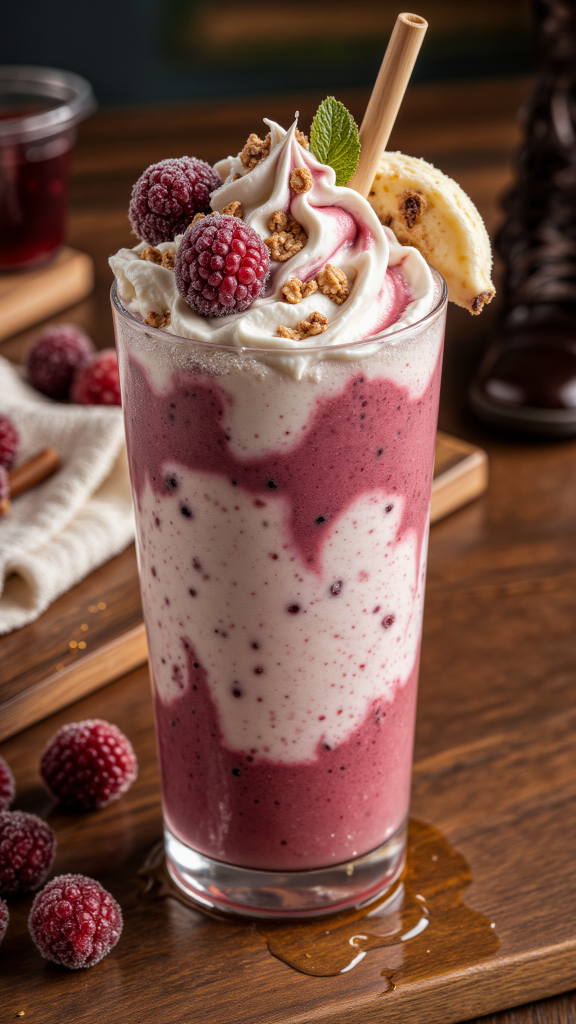
Raspberry Swirl Frozen Yogurt Smoothie
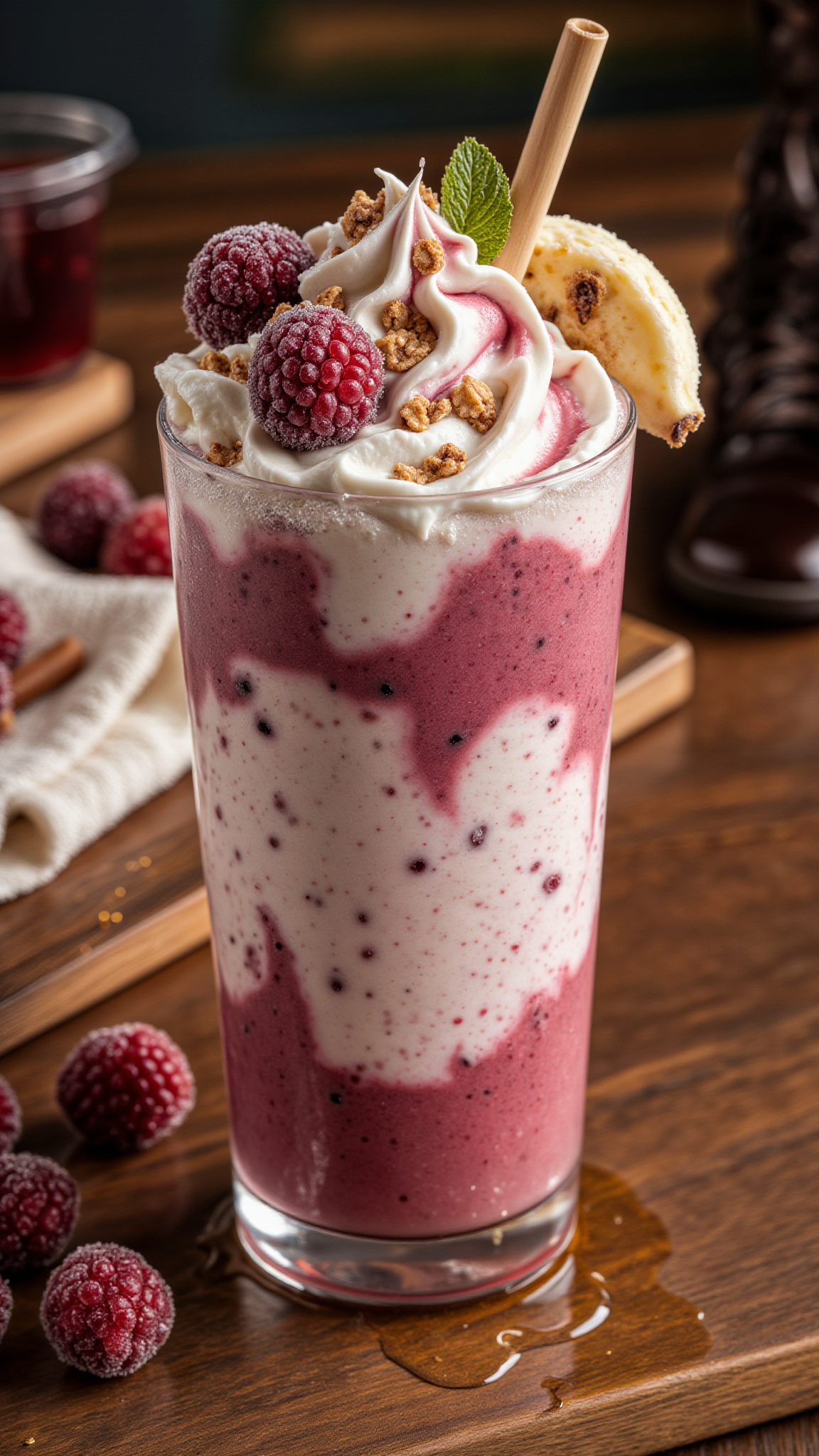
Raspberry Swirl Frozen Yogurt Smoothie
This frozen yogurt smoothie balances creamy Greek yogurt base with vibrant raspberry swirl that holds its pattern without blending in. The method focuses on texture control—thick enough to support swirl definition but drinkable through a straw—and temperature management that keeps the swirl distinct. Raspberry preparation avoids seed bitterness while maximizing color intensity, and the yogurt base provides protein richness without heaviness. Everything works for quick morning preparation or make-ahead convenience, with visual cues for perfect swirl execution every time.
Why this recipe works
Raspberry viscosity control. The swirl uses minimal liquid to create a thick, intensely colored puree that holds its shape when swirled. Frozen raspberries provide natural pectin and fiber that thicken without additives, while the small amount of honey adds sweetness without thinning the texture excessively.
Yogurt base structure. Greek yogurt provides protein-based thickness that supports the swirl without collapsing. The ice and frozen fruit create slushy texture that’s drinkable but substantial enough to maintain swirl definition for 15-20 minutes after preparation.
Temperature differential. Both components start equally frozen, but the raspberry swirl is blended thicker and colder. This slight temperature and texture difference creates the visual separation—the swirl sits on top rather than blending in immediately.
Acidity balance. Lemon juice in the raspberry swirl brightens the berry flavor while activating natural pectins for better thickening. It also balances the richness of the yogurt base, preventing the smoothie from tasting too heavy or cloying.
Liquid precision. The exact milk measurement creates base texture that’s thick enough to support swirls but thin enough to drink. Too much liquid and swirls sink; too little and the smoothie becomes frozen yogurt that needs spooning.
Ingredients (cups & tablespoons only)
Raspberry Swirl
- 1/2 cupfrozen raspberries
- 1 tbsphoney or maple syrup
- 2 tsplemon juice
- 1-2 tspwater (if needed)
Yogurt Base
- 1.5 cupsfrozen raspberries
- 1.5 cupsGreek yogurt, plain
- 1 cupice cubes
- 1 tbsphoney or maple syrup
- 1 tspvanilla extract
- 1/2 cupmilk or almond milk
Optional Add-ins
- 1 tspchia seeds
- 1 tbspprotein powder
- 1/2 tspmac powder
- 1 tbspflax seeds
Garnishes
- 1/4 cupfresh raspberries
- 2 sprigsfresh mint
- 2 tbspGreek yogurt
- 1 tsphoney (for drizzle)
Recipe
- Prepare raspberry swirl: In blender, combine 1/2 cup frozen raspberries, 1 tbsp honey, and lemon juice. Pulse until thick and chunky—it should be spreadable but not liquid. Add water only if too thick to blend. Transfer to small bowl.
- Make yogurt base: Rinse blender. Add remaining 1.5 cups frozen raspberries, Greek yogurt, ice, 1 tbsp honey, vanilla, and milk. Blend until smooth and creamy, scraping sides as needed. Texture should be thick but pourable.
- Test consistency: The base should mound slightly when dropped from spoon but still flow. If too thick, add milk 1 tbsp at a time. If too thin, add 2-3 more frozen raspberries and blend briefly.
- Assemble swirls: Divide yogurt base between two glasses. Dollop raspberry swirl mixture over top in several places around the glass.
- Create swirl pattern: Using skewer, chopstick, or thin knife, gently drag through the raspberry dollops in circular or zigzag pattern. Don’t over-mix—3-4 passes maximum for defined swirls.
- Garnish: Top with fresh raspberries, mint sprigs, and drizzle with thinned Greek yogurt or extra honey if desired.
- Serve immediately with wide straw and spoon for best texture experience.
Work quickly once blended—the swirl definition is best when both components are equally cold and the base is freshly blended.
Texture control & consistency
Swirl thickness test
The raspberry swirl should hold its shape when spooned but still be pliable. If it stands in stiff peaks, it’s too thick—add water 1 tsp at a time. If it runs immediately, it’s too thin—add 2-3 more frozen raspberries.
Base consistency test
The yogurt base should slowly pour from blender rather than flow. When spooned, it should mound then slowly settle. If it stands in stiff peaks, add milk; if it immediately levels out, add more frozen fruit.
Temperature balance
Both components must be equally cold. If base warms during blending, the swirl will sink. If swirl warms, it will blend in. Work quickly and use frozen ingredients straight from freezer.
Swirl technique & pattern creation
Dollop placement. Space raspberry dollops evenly around the glass perimeter rather than piling in center. This creates multiple swirl points that connect into cohesive pattern. For 16 oz glass, use 3-4 tablespoon-sized dollops.
Tool selection. Thin tools create delicate swirls; thicker tools create bolder patterns. Skewers or toothpicks make fine lines; butter knives make wider ribbons. The back of a spoon creates soft cloud-like swirls.
Swirl motion. Use gentle, continuous motions—don’t stab or chop. Insert tool to bottom of glass, then slowly draw up in spiral, zigzag, or figure-8 pattern. The goal is to distribute color while maintaining definition.
Depth control. Vary how deep you insert the swirling tool. Some swirls should stay near surface for visual impact; others can go deeper to create dimension. This layered approach makes the pattern more interesting.
Restraint principle. Over-swirling creates muddy appearance. 3-4 passes maximum maintains the contrast between creamy base and vibrant swirl. Stop when you see defined patterns rather than continuing until uniform.
Raspberry preparation & flavor
Seed management. Raspberry seeds can be bitter and texturally unpleasant. The quick pulse blending for the swirl keeps seeds largely intact within berry structure rather than dispersing throughout. For seed-free version, strain swirl through fine mesh after blending.
Color intensity. Frozen raspberries provide more vibrant color than fresh because freezing breaks down cell walls, releasing more pigments. The thick swirl consistency concentrates this color for maximum visual impact against the white yogurt base.
Sweetness calibration. Raspberries vary significantly in natural sweetness based on variety and season. Taste your berries before adding sweetener—tart berries may need extra honey, while very sweet berries might need only a teaspoon.
Acidity balance. Lemon juice does triple duty: brightens flavor, enhances color stability, and activates natural pectins for better thickening. Don’t skip this—it transforms flat berry flavor into vibrant, complex taste.
Common mistakes (and quick fixes)
- Swirl sinking: Base too thin or swirl too thick. Adjust consistencies so base is thicker and swirl is slightly thinner but still distinct.
- Muddy appearance: Over-swirling or components too warm. Use fewer swirl motions and ensure both parts are equally cold.
- Base too icy: Insufficient blending or wrong ice-to-fruit ratio. Blend longer and use the 1:1.5 ice-to-frozen fruit ratio specified.
- Swirl too runny: Over-blended or too much liquid. Pulse rather than blend continuously, and add more frozen berries to thicken.
- Bitter taste: Over-blended seeds or inferior berries. Use quick pulses for swirl and taste berries before using.
- Separation: Components too different in temperature or density. Ensure both are equally frozen and adjust textures to be more similar.
- Not drinkable: Too thick for straw. Add milk 1 tbsp at a time until it flows but still supports swirls.
Substitutions & variations
Different fruit swirls
- Strawberry + 1 tsp lemon juice
- Mixed berries for deeper color
- Cherries (pitted) for dramatic contrast
Yogurt alternatives
- Coconut yogurt for vegan
- Skyr for higher protein
- Regular yogurt (thicker base needed)
Milk alternatives
- Almond, oat, or soy milk
- Coconut water for tropical twist
- Orange juice for creamiscle effect
Additional flavors
- 1/2 tsp almond extract in base
- 1 tbsp cocoa powder in swirl
- 1/4 tsp cinnamon in base
Health additions
- 1 tbsp protein powder in base
- 1 tsp spirulina for green boost
- 1 tbsp hemp seeds in base
Different consistencies
- Add 1/4 avocado for ultra-creamy
- Omit ice for softer texture
- More frozen fruit for thicker smoothie
When substituting berries, adjust sweetener based on natural sweetness and add lemon juice to brighten flavors that might otherwise taste flat.
Serving & presentation
- Glass selection: Clear glasses are essential for swirl visibility. Wide-mouth glasses show surface patterns best; tall glasses create dramatic vertical swirls.
- Garnish timing: Add fresh berries and mint after swirling but before serving. The garnishes should rest on surface rather than sink into the smoothie.
- Utensil strategy: Provide both wide straw and spoon—the straw for drinking, spoon for capturing swirl sections intentionally.
- Temperature service: Serve within 5 minutes of assembly for best swirl definition. The patterns hold for 15-20 minutes but are most distinct initially.
- Photography tips: Shoot in natural light from the side to highlight swirl dimension. A plain white or neutral background makes the colors pop.
Batching & make-ahead
Swirl preparation
Make raspberry swirl up to 3 days ahead. Store in airtight container in refrigerator. The color may darken slightly but flavor improves.
Base components
Measure dry and frozen ingredients into bags up to 1 week ahead. Store in freezer. In morning, add yogurt and milk, then blend.
Complete assembly
Not recommended more than 15 minutes ahead. The swirls begin to blend over time. For best results, assemble just before serving.
Equipment notes
- Blender power: High-speed blenders create smoothest base, but any blender works. Weaker blenders may require stopping to scrape sides and blending longer.
- Swirl tools: Skewers, chopsticks, butter knives, or even the handle of a thin spoon all work. Avoid wide utensils that create channels rather than swirls.
- Measuring precision: Use liquid measuring cups for milk and honey, dry cups for frozen fruit. The 1/2 cup measurement for milk is critical for proper texture.
- Container strategy: Have serving glasses and swirl tools ready before blending. The assembly should happen quickly once components are prepared.
- Temperature maintenance: Chill glasses in freezer 10 minutes before assembling if your kitchen is warm. This helps maintain swirl definition.
Nutrition (estimated)
| Nutrient | Amount |
|---|---|
| Calories | ~320 kcal |
| Total Fat | 8 g |
| Saturated Fat | 4 g |
| Carbohydrates | 52 g |
| Total Sugars | 42 g |
| Fiber | 8 g |
| Protein | 14 g |
| Sodium | ~120 mg |
| Vitamin C | ~60% DV |
| Calcium | ~30% DV |
Numbers are estimates and will vary based on specific ingredients, especially yogurt fat content, berry sweetness, and exact measurements. Natural sugars from fruit and honey comprise most of the sugar content.
Storage & timing considerations
- Immediate consumption: Best within 15 minutes of assembly. Swirls are most defined when freshly made and equally cold.
- Short-term storage: Store assembled smoothies up to 2 hours in refrigerator, but expect some blending of swirls into base.
- Component storage: Raspberry swirl stores separately for 3 days refrigerated. Yogurt base stores 24 hours but may separate—shake or re-blend before using.
- Freezing: Freeze base and swirl separately for up to 1 month. Thaw in refrigerator overnight and re-blend base before assembling.
- Travel considerations: Not recommended—movement will blend the swirls. Assemble at destination if possible.
- Make-ahead limit: Maximum 15 minutes ahead for best visual results, though flavor remains excellent for several hours.
FAQ
Can I use fresh raspberries instead of frozen?
Yes, but you’ll need to adjust the texture. Use 1.5 cups fresh raspberries + 1 cup ice for the base, and 1/2 cup fresh raspberries + 2 tbsp frozen berries for the swirl. The texture will be slightly less thick and the color may be less vibrant.
My swirl keeps blending into the base—how do I prevent this?
Ensure both components are equally cold and your base is thick enough to support the swirl. Also, don’t over-swirl—3-4 gentle passes maximum. Working quickly once blended helps maintain temperature differential.
Can I make this vegan?
Yes—use plant-based yogurt, maple syrup instead of honey, and plant-based milk. The texture may be slightly different but the swirl technique works the same.
How do I get rid of raspberry seeds?
Strain the raspberry swirl through a fine-mesh strainer after blending. You’ll need to press with a spatula to extract all the puree. This removes most seeds but maintains color and flavor.
Can I double this recipe?
Yes, but blend in batches if your blender is under 48 oz capacity. The swirl technique remains the same, just with more volume per component.
Why does my smoothie taste bitter?
Likely over-blended raspberry seeds or inferior quality berries. Use quick pulses for the swirl rather than continuous blending, and taste your berries before using.
Cook notes
- Texture balance is everything—base should be thick but drinkable, swirl should be thick but spreadable.
- Temperature consistency matters—both components must be equally cold for defined swirls.
- Swirl with restraint—over-mixing creates muddy appearance rather than beautiful patterns.
- Clear glasses are essential for visual impact—the beauty is in the visible swirls.
- Serve immediately—the swirls are most distinct within the first 15 minutes.
- Don’t fear imperfection—each swirl pattern is unique and beautiful in its own way.