lemon shortbread creme filled cookies
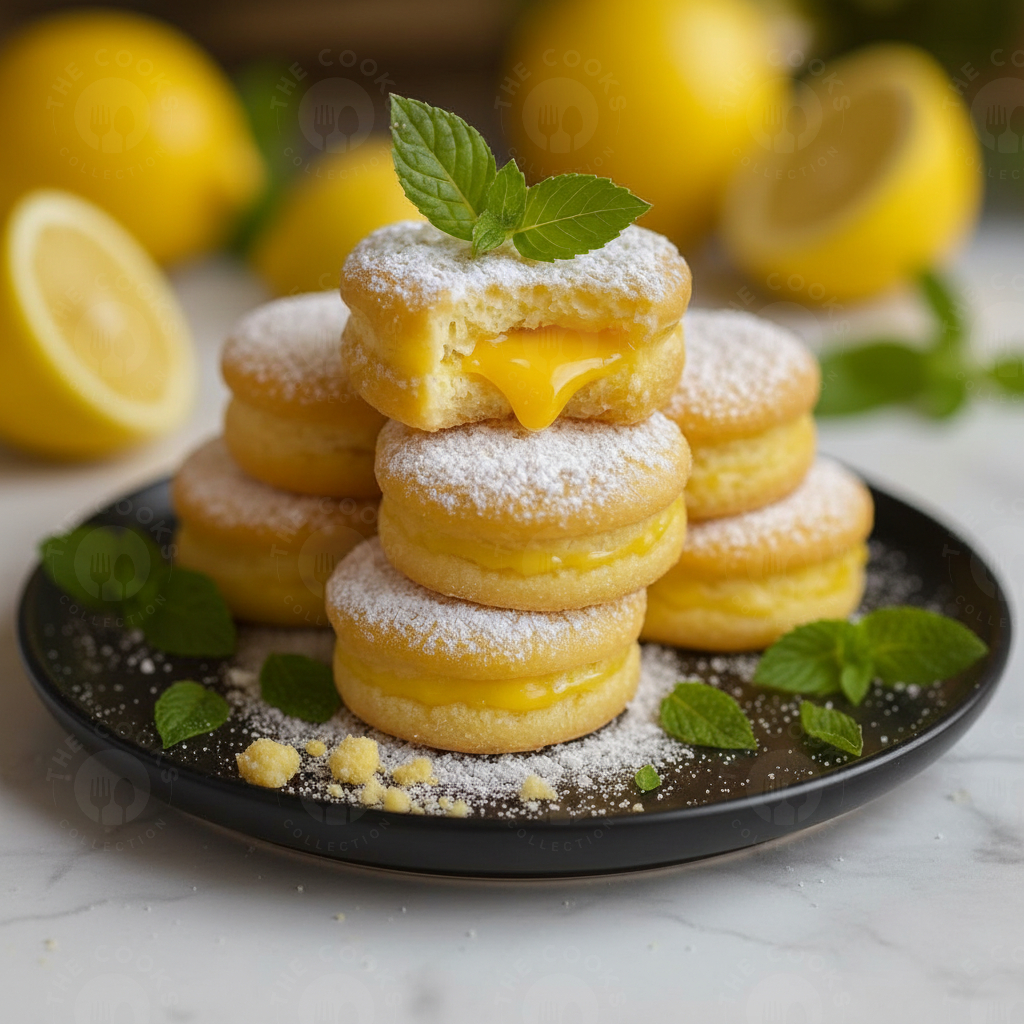
Lemon Shortbread Creme Filled Cookies
These lemon shortbread creme filled cookies achieve perfect texture and flavor balance through precise butter temperature control, proper creaming technique, and optimal baking temperature. The method focuses on creating crisp, buttery shortbread that melts in your mouth while maintaining structural integrity for sandwiching with tangy lemon cream filling. The result is professional-quality sandwich cookies with striking visual appeal from powdered sugar dusting, balanced sweet-tart flavor profile, and the technical precision needed for consistent baking results.
Why this recipe works
Butter temperature and creaming science. Properly softened butter (65-68°F) creates tiny air pockets when creamed with sugar that expand during baking, giving shortbread its characteristic melt-in-your-mouth texture. The 3-4 minute creaming time is crucial for incorporating enough air to create lift without developing gluten. Unlike cookies that rely on chemical leaveners, shortbread gets its texture from this physical aeration process combined with the high fat content that inhibits gluten formation. The combination of powdered sugar and granulated sugar provides both immediate dissolution (powdered) and crystal structure (granulated) for optimal texture development.
Flour composition and gluten control. The 2 1/4 cups flour to 1/4 cup cornstarch ratio creates a tender cookie with minimal gluten development. Cornstarch interferes with gluten formation and contributes to the sandy, crumbly texture that defines quality shortbread. The minimal mixing time after adding dry ingredients prevents gluten strands from developing, ensuring the cookies remain delicate rather than tough. This careful balance allows the cookies to be sturdy enough for sandwiching while maintaining their signature shortbread texture.
Lemon flavor layering and balance. Using both lemon zest and juice provides complete citrus flavor – the zest contains aromatic oils for fragrance while the juice provides tartness. The 2 tablespoons zest to 2 tablespoons juice ratio creates bright lemon flavor without making the dough too wet. The acidity from lemon juice also helps tenderize the gluten, contributing to the delicate texture. In the filling, the cream cheese base provides tang that complements the lemon while the minimal sugar allows the citrus notes to shine through.
Chilling science and baking precision. The 2-hour chilling period allows the butter to firm up, preventing cookies from spreading too much during baking. It also allows the flour to fully hydrate and the flavors to meld. The 350°F baking temperature is high enough to set the structure quickly but low enough to allow even cooking without excessive browning. The 10-12 minute baking window creates cookies that are set at the edges but still pale, preserving their delicate flavor and texture.
Filling consistency and stability. The cream cheese to powdered sugar ratio (8 oz to 1/2 cup) creates a filling that’s stable enough to hold its shape between cookies without being overly sweet. The additional lemon zest and juice in the filling ensure the citrus flavor carries through the entire cookie experience. The filling’s thickness prevents it from soaking into the cookies prematurely, maintaining the textural contrast between crisp shortbread and creamy filling.
Ingredients (cups & tablespoons only)
Lemon Shortbread Cookies
- 1 cupunsalted butter, softened
- 1/2 cuppowdered sugar
- 1/4 cupgranulated sugar
- 2 tbsplemon zest
- 2 tbspfresh lemon juice
- 1 tspvanilla extract
- 2 1/4 cupsall-purpose flour
- 1/4 cupcornstarch
- 1/2 tspsalt
Lemon Cream Filling
- 8 ozcream cheese, softened
- 1/2 cuppowdered sugar
- 1 tbsplemon zest
- 2 tspfresh lemon juice
- 1/2 tspvanilla extract
For Assembly
- 1/4 cuppowdered sugar
Recipe
- Cream butter and sugars: In stand mixer fitted with paddle attachment, beat 1 cup softened butter, 1/2 cup powdered sugar, and 1/4 cup granulated sugar on medium speed for 3-4 minutes until light, pale, and fluffy. Scrape bowl halfway through.
- Add flavorings: Reduce speed to low and add 2 tablespoons lemon zest, 2 tablespoons lemon juice, and 1 teaspoon vanilla extract. Mix until fully incorporated, about 30 seconds.
- Combine dry ingredients: In separate bowl, whisk together 2 1/4 cups flour, 1/4 cup cornstarch, and 1/2 teaspoon salt until well combined and aerated.
- Incorporate dry ingredients: With mixer on low speed, gradually add flour mixture to butter mixture. Mix until just combined and no dry spots remain, about 45-60 seconds. Do not overmix.
- Chill dough: Divide dough in half and shape into 1-inch thick discs. Wrap tightly in plastic wrap and refrigerate for at least 2 hours or up to 3 days.
- Roll and cut: On lightly floured surface, roll one dough disc to 1/4-inch thickness. Using 2-inch round cutter, cut out cookies and transfer to parchment-lined baking sheets.
- Bake: Bake at 350°F for 10-12 minutes until cookies are set and edges are very lightly golden. Centers should remain pale. Rotate pans halfway through baking.
- Cool completely: Let cookies cool on baking sheets for 5 minutes, then transfer to wire racks to cool completely before filling.
- Prepare filling: Beat 8 oz softened cream cheese until smooth. Add 1/2 cup powdered sugar, 1 tablespoon lemon zest, 2 teaspoons lemon juice, and 1/2 teaspoon vanilla. Beat until smooth and creamy.
- Assemble cookies: Spread about 1 tablespoon filling on bottom of one cookie. Top with second cookie, bottom side down, and press gently to spread filling to edges.
- Dust with sugar: Using fine-mesh sieve, dust assembled cookies with remaining 1/4 cup powdered sugar. Serve immediately or refrigerate until serving.
The cookies will be very fragile when warm but firm up as they cool. For cleanest assembly, ensure cookies are completely cooled before filling. The filling will firm up when chilled, making the cookies easier to handle and transport.
Nutrition (estimated)
| Nutrient | Amount |
|---|---|
| Calories | ~220 kcal |
| Total Fat | 14 g |
| Saturated Fat | 8 g |
| Trans Fat | 0 g |
| Cholesterol | 35 mg |
| Sodium | 85 mg |
| Total Carbohydrates | 22 g |
| Dietary Fiber | 1 g |
| Total Sugars | 12 g |
| Added Sugars | 11 g |
| Protein | 3 g |
| Vitamin D | 0.2 mcg |
| Calcium | 20 mg |
| Iron | 1 mg |
| Potassium | 45 mg |
Nutrition calculated with standard ingredient measurements. Values are estimates and will vary based on specific brands and exact measurements. Using reduced-fat cream cheese will lower fat content by approximately 3g per cookie.
Shortbread science & ingredient principles
Butter structure
Butter creates flaky layers when cold. Creaming incorporates air bubbles. Milk solids contribute flavor. Water content creates steam. Fat coats flour proteins. Proper temperature ensures correct texture.
Flour dynamics
All-purpose flour provides structure. Cornstarch inhibits gluten formation. Proper measuring ensures consistency. Hydration time improves texture. Minimal mixing prevents toughness. Ratio creates tender crumb.
Sugar functions
Powdered sugar dissolves quickly. Granulated sugar provides structure. Sugar tenderizes gluten. Creates crisp texture. Contributes to spread. Balances lemon acidity.
Filling techniques & consistency control
Creating the perfect lemon cream filling requires precise temperature control, proper mixing technique, and careful flavor balancing to achieve a creamy, stable filling that holds its shape between cookies without becoming overly sweet or overwhelming the delicate shortbread.
Filling preparation science
- Cream cheese temperature: Must be at 65-70°F for smooth incorporation. Cold cream cheese creates lumps that won’t incorporate properly. Too warm and the filling becomes greasy and may separate.
- Mixing technique: Beat cream cheese alone first to aerate and break up any lumps, then add powdered sugar gradually. Scrape bowl frequently to ensure no lumps remain.
- Flavor incorporation: Add lemon zest and juice after sugar is incorporated to prevent curdling. The acid in lemon juice can cause cream cheese to break if added too early in the process.
- Consistency check: Filling should hold its shape when scooped but spread easily. Too thick: add teaspoon milk or cream. Too thin: chill 15-20 minutes or add tablespoon powdered sugar.
- Flavor balancing: The tartness of lemons should balance cream cheese richness. If lemons are very tart, increase powdered sugar by tablespoon. If mild, add extra teaspoon lemon juice.
The filling will firm up when chilled, making it easier to work with if preparing in advance. If the filling becomes too soft while working, refrigerate the filled cookies for 15-20 minutes before dusting with powdered sugar to help maintain clean presentation.
Baking methods & temperature control
The baking process transforms the chilled dough into delicate shortbread through careful heat management, proper pan placement, and precise timing to achieve the characteristic pale color and sandy texture while maintaining structural integrity for sandwiching.
Oven science
350°F sets structure quickly. Even heat distribution crucial. Convection not recommended. Middle rack position ideal. Cookie rotation ensures even baking. Proper preheating prevents spread.
Baking stages
Minutes 1-4: butter melts. Minutes 5-8: structure sets. Minutes 9-12: edges color slightly. Over 12 minutes: excessive browning. Under 10 minutes: soft centers. Perfect timing: pale with firm edges.
Pan factors
Light-colored pans prevent burning. Parchment ensures easy removal. Air circulation prevents steaming. Proper spacing allows even baking. Batch baking requires rotation. Cool pans between batches.
Assembly science & structural integrity
The cookie assembly process requires careful attention to filling distribution, pressure application, and timing to create stable sandwich cookies that maintain their appearance and textural contrast between serving and storage.
Assembly stages and techniques
- Cookie selection: Pair cookies of similar size and thickness. Sort before filling to ensure even matches. Reserve any broken cookies for crumbs or tasting.
- Filling application: Use offset spatula for even distribution. Apply filling to bottom of one cookie. Leave 1/8-inch border to prevent squeezing out. Consistent amount ensures even sandwiches.
- Sandwich technique: Place second cookie bottom-side down. Apply gentle, even pressure. Twist slightly to spread filling. Check edges for even distribution. Wipe excess immediately.
- Setting time: Let assembled cookies rest 15-20 minutes before dusting. Filling will settle and firm up. Cookies become more stable for handling and storage.
- Dusting method: Use fine-mesh sieve for even powder distribution. Hold 6-8 inches above cookies. Light, sweeping motion creates even coating. Tap off excess powder.
- Final presentation: Arrange on serving platter. Store with parchment between layers. Serve at cool room temperature for optimal texture experience.
The assembly order is crucial – dusting must happen after sandwiching to prevent powdered sugar from interfering with the filling adhesion. The filling acts as edible glue that holds the cookies together while providing flavor and textural contrast.
Common mistakes (and quick fixes)
- Cookies spreading too much: Butter too warm or insufficient chilling. Ensure proper butter temperature, chill dough adequately. If spreading occurs, cookies can be trimmed when cool or embraced as rustic.
- Cookies too hard: Overmixing or overbaking. Mix dry ingredients only until combined, watch baking time carefully. Hard cookies can be crumbled for parfait layers or ice cream topping.
- Filling too runny: Cream cheese too warm or insufficient sugar. Chill filling before using, adjust sugar ratio. Runny filling can be used as dip or frosting for other baked goods.
- Lemon flavor too weak: Old lemons or insufficient zest. Use fresh, room temperature lemons, microplane zest finely. Boost flavor with drop of lemon extract if needed.
- Cookies breaking during assembly: Overbaking or rough handling. Ensure proper baking time, handle cooled cookies gently. Broken cookies can become trifle components or crumb crust.
- Filling squeezing out: Too much filling or improper pressure. Use measured amount, apply even gentle pressure. Excess filling can be wiped and cookies re-dusted.
- Powdered sugar dissolving: Filling too moist or humid conditions. Ensure filling proper consistency, dust just before serving. Refresh dusting if needed before presentation.
- Uneven baking: Oven hotspots or improper pan rotation. Use oven thermometer, rotate pans halfway. Slight variations add homemade charm.
Substitutions & variations
Different citrus
- Lime: tropical twist
- Orange: sweeter flavor
- Grapefruit: sophisticated bitter
- Lemon-lime: classic combo
- Blood orange: dramatic color
- Yuzu: exotic Japanese
Different fillings
- Lemon curd: intense citrus
- Buttercream: classic sweet
- White chocolate: rich contrast
- Mascarpone: Italian luxury
- Coconut cream: tropical
- Dairy-free: plant-based
Different shapes
- Square: modern presentation
- Heart: romantic occasions
- Fluted rounds: elegant edges
- Bar cookies: efficient baking
- Mini cookies: party size
- Freeform: rustic appeal
Additional flavors
- Poppy seeds: textural interest
- Lavender: floral notes
- Earl Grey: tea infusion
- Thyme: herbal complexity
- White chocolate: sweet contrast
- Almond extract: nutty background
Special diets
- Gluten-free: flour blend
- Vegan: plant butter
- Reduced sugar: alternative sweeteners
- Dairy-free: coconut cream
- Low-carb: almond flour
- Paleo: grain-free flour
Different finishes
- Lemon glaze: shiny coating
- Candied lemon: elegant garnish
- Edible flowers: special occasion
- Colored sugar: festive touch
- Chocolate drizzle: contrast
- Gold leaf: luxury presentation
Serving & presentation techniques
Proper serving and presentation elevate these lemon shortbread cookies from homemade treat to professional-quality dessert through careful attention to temperature, plating, and complementary accompaniments.
Presentation principles
- Temperature serving: Serve at cool room temperature (65-68°F) for optimal texture. Cold cookies can be hard, warm cookies may be fragile. Remove from refrigerator 15-20 minutes before serving.
- Plating arrangements: Arrange in circular patterns on round plates. Create linear arrangements on rectangular platters. Vary heights with cake stands. Use doilies or parchment for rustic charm.
- Garnish enhancements: Fresh lemon slices or twists. Sprigs of mint or thyme. Additional lemon zest. Edible flowers like violets or pansies. White chocolate curls for contrast.
- Beverage pairings: Earl Grey tea complements citrus. Coffee provides bitter contrast. Sparkling wine adds celebration. Lemonade enhances theme. Milk comforts classic.
- Accompaniment options: Fresh berries for color contrast. Lemon sorbet for intense citrus. Whipped cream for richness. Fruit compote for texture variation. Ice cream for indulgence.
- Seasonal adaptations: Spring: pastel decorations. Summer: berry garnishes. Fall: spice dusting. Winter: holiday shapes. Year-round: classic presentation.
The visual appeal of the powdered sugar dusting is maximized when served on dark-colored plates or platters that provide contrast. For special occasions, use stencils to create patterned dusting or add edible glitter for sparkle.
Equipment notes & recommendations
Proper equipment selection significantly impacts the quality and consistency of lemon shortbread cookies, from mixing tools to baking pans and assembly aids.
Mixing equipment
Stand mixer: consistent creaming. Paddle attachment: proper incorporation. Rubber spatula: thorough scraping. Measuring cups: accurate proportions. Digital scale: precision weighing. Mixing bowls: various sizes.
Baking tools
Rolling pin: even thickness. Cookie cutters: clean edges. Parchment paper: easy release. Baking sheets: even heating. Cooling racks: proper airflow. Oven thermometer: accurate temperature.
Assembly aids
Offset spatula: smooth filling. Piping bags: precise application. Fine-mesh sieve: even dusting. Pastry brush: crumb removal. Cookie spatula: gentle handling. Storage containers: preservation.
Storage & shelf life guidelines
Proper storage techniques maintain the texture, flavor, and appearance of lemon shortbread cookies while preventing common issues like sogginess, flavor loss, or structural breakdown.
Storage methods and timelines
- Unfilled cookies: Store in airtight container at room temperature for up to 1 week. Layer with parchment paper to prevent sticking. Freeze for up to 3 months in airtight container.
- Filling only: Refrigerate in airtight container for up to 5 days. Bring to room temperature and re-whip before using. Freezing not recommended as texture may change.
- Assembled cookies: Refrigerate in single layer in airtight container for up to 3 days. Bring to room temperature before serving. Freezing possible but may affect texture.
- Powdered sugar maintenance: Dust with powdered sugar just before serving rather than before storage. Refresh dusting if needed after storage period.
- Humidity considerations: In humid climates, add silica gel packet to storage container. Avoid refrigeration if possible as condensation can affect texture.
- Transportation tips: Use rigid containers with secure lids. Pack in single layers with parchment between. Transport chilled during warm weather.
The cookies will gradually soften when stored with filling due to moisture migration. For longest shelf life, store components separately and assemble within 24 hours of serving. The flavor actually improves over the first 24 hours as the lemon notes meld and mature.
Frequently asked questions
Can I make these cookies ahead of time?
Yes, all components can be prepared in advance. The cookie dough can be refrigerated for up to 3 days or frozen for 3 months. Baked unfilled cookies freeze excellently for up to 3 months. The filling can be made 2 days ahead and refrigerated. Assemble within 24 hours of serving for best texture.
Why did my cookies spread too much?
Common causes include: butter too warm, dough insufficiently chilled, oven temperature too low, or over-creaming the butter and sugar. Ensure butter is 65-68°F, chill dough fully, verify oven temperature with thermometer, and cream just until light and fluffy.
Can I use bottled lemon juice?
Fresh lemon juice is strongly recommended for optimal flavor. Bottled juice lacks the bright, complex notes of fresh lemons and may contain preservatives that affect the filling consistency. In emergencies, use 1 1/2 tablespoons bottled juice plus 1/2 tablespoon water.
How do I prevent the filling from making cookies soggy?
Ensure cookies are completely cooled before filling, use the proper filling consistency, assemble close to serving time, and store properly. The cornstarch in the cookie recipe helps create a barrier against moisture migration.
Can I make these without a stand mixer?
Yes, use a sturdy bowl and wooden spoon for creaming. The process will take longer (5-7 minutes of vigorous creaming) and require more effort, but produces excellent results. Ensure butter is properly softened to make hand mixing feasible.
Why are my cookies tough instead of tender?
Overmixing after adding flour develops gluten, creating toughness. Mix only until no dry spots remain. Also check that you’re using the correct flour measurement – too much flour creates dense cookies.
Baker notes & professional tips
These insights from professional bakers and extensive testing will help you achieve consistent, restaurant-quality results with these lemon shortbread creme filled cookies.
Advanced techniques for perfect results
- Zest extraction: Use microplane for finest zest without bitter pith. zest lemons before juicing for easiest workflow. Freeze extra zest in small portions for future use.
- Butter temperature test: Properly softened butter should leave a clear indentation when pressed but not feel oily or look shiny. The wrapper should still be somewhat firm.
- Cookie thickness consistency: Use rolling pin rings or guides to ensure uniform 1/4-inch thickness. Consistent thickness ensures even baking and professional appearance.
- Filling quantity control: Use #60 cookie scoop (1 tablespoon) for perfectly portioned filling every time. This ensures even sandwiches and prevents squeezing out.
- Powdered sugar application: For dramatic presentation, use stencils or place cookies in empty cardboard egg cartons to contain dusting to tops only.
- Flavor development: The lemon flavor intensifies over the first 24 hours. For strongest citrus impact, prepare components a day ahead and assemble before serving.
- Texture preservation: Store with a piece of bread in the container to absorb excess moisture and maintain crisp texture. Replace bread daily.
- Scaling recipes: This recipe scales well for larger batches. Double or triple as needed, working in manageable batches for rolling and cutting.
The most common success factor is patience – allowing proper chilling time, complete cooling before filling, and resting after assembly. Rushing any step compromises the delicate texture and flavor balance that define exceptional shortbread sandwich cookies.