Lemon & Herb Baked White Fish with Olive Salsa
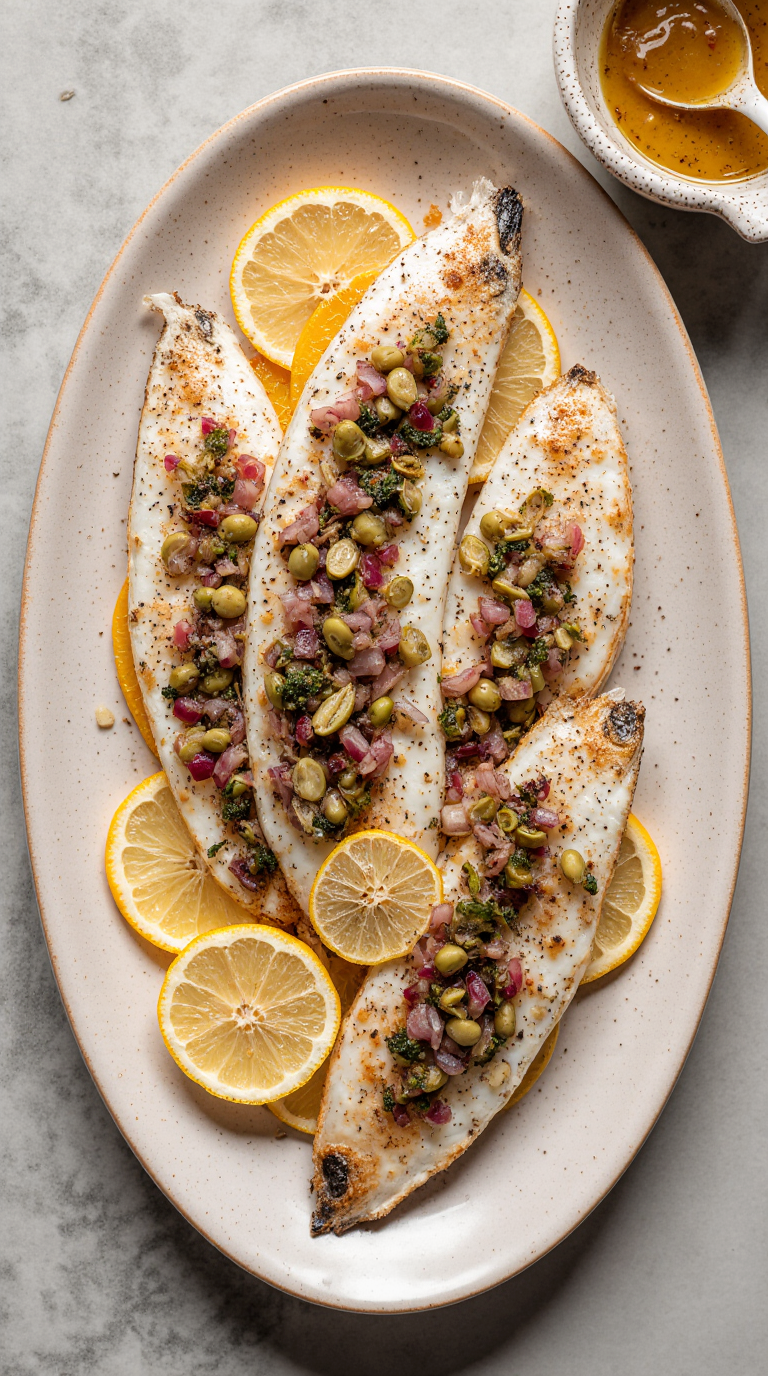
Lemon & Herb Baked White Fish with Olive Salsa
This white fish preparation focuses on precise oven temperature control to achieve flaky, moist texture while the olive salsa provides bright acidity and briny contrast. The method uses a quick herb marinade that penetrates without overwhelming the delicate fish, and baking at 400°F creates a light crust while keeping the interior tender. The olive salsa balances richness with freshness, cutting through the fish’s natural oils without masking its flavor.
Why this recipe works
Temperature precision. Baking at 400°F creates the ideal environment for white fish—hot enough to develop a light crust and cook through quickly, but not so hot that the exterior overcooks before the center is done. This temperature allows the fish proteins to coagulate gently rather than seizing tightly, resulting in the characteristic large, moist flakes of properly cooked white fish.
Marinade chemistry. The olive oil and lemon juice marinade serves multiple purposes: the oil carries fat-soluble flavors from the herbs and garlic into the fish, while the acid in the lemon juice gently denatures surface proteins, allowing the seasonings to penetrate slightly. The balance is crucial—too much acid and the fish becomes ceviche-like; too little and the flavors remain superficial.
Moisture management. Patting the fish dry before applying the marinade is non-negotiable. Surface moisture steams rather than bakes the fish, preventing proper browning and creating a watery texture. The oil in the marinade then creates a barrier that helps retain the fish’s natural moisture during cooking.
Flavor contrast engineering. The olive salsa provides three essential contrasts: briny (olives, capers), acidic (lemon juice), and fresh (herbs, tomatoes). This combination cuts through the richness of the baked fish without overwhelming its delicate flavor. The salsa’s texture contrast—chopped but not puréed—adds interest without competing with the fish’s flakiness.
Timing synchronization. The fish bakes in the time it takes to prepare the salsa, making this an efficient weeknight meal. The salsa ingredients benefit from 10-15 minutes of marinating time anyway, allowing flavors to meld while the fish cooks. This parallel preparation ensures both components reach their peak at the same moment.
Ingredients (cups & tablespoons only)
Fish & Marinade
- 4 (6 oz)white fish fillets
- 2 tbspolive oil
- 1lemon, zested & juiced
- 2 clovesgarlic, minced
- 1 tspdried oregano
- 1/2 tspdried thyme
- 1/4 tspred pepper flakes
- 1/2 tspsalt
- 1/4 tspblack pepper
Olive Salsa
- 1/2 cupKalamata olives, chopped
- 1/4 cupgreen olives, chopped
- 1/4 cupcherry tomatoes, diced
- 2 tbspred onion, diced
- 1 tbspcapers, drained
- 2 tbspfresh parsley, chopped
- 1 tbspfresh dill, chopped
- 2 tbspolive oil
- 1 tbsplemon juice
- 1/4 tspblack pepper
Recipe
- Prep oven and fish: Preheat oven to 400°F. Pat fish fillets completely dry with paper towels. Moisture on the surface prevents proper browning and creates steam that can make the fish watery.
- Make marinade: In small bowl, combine 2 tablespoons olive oil, zest from 1 lemon, 2 tablespoons lemon juice, 2 minced garlic cloves, 1 teaspoon oregano, 1/2 teaspoon thyme, 1/4 teaspoon red pepper flakes, 1/2 teaspoon salt, and 1/4 teaspoon black pepper. Whisk until emulsified.
- Marinate fish: Brush marinade generously over both sides of fish fillets. Arrange in single layer in baking dish. The marinade should coat evenly but not pool excessively underneath.
- Bake fish: Place in preheated oven and bake 10-12 minutes. The fish is done when it flakes easily with a fork but still appears moist. The internal temperature should reach 145°F.
- Prepare salsa: While fish bakes, combine 1/2 cup chopped Kalamata olives, 1/4 cup chopped green olives, 1/4 cup diced cherry tomatoes, 2 tablespoons diced red onion, 1 tablespoon capers, 2 tablespoons parsley, 1 tablespoon dill, 2 tablespoons olive oil, 1 tablespoon lemon juice, and 1/4 teaspoon black pepper.
- Rest fish: Remove fish from oven and let rest 2-3 minutes. This allows proteins to relax and redistribute juices throughout the fillets.
- Serve: Transfer fish to plates, top generously with olive salsa, and serve with additional lemon wedges. The salsa should be at room temperature for optimal flavor.
The fish continues to cook slightly after removal from oven due to residual heat. Remove when it just begins to flake and appears slightly underdone in the very center.
Nutrition (estimated)
| Nutrient | Amount |
|---|---|
| Calories | ~280 kcal |
| Total Fat | 14 g |
| Saturated Fat | 2 g |
| Trans Fat | 0 g |
| Cholesterol | 65 mg |
| Sodium | 480 mg |
| Total Carbohydrates | 6 g |
| Dietary Fiber | 2 g |
| Total Sugars | 2 g |
| Added Sugars | 0 g |
| Protein | 32 g |
| Vitamin D | 4 mcg |
| Calcium | 45 mg |
| Iron | 1.5 mg |
| Potassium | 620 mg |
Nutrition calculated with cod fillets and standard ingredient measurements. Values are estimates and will vary based on specific fish type and olive brands used.
Fish selection & preparation
Best fish types
Cod: mild, flaky, widely available. Halibut: firm, sweet, holds shape well. Tilapia: mild, economical, thin fillets. Haddock: similar to cod, slightly sweeter. Avoid oily fish like salmon or mackerel for this preparation.
Thickness guidelines
1/2-inch fillets: 8-10 minutes. 3/4-inch fillets: 10-12 minutes. 1-inch fillets: 12-14 minutes. Uniform thickness ensures even cooking. If fillets vary, place thicker parts toward oven edges.
Freshness indicators
Clear, bright eyes (whole fish). Firm flesh that springs back. Mild ocean scent, not fishy. No discoloration or drying around edges. Fresh fish should feel slippery, not slimy.
Baking science & temperature control
White fish contains delicate proteins that coagulate at relatively low temperatures (around 140-145°F). The 400°F oven temperature creates the ideal environment for gentle, even cooking without excessive moisture loss.
Protein coagulation stages
- 120-130°F: Proteins begin to denature, flesh becomes opaque
- 140-145°F: Optimal doneness—proteins fully coagulated but still moist
- 150°F+: Overcooked—proteins tighten excessively, squeezing out moisture
- 160°F+: Dry, tough, rubbery texture
The visual cue of “flaking easily” occurs around 145°F internal temperature. Using an instant-read thermometer provides the most accurate results, especially when working with unfamiliar fish types or thicknesses.
Salsa balance & flavor development
The olive salsa serves as both garnish and sauce, providing multiple flavor dimensions that complement the simple baked fish. Each ingredient contributes specific characteristics to the overall balance.
Flavor components
- Briny base: Kalamata olives (fruity, complex), green olives (sharp, salty), capers (pungent, acidic)
- Fresh contrast: Cherry tomatoes (sweet acidity), red onion (sharp crunch), parsley (clean freshness), dill (anise-like brightness)
- Liquid balance: Olive oil (richness carrier), lemon juice (acidic sharpness)
- Texture elements: Chopped olives (meaty bite), diced tomatoes (juicy pop), minced onion (crisp texture)
Let the salsa sit 10-15 minutes before serving to allow flavors to meld. The salt in the olives will draw moisture from the tomatoes and onions, creating a light natural dressing.
Timing & serving suggestions
Side dish pairings
Quinoa pilaf: absorbs salsa juices. Roasted asparagus: complements lemon notes. Couscous with herbs: quick, light base. Steamed green beans: simple, clean contrast.
Wine pairings
Sauvignon Blanc: citrus notes match lemon. Pinot Grigio: crisp, doesn’t overwhelm. Dry Rosé: bridges fish and salsa. Unoaked Chardonnay: buttery but light.
Meal timing
Best served immediately after baking. Fish waits better than salsa—prepare salsa components ahead but combine last minute. Leftover fish good cold but salsa best fresh.
Common mistakes (and quick fixes)
- Overcooked fish: Baked too long or oven too hot. Use thermometer and check early. If overcooked, serve with extra salsa and lemon to add moisture.
- Watery fish: Not patted dry or overcrowded pan. Ensure dry surface and space between fillets. Pour off excess liquid before serving.
- Bland fish: Insufficient seasoning or poor quality fish. Season aggressively and source fresh fish. The marinade should be flavorful on its own.
- Soggy bottom: Too much marinade pooling underneath. Brush on marinade rather than pouring. Use rack in baking dish if available.
- Bitter salsa: Over-processed olives or too much lemon pith. Chop olives by hand, not food processor. Use only lemon juice, not bitter pith.
- Separated salsa: Ingredients too wet or improperly chopped. Drain olives and tomatoes well. Uniform chopping ensures even distribution.
- Sticking to pan: Insufficient oil or wrong pan surface. Use well-oiled baking dish or parchment paper. Non-reactive pans prevent metallic flavors.
Substitutions & variations
Different seafood
- Sea bass: rich, buttery texture
- Snapper: firm, slightly sweet
- Grouper: mild, large flakes
- Mahi mahi: firm, steak-like
Different herbs
- Italian: basil + oregano
- French: tarragon + chervil
- Greek: mint + oregano
- Provençal: herbes de Provence
Different toppings
- Tomato-olive: add diced Roma tomatoes
- Citrus-herb: orange segments + mint
- Mediterranean: add feta cheese
- Spicy: add Calabrian chilies
Different techniques
- Pan-sear: crisp skin option
- Broil: quick, caramelized top
- En papillote: steam-bake in parchment
- Grill: smoky flavor, grill marks
Special diets
- Low-sodium: reduce olives, add herbs
- Dairy-free: naturally compliant
- Gluten-free: naturally compliant
- Paleo: naturally compliant
Enhancements
- Anchovy: 1 minced fillet in marinade
- Chili: add sliced fresno chili
- Preserved lemon: use in place of fresh
- Orange: zest and juice variation
Any substitution may affect cooking time, texture, and flavor balance. When substituting fish types, adjust cooking time based on thickness and oil content.
Equipment notes
- Baking dish: Glass or ceramic conducts heat evenly. Metal pans may cause hotter spots. Size should accommodate fillets without crowding—9×13 inch works for 4 fillets.
- Oven thermometer: Crucial for accuracy. Home ovens often run 25°F hot or cold, significantly affecting delicate fish cooking times.
- Instant-read thermometer: Most reliable doneness indicator. Insert into thickest part of thickest fillet, avoiding contact with baking dish.
- Cutting tools: Sharp chef’s knife for herb chopping. Olive pitter for efficient olive preparation. Microplane for lemon zesting.
- Mixing bowls: Small for marinade, medium for salsa. Non-reactive materials (glass, stainless) prevent metallic flavors from acidic ingredients.
- Paper towels: Essential for drying fish thoroughly. Moisture is the enemy of properly baked fish texture.
- Baking rack: Optional but helpful for air circulation. Elevates fish above any accumulated juices, preventing steaming.
Storage & reheating
- Refrigeration: Store leftover fish and salsa separately up to 2 days. Fish keeps better without salsa moisture. Cover tightly to prevent odors.
- Freezing: Freeze baked fish only (no salsa) up to 1 month. Wrap tightly in plastic then foil. Thaw in refrigerator overnight.
- Reheating fish: Best served cold or gently warmed. To reheat, place in 300°F oven 8-10 minutes until just warm. Microwave makes rubbery.
- Salsa storage: Best used fresh. If storing, drain excess liquid and use within 24 hours. The tomatoes will continue to release moisture.
- Make-ahead: Prepare salsa components separately, combine just before serving. Marinate fish up to 30 minutes before baking—longer and lemon juice will “cook” the fish.
- Leftover uses: Flake cold fish into salads. Use salsa as bruschetta topping. Combine with pasta for quick meal. Add to omelets or frittatas.
FAQ
Can I use frozen fish fillets?
Yes, but thaw completely in refrigerator overnight and pat very dry. Frozen fish releases more moisture during cooking, so increase baking time by 1-2 minutes and watch carefully.
My fish is sticking to the pan—what can I do?
Ensure adequate oil in marinade and use non-stick spray on baking dish. Let fish rest 2-3 minutes after baking—it will release naturally. Use thin spatula for removal.
Can I make this with skin-on fish?
Yes, but place skin-side down and don’t flip. The skin protects the flesh and becomes crisp. Increase baking time slightly for thicker skin varieties.
How do I know when the fish is done?
The fish should flake easily when tested with a fork at the thickest part, but still appear moist. The internal temperature should read 145°F. It will continue cooking slightly after removal.
Can I prepare the salsa ahead of time?
Yes, but combine all ingredients except tomatoes and herbs. Add those just before serving to maintain freshness and texture. Drain excess liquid if it sits more than an hour.
What if I don’t have fresh herbs?
Use 1/3 the amount of dried herbs in the marinade. For the salsa, the fresh herbs are essential—substitute with 1 teaspoon each dried parsley and dill, but flavor will be different.
Can I cook this at a different temperature?
Yes—375°F for 14-16 minutes (slower, more even) or 425°F for 8-10 minutes (faster, crisper exterior). Adjust time based on thickness and watch carefully.
Cook notes
- Dry fish thoroughly
- Check early, check often. Fish goes from perfect to overcooked in minutes. Use visual and temperature cues rather than strict timing.
- Let fish rest
- Taste salsa before serving
- Serve immediately
- Don’t overcrowd the pan
- Use fresh lemons