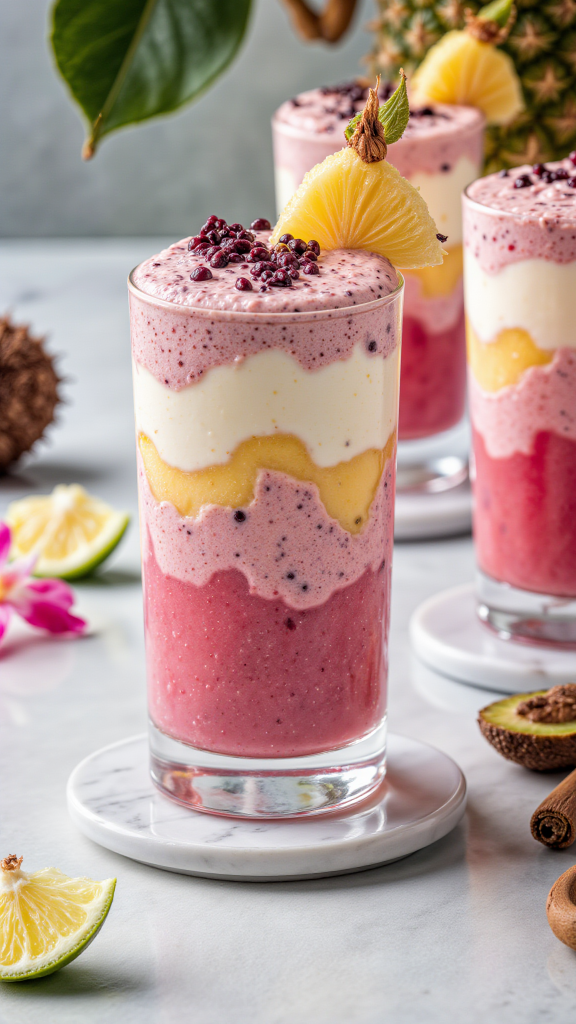
Layered tropical smoothie
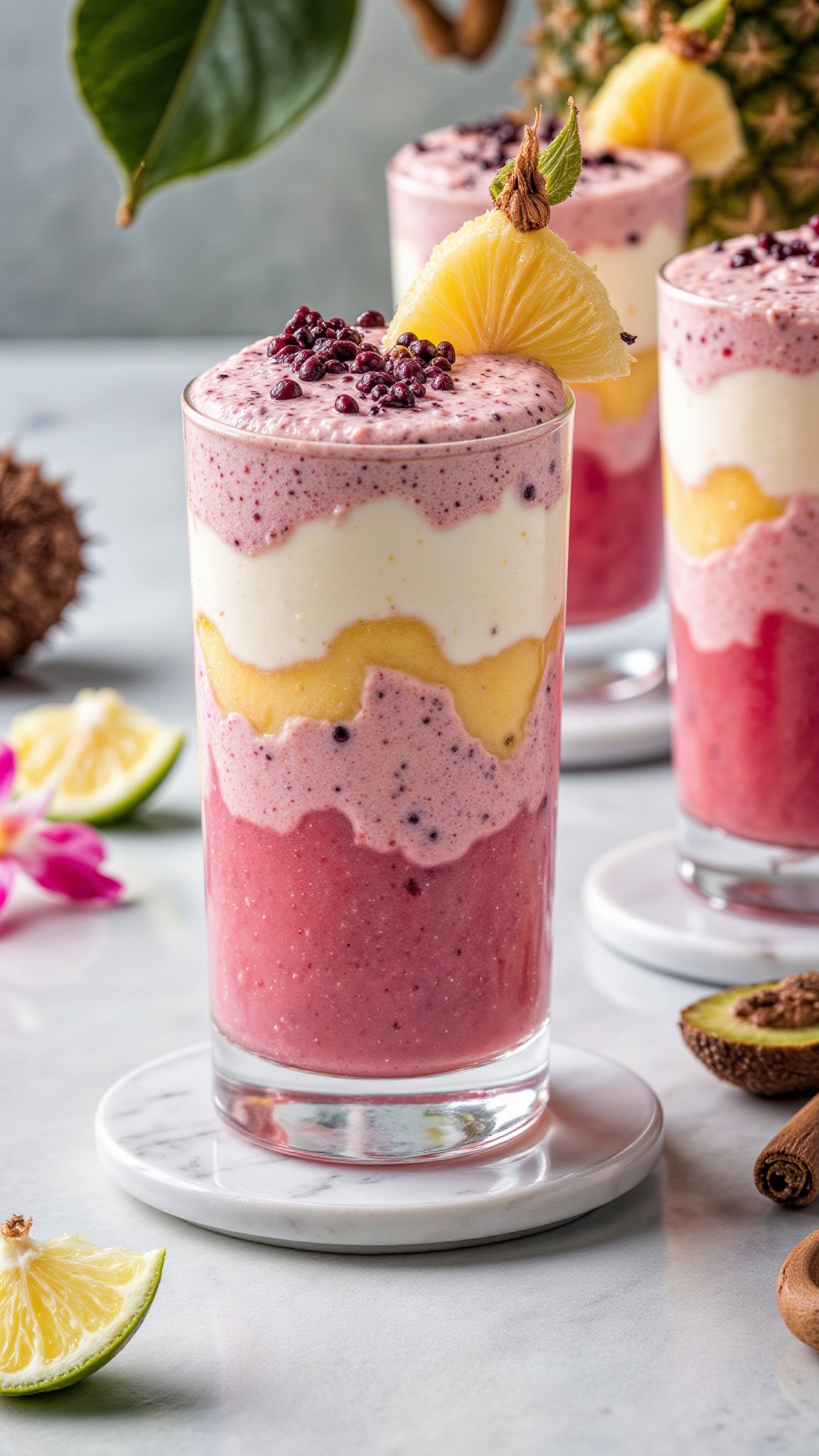
Layered Tropical Smoothie with Pineapple, Berry, and Yogurt Layers
This layered smoothie achieves clean separation between vibrant pineapple, deep berry, and creamy yogurt layers through precise thickness control and technique. The method focuses on frozen fruit ratios that create pourable but distinct textures, strategic liquid amounts that prevent blending, and layering physics that maintain definition. Each layer balances sweetness and acidity while contributing different nutritional profiles. The result works for Instagram-worthy presentation or practical meal prep, with adjustments for different blenders and serving timelines.
Why this recipe works
Density differential. Each layer is formulated with specific frozen-to-liquid ratios that create slight density variations. The pineapple layer (most liquid) sits heaviest, berry layer (medium) floats above it, and yogurt layer (thickest) stays on top. This natural stacking prevents mixing when poured correctly.
Viscosity control. The pineapple layer uses coconut water for fluidity, berry layer uses almond milk for medium thickness, and yogurt layer uses minimal liquid for maximum thickness. Each consistency is calibrated to pour without blending into adjacent layers when using the spoon technique.
Temperature management. All layers start with frozen components and minimal blending time to maintain chill. Warm layers thin out and blend together. The frozen fruit not only provides texture but also maintains the thermal barrier between layers for 15-20 minutes after assembly.
Acidity balance. Lime juice in the pineapple layer brightens the tropical flavor while slightly thickening the mixture via pectin activation. This creates cleaner separation from the berry layer without artificial thickeners.
Structural ingredients. Banana appears in two layers as a natural thickener and sweetness balancer. Its creamy texture helps each layer hold shape while providing consistent flavor bridge across the different fruit profiles.
Ingredients (cups & tablespoons only)
Pineapple Layer
- 1.5 cupsfrozen pineapple chunks
- 1/2banana, frozen
- 1/2 cupcoconut water
- 1 tbsplime juice, fresh
- 1 tsphoney (optional)
Berry Layer
- 1 cupfrozen mixed berries
- 1/2banana, frozen
- 1/2 cupalmond milk, unsweetened
- 1 tsphoney or maple syrup
- 1 tspchia seeds (optional)
Yogurt Layer
- 1 cupGreek yogurt, plain
- 1/2 cupice cubes
- 1 tbsphoney or maple syrup
- 1/2 tspvanilla extract
- 1-2 tbspmilk (if needed)
Garnishes & Toppings
- 1/4 cupfresh berries
- 2-3 slicesfresh pineapple
- 2 sprigsfresh mint
- 1 tbspcoconut flakes, toasted
- 1 tsphemp seeds (optional)
Recipe
- Prep ingredients: Measure all components for each layer separately. Have serving glasses ready. For best results, use clear glasses to see the layers.
- Make pineapple layer: In blender, combine frozen pineapple, frozen banana, coconut water, and lime juice. Blend on medium until smooth but still thick—it should mound slightly when dropped from spoon. Transfer to separate container.
- Make berry layer: Rinse blender briefly. Add frozen berries, frozen banana, almond milk, and honey. Blend until same consistency as pineapple layer—thick but pourable. Transfer to separate container.
- Make yogurt layer: Rinse blender. Add Greek yogurt, ice, honey, and vanilla. Blend until thick and creamy, like soft-serve ice cream. Add milk only if too thick to pour.
- First layer: Divide pineapple mixture evenly between two glasses, filling about 1/3 of each glass. Smooth surface with back of spoon.
- Second layer: Hold spoon upside down against inside of glass, just above pineapple layer. Slowly pour berry mixture over back of spoon so it spreads gently over pineapple layer without mixing.
- Third layer: Repeat spoon technique with yogurt layer, pouring even more slowly as this thickest layer wants to sink.
- Garnish and serve: Top with fresh berries, pineapple chunks, mint sprigs, and coconut flakes. Serve immediately with straw and long spoon.
Work quickly but calmly—the layers maintain separation best when all components are equally cold and assembled within 5 minutes of blending.
Thickness control & consistency
Pineapple layer test
When scooped with spoon, it should slowly slide off rather than pour. If too thick, add coconut water 1 tbsp at a time. If too thin, add 2-3 more frozen pineapple chunks and blend briefly.
Berry layer test
Should hold its shape when spooned but still be pourable. The berry seeds naturally thicken this layer. If too thin, add a few more frozen berries; if too thick, add almond milk 1 tbsp at a time.
Yogurt layer test
Should be thick enough to mound—think soft-serve consistency. It should slowly pour rather than flow. If too thin, add more ice; if too thick, add milk 1 tbsp at a time until correct consistency.
Layering physics & technique
Density principle. The pineapple layer is densest due to higher liquid content and fruit fiber. Berry layer is medium density from fruit pulp and seeds. Yogurt layer is lightest due to air incorporation during blending and protein structure. This natural order prevents mixing.
Spoon method science. Pouring over the back of a spoon disrupts the pour velocity, allowing the new layer to spread gently across the surface rather than plunging through. The curved spoon surface creates a wider dispersal pattern.
Temperature maintenance. All components must stay equally cold. If one layer warms significantly (from over-blending or room temperature ingredients), it will thin out and mix with adjacent layers. Work quickly and keep ingredients frozen until blending.
Pouring speed. The thicker the layer, the slower you should pour. Yogurt layer requires the most patience—imagine pouring cold honey rather than liquid. Rushing this step is the most common cause of blended layers.
Texture balance & mouthfeel
Pineapple layer texture. Should be smooth with slight fiber from pineapple. The coconut water provides clean hydration without dairy heaviness. Lime juice brightens and slightly thickens via natural pectin.
Berry layer complexity. Mixed berries provide varying seed textures and natural thickness from fruit pectins. The banana bridges sweetness between tart berries and sweet pineapple while adding creaminess.
Yogurt layer richness. Greek yogurt provides protein thickness and tangy contrast. The ice lightens what would otherwise be too dense a layer. Vanilla adds aromatic warmth that complements both fruit layers.
Combined drinking experience. When consumed, the straw pulls from all layers simultaneously, creating evolving flavor as different ratios reach the palate. The long spoon allows intentional mixing or layer-by-layer tasting.
Common mistakes (and quick fixes)
- Layers blending: Components too warm or poured too quickly. Ensure all ingredients are frozen/cold and use spoon method patiently.
- Pineapple layer too thin: Over-blended or insufficient frozen fruit. Add 2-3 more pineapple chunks and pulse briefly.
- Berry layer too seedy: Over-blended berries release too many seeds. Blend just until smooth, not ultra-puréed.
- Yogurt layer too thick: Won’t pour properly. Add milk 1 tbsp at a time until pourable but still thick.
- Separation over time: Natural in layered smoothies. Serve within 15 minutes or accept some blending as natural.
- Colors bleeding: Berry layer staining yogurt. Ensure proper thickness and pour yogurt layer even more slowly over spoon.
- Blender capacity issues: Overfilling blender creates uneven texture. Work in batches if your blender is under 48 oz capacity.
Substitutions & variations
Pineapple swaps
- Mango or peach instead of pineapple
- Orange juice instead of coconut water
- Add 1/4 cup spinach (color will change)
Different berry mixes
- Single berry type instead of mix
- Cherries (pitted) for deeper color
- Add 1 tbsp cocoa powder for chocolate-berry
Yogurt alternatives
- Coconut yogurt for vegan
- Skyr for higher protein
- Cottage cheese for extra protein
Alternative sweeteners
- Maple syrup instead of honey
- Dates (soaked) for whole food sweetening
- Stevia or monk fruit to reduce sugar
Superfood additions
- 1 tbsp protein powder in yogurt layer
- 1 tsp spirulina in pineapple layer
- 1 tbsp flax or chia seeds in any layer
Quick blend option
- Blend all ingredients together
- Texture will be uniform
- Still delicious, less visual impact
When substituting fruits, adjust liquid amounts based on natural water content and freezing characteristics of the alternative fruits.
Serving & presentation
- Glass selection: Clear glasses are essential for visual impact. Mason jars, parfait glasses, or smoothie-specific cups all work well.
- Garnish placement: Arrange fresh berries and pineapple chunks artistically on top. Place mint sprigs last to prevent wilting.
- Utensils: Provide both straw and long spoon—the straw for drinking, spoon for mixing or layer-by-layer tasting.
- Temperature service: Serve immediately after assembly. The layers maintain best separation when all components are equally cold.
- Photography timing: For social media, photograph within 5 minutes of assembly in natural light. The colors are most vibrant when freshly made.
Batching & make-ahead
Individual components
Make each layer up to 4 hours ahead. Store in separate airtight containers in refrigerator. The texture may thicken—whisk briefly before layering.
Freezer packs
Portion each layer into silicone molds or bags and freeze. Thaw in refrigerator 1-2 hours before assembling, or blend briefly if too thick.
Meal prep strategy
Prep fruit portions in bags for each layer. In morning, blend each bag with its liquid components, then assemble layers fresh.
Equipment notes
- Blender power: High-speed blenders create smoothest texture, but any blender works. Weaker blenders may require scraping sides and blending longer.
- Container strategy: Have 3 separate containers ready for each layer before blending. This prevents cross-contamination and allows quick assembly.
- Measuring precision: Use liquid and dry measuring cups appropriately. The 1/2 cup liquid measurements are critical for proper layer consistency.
- Spoon selection: Use tablespoon with deep bowl for best layering results. The curved surface creates ideal dispersion pattern.
- Glassware: Wide-mouth glasses are easiest for layering. Narrow glasses create taller, more dramatic layers but require more precision when pouring.
Nutrition (estimated)
| Nutrient | Amount |
|---|---|
| Calories | ~280 kcal |
| Total Fat | 2 g |
| Saturated Fat | 1 g |
| Carbohydrates | 58 g |
| Total Sugars | 42 g |
| Fiber | 6 g |
| Protein | 12 g |
| Sodium | ~120 mg |
| Vitamin C | ~90% DV |
| Calcium | ~25% DV |
Numbers are estimates and will vary based on specific ingredients, especially yogurt fat content, fruit sweetness, and exact measurements. Natural sugars from fruit comprise most of the sugar content.
Storage & timing considerations
- Immediate consumption: Best within 15 minutes of assembly. Layers maintain cleanest separation when freshly made and equally cold.
- Refrigeration: Store assembled smoothies up to 4 hours, but expect some blending of layers. The colors may also intensify as pigments diffuse.
- Component storage: Individual layers store separately for up to 24 hours. Whisk or re-blend briefly before assembling as separation may occur.
- Freezing: Freeze individual layers in separate containers for up to 1 month. Thaw in refrigerator overnight and re-blend if necessary.
- Travel considerations: Not recommended for transport. The layers will blend during movement. Assemble at destination if possible.
- Make-ahead limit: Maximum 4 hours ahead for best texture and visual appeal. The frozen element loses effectiveness over time.
FAQ
Can I make this with fresh fruit instead of frozen?
Yes, but you’ll need to adjust the texture. Use 1 cup fresh fruit + 1/2 cup ice instead of 1.5 cups frozen fruit for the pineapple layer, and 3/4 cup fresh berries + 1/4 cup ice for the berry layer. The layers may be slightly less distinct.
My layers keep blending together—what am I doing wrong?
Likely one of three issues: components not cold enough, pouring too quickly, or inconsistent thickness between layers. Ensure all ingredients are chilled, use the spoon method patiently, and test each layer’s consistency before assembling.
Can I make this vegan?
Yes—use plant-based yogurt, maple syrup instead of honey, and ensure all other ingredients are plant-based. The layers may behave slightly differently but will still work.
How do I clean the blender between layers quickly?
Rinse with cold water and wipe with paper towel. Don’t use soap between layers as residue can affect flavor. The small amount of cross-contamination between similar fruit layers is negligible.
Can I double this recipe?
Yes, but blend in batches if your blender is under 48 oz capacity. The layering technique remains the same, just with more volume per layer.
Why does my yogurt layer sink into the berry layer?
Your yogurt layer is likely too thin or your berry layer is too thick. Adjust consistencies so yogurt layer is thickest (soft-serve texture) and berry layer is medium thickness.
Cook notes
- Temperature is everything—all components must be equally cold for clean layers.
- Test each layer’s consistency before assembling—the spoon slide test is reliable.
- Use the spoon method patiently—rushing the pour guarantees blended layers.
- Clear glasses are non-negotiable for visual impact—you eat with your eyes first.
- Serve immediately—the layers are most distinct within the first 15 minutes.
- Don’t stress perfection—some natural blending creates beautiful marbling effects.