Double Chocolate Banana Loaf
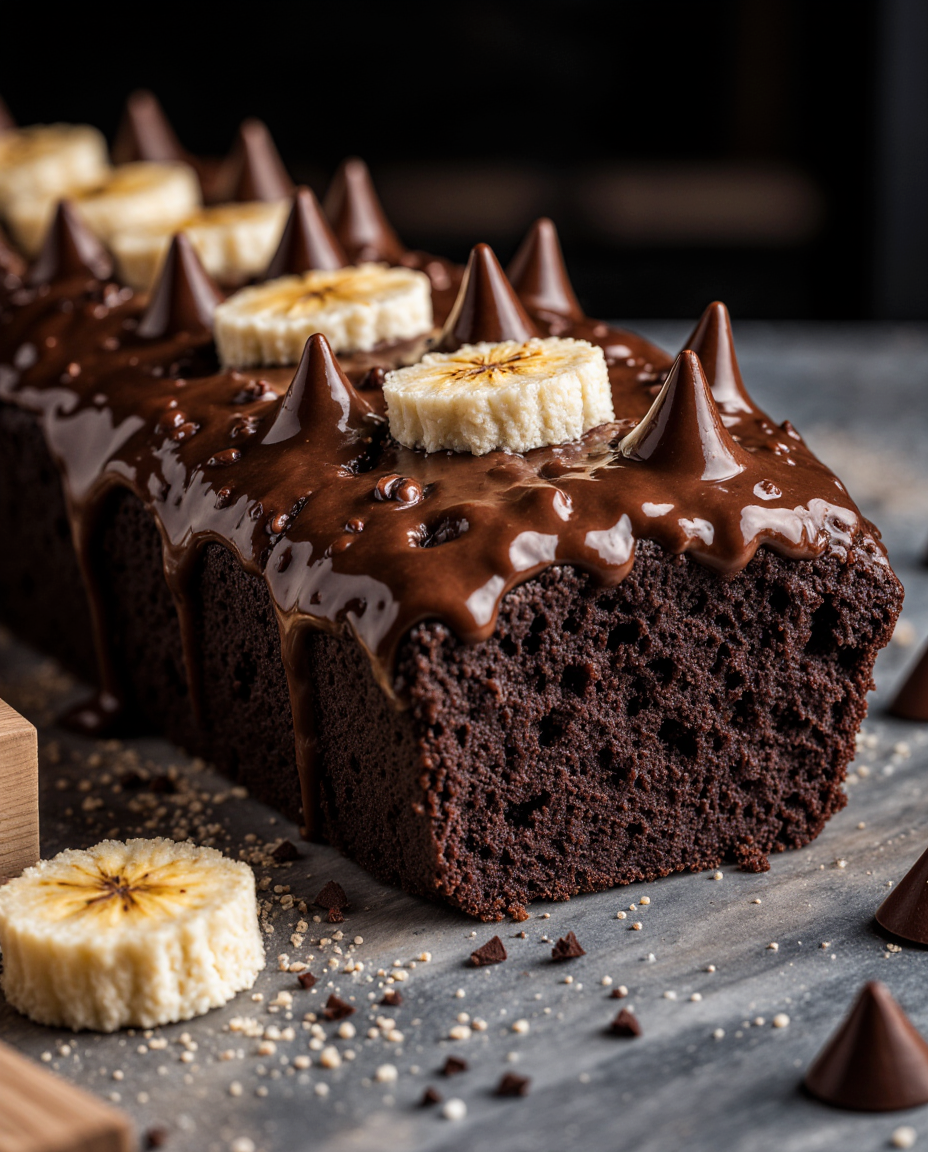
Double Chocolate Banana Loaf with Chocolate Icing
This double chocolate banana loaf achieves perfect moisture through precise banana ripeness and cocoa hydration, while the chocolate icing provides glossy finish without overwhelming sweetness. The method focuses on banana preparation that maximizes natural sweetness and moisture, cocoa integration that prevents dryness, and baking temperature that cooks through without drying edges. Everything here works for standard loaf pans with techniques that ensure domed top, tender crumb, and clean slices that hold the rich chocolate icing perfectly.
Why this recipe works
Banana ripeness science. Very ripe bananas (completely yellow with brown spots) provide maximum natural sweetness and moisture. The starch has converted to sugar, reducing the need for additional sweeteners while contributing to tender texture. The increased pectin content in overripe bananas also helps bind the loaf without making it dense.
Cocoa hydration technique. Natural cocoa powder is used in both the loaf and icing for its acidic properties that react with baking soda, creating lift and tender crumb. The cocoa is thoroughly incorporated into the wet ingredients first, allowing it to hydrate properly rather than remaining powdery, which can create dry spots in the finished loaf.
Fat distribution system. Melted butter rather than creamed butter distributes more evenly throughout the batter, coating the flour particles and preventing gluten development. This results in a more tender, cake-like crumb rather than a bread-like texture. The butter also carries the chocolate flavor effectively through the entire loaf.
Sugar balancing act. Brown sugar provides moisture from its molasses content while contributing caramel notes that complement both banana and chocolate. The 3/4 cup measurement provides adequate sweetness without overwhelming the natural banana flavor or making the loaf cloyingly sweet.
Icing consistency control. The icing uses a specific ratio of powdered sugar to liquid that creates a pourable but substantial glaze. The melted butter ensures the icing sets with a slight crust while remaining soft underneath, and the pinch of salt balances the sweetness while enhancing the chocolate flavor.
Ingredients (cups & tablespoons only)
Chocolate Banana Loaf
- 3very ripe bananas
- 1/2 cupbutter, unsalted, melted
- 3/4 cupbrown sugar, packed
- 2large eggs
- 1 tspvanilla extract
- 1 1/2 cupsall-purpose flour
- 1/2 cupcocoa powder
- 1 tspbaking soda
- 1/2 tspsalt
- 1 cupchocolate chips
Chocolate Icing
- 1 cuppowdered sugar
- 1/4 cupcocoa powder
- 3 tbspmilk or cream
- 2 tbspbutter, melted
- 1/2 tspvanilla extract
- 1 pinchsalt
Optional Additions
- 1/2 cupwalnuts or pecans
- 1/2 tspinstant espresso
- 1/4 tspcinnamon
Recipe
- Prep pan and oven: Preheat oven to 350°F. Grease 9×5 inch loaf pan and line with parchment paper, leaving overhang on long sides for easy removal.
- Mash bananas: In large bowl, mash bananas until smooth with few small lumps remaining. They should measure about 1 1/4 cups when mashed.
- Combine wet ingredients: Whisk melted butter into mashed bananas until well combined. Add brown sugar and whisk vigorously for 1 minute until smooth. Add eggs one at a time, whisking after each addition. Stir in vanilla.
- Whisk dry ingredients: In separate bowl, whisk together flour, cocoa powder, baking soda, and salt until thoroughly combined and no cocoa lumps remain.
- Combine wet and dry: Add dry ingredients to wet ingredients and fold gently with spatula until just combined. Some streaks of flour are okay—do not overmix.
- Add chocolate chips: Fold in chocolate chips until evenly distributed throughout the batter.
- Bake: Pour batter into prepared loaf pan and smooth top. Bake 60-65 minutes until toothpick inserted in center comes out with few moist crumbs (not wet batter).
- Cool properly: Let cool in pan 15 minutes, then use parchment to lift loaf out onto wire rack. Cool completely before icing (about 2 hours).
- Make icing: Whisk powdered sugar and cocoa powder together. Add melted butter, milk, vanilla, and salt. Whisk until smooth and pourable.
- Ice and serve: Drizzle icing over completely cooled loaf. Let set 30 minutes before slicing with serrated knife.
The loaf must be completely cool before icing—warm loaf will melt the icing and create a messy appearance.
Banana preparation & ripeness
Ripeness indicators
Look for bananas with brown spots covering at least 50% of the peel. The fruit should be very soft and sweet-smelling. The starch has converted to sugar at this stage.
Mashing technique
Mash until smooth with few small lumps. Over-mashing can make the loaf gummy, while under-mashing leaves chunks that create uneven texture.
Measuring accuracy
3 medium bananas should yield about 1 1/4 cups mashed. Measure after mashing for accuracy. Too much banana makes the loaf dense; too little makes it dry.
Chocolate balance & cocoa science
Cocoa powder selection. Natural cocoa powder (not Dutch-process) works best with the baking soda in this recipe. The acidity in natural cocoa reacts with the alkaline baking soda to create lift and tender texture. Dutch-process cocoa may result in a denser loaf unless you adjust the leavening.
Chocolate chip distribution. The chocolate chips provide pockets of melted chocolate throughout the loaf. Tossing them with 1 teaspoon of the flour mixture before folding in helps prevent them from sinking to the bottom during baking. Semi-sweet chips provide the best flavor balance against the sweet banana.
Cocoa hydration importance. Cocoa powder is highly absorbent and can create dry spots if not properly hydrated. Incorporating it with the other dry ingredients first ensures even distribution. The moisture from the bananas and butter properly hydrates the cocoa during mixing and baking.
Flavor layering. The double chocolate approach (cocoa in batter plus chocolate chips) creates depth rather than one-note chocolate flavor. The cocoa provides the base chocolate flavor while the chips add texture and bursts of richer chocolate.
Sweetness calibration. The combination of banana natural sugars, brown sugar, and chocolate creates a balanced sweetness profile. The brown sugar’s molasses notes complement both the banana and chocolate without making the loaf overly sweet.
Icing technique & consistency
The icing should be thick enough to coat but thin enough to drizzle, setting with a slight crust while remaining soft underneath.
Icing consistency levels
- Too thick: Won’t drizzle, sits in clumps. Add milk 1 tsp at a time until pourable.
- Too thin: Runs off loaf completely. Add powdered sugar 1 tbsp at a time to thicken.
- Ideal consistency: Slowly ribbons off whisk, coats back of spoon thickly but evenly.
Sift powdered sugar and cocoa together to prevent lumps in the icing. Small lumps won’t dissolve once liquid is added.
Common mistakes (and quick fixes)
- Dry loaf: Overbaked or overmixed. Check at 60 minutes and mix only until combined. Brush with simple syrup if already baked.
- Dense texture: Overmixed or too much banana. Mix gently and measure bananas after mashing.
- Sunken center: Underbaked or too much leavening. Use fresh baking soda and test doneness properly.
- Burnt edges: Oven too hot or dark pan. Use light-colored pan and check oven temperature with thermometer.
- Icing too runny: Too much liquid or warm butter. Let icing thicken 5 minutes or add more powdered sugar.
- Chocolate chips sunk: Not tossed with flour or batter too thin. Toss chips with 1 tsp flour before adding.
- Sticking to pan: Insufficient greasing or removed too soon. Grease thoroughly and let cool 15 minutes before removing.
Substitutions & variations
Different flours
- Whole wheat pastry flour
- Gluten-free 1:1 blend
- Spelt flour for nutty flavor
Alternative sweeteners
- Maple syrup instead of brown sugar
- Coconut sugar for lower GI
- Honey (reduce other liquids)
Different chocolates
- Dark chocolate chips for less sweet
- Milk chocolate for sweeter version
- White chocolate chips for contrast
Additional ingredients
- 1/2 cup toasted walnuts or pecans
- 1/2 cup shredded coconut
- 1/4 cup peanut butter swirled in
Special diets
- Vegan: flax eggs + plant-based butter
- Dairy-free: oil + dairy-free chocolate
- Reduced sugar: 1/2 cup sugar + extra banana
Extra flavors
- 1 tsp instant espresso powder
- 1/2 tsp orange zest in batter
- 1/4 tsp almond extract with vanilla
When substituting liquid sweeteners like maple syrup, reduce other liquids slightly and expect a denser, moister result. The baking time may need adjustment.
Serving & presentation
- Slicing technique: Use serrated knife and gentle sawing motion for clean slices. The loaf is tender and can crumble if sliced with downward pressure.
- Plating style: Serve slices on individual plates with the icing side up. The marbled interior and glossy icing create visual appeal.
- Garnish options: Fresh banana slices, chocolate shavings, or a dusting of powdered sugar complement the loaf without overwhelming it.
- Temperature service: Best at room temperature when the chocolate chips are slightly firm but the crumb is soft. Can be served slightly warm if preferred.
- Accompaniments: Whipped cream, vanilla ice cream, or a glass of cold milk balance the richness. Coffee or tea make excellent beverage pairings.
Batching & make-ahead
Batter preparation
Make batter up to 24 hours ahead. Store covered in refrigerator. Let come to room temperature before baking for best rise.
Baked loaf
Bake up to 3 days ahead. Store wrapped at room temperature. The flavor actually improves over the first 24 hours.
Freezing
Freeze un-iced loaf up to 3 months. Wrap tightly in plastic then foil. Thaw at room temperature and ice before serving.
Equipment notes
- Loaf pan size: 9×5 inch standard loaf pan works best. 8×4 will make a taller loaf that may need longer baking; 10×5 will be shorter and bake faster.
- Pan material: Light-colored metal pans promote even browning. Dark pans may cause over-browning—reduce temperature by 25°F if using dark metal.
- Mixing tools: Use whisk for wet ingredients and spatula for combining with dry. Electric mixer can overmix—hand mixing is preferred.
- Measuring tools: Use dry measuring cups for flour and cocoa, liquid measuring cup for melted butter. Spoon and level flour for accuracy.
- Cooling rack: Essential for proper cooling. Air circulation prevents soggy bottom and ensures even cooling before icing.
Nutrition (estimated)
| Nutrient | Amount |
|---|---|
| Calories | ~380 kcal |
| Total Fat | 18 g |
| Saturated Fat | 10 g |
| Carbohydrates | 55 g |
| Total Sugars | 35 g |
| Fiber | 4 g |
| Protein | 6 g |
| Sodium | ~280 mg |
| Potassium | ~15% DV |
Numbers are estimates and will vary based on specific ingredients, especially banana size, chocolate type, and exact measurements. Using reduced-sugar chocolate chips lowers sugar content.
Storage & shelf life
- Room temperature: Store wrapped in plastic or in airtight container up to 3 days. The icing will remain soft but set.
- Refrigeration: Can be refrigerated up to 1 week, but may dry out slightly. Bring to room temperature before serving.
- Freezing: Freeze un-iced loaf up to 3 months. Wrap tightly in multiple layers. Ice after thawing.
- Texture changes: The loaf becomes more moist and flavorful over the first 24 hours as the ingredients meld.
- Icing storage: Iced loaf stores well at room temperature. Refrigeration may cause condensation on the icing.
- Best consumed: Within 3 days for optimal texture. After 5 days, it may become dry or stale.
FAQ
Can I use Dutch-process cocoa instead of natural?
Yes, but you’ll need to adjust the leavening. Replace baking soda with 2 teaspoons baking powder. The flavor will be slightly different—darker and less acidic.
My loaf is browning too quickly—what should I do?
Tent with foil after 45 minutes of baking. This will slow browning while allowing the center to continue cooking through.
Can I make this without eggs?
Yes—use 2 flax eggs (2 tbsp ground flax + 6 tbsp water, let gel 15 minutes) or commercial egg replacer. The texture will be slightly denser but still delicious.
Why did my chocolate chips sink to the bottom?
Your batter was likely too thin or the chips weren’t tossed with flour. Next time, toss chips with 1 teaspoon flour before folding in, and don’t overmix the batter.
Can I double this recipe?
Yes—double all ingredients and divide between two 9×5 loaf pans. Baking time may be slightly longer—start checking at 65 minutes.
How do I know when the loaf is done baking?
Toothpick inserted in center should come out with a few moist crumbs, not wet batter. The edges should pull away slightly from the pan, and the top should spring back when lightly pressed.
Cook notes
- Use very ripe bananas—this is non-negotiable for sweetness and moisture.
- Don’t overmix the batter—some streaks are better than overmixed.
- Cool completely before icing—warm loaf melts the icing.
- Use serrated knife for slicing—prevents crumbling of tender loaf.
- Store wrapped tightly—prevents drying and maintains moisture.
- Let flavors develop—the loaf tastes even better the next day.