Crème Brûlée Cheesecake Cupcakes
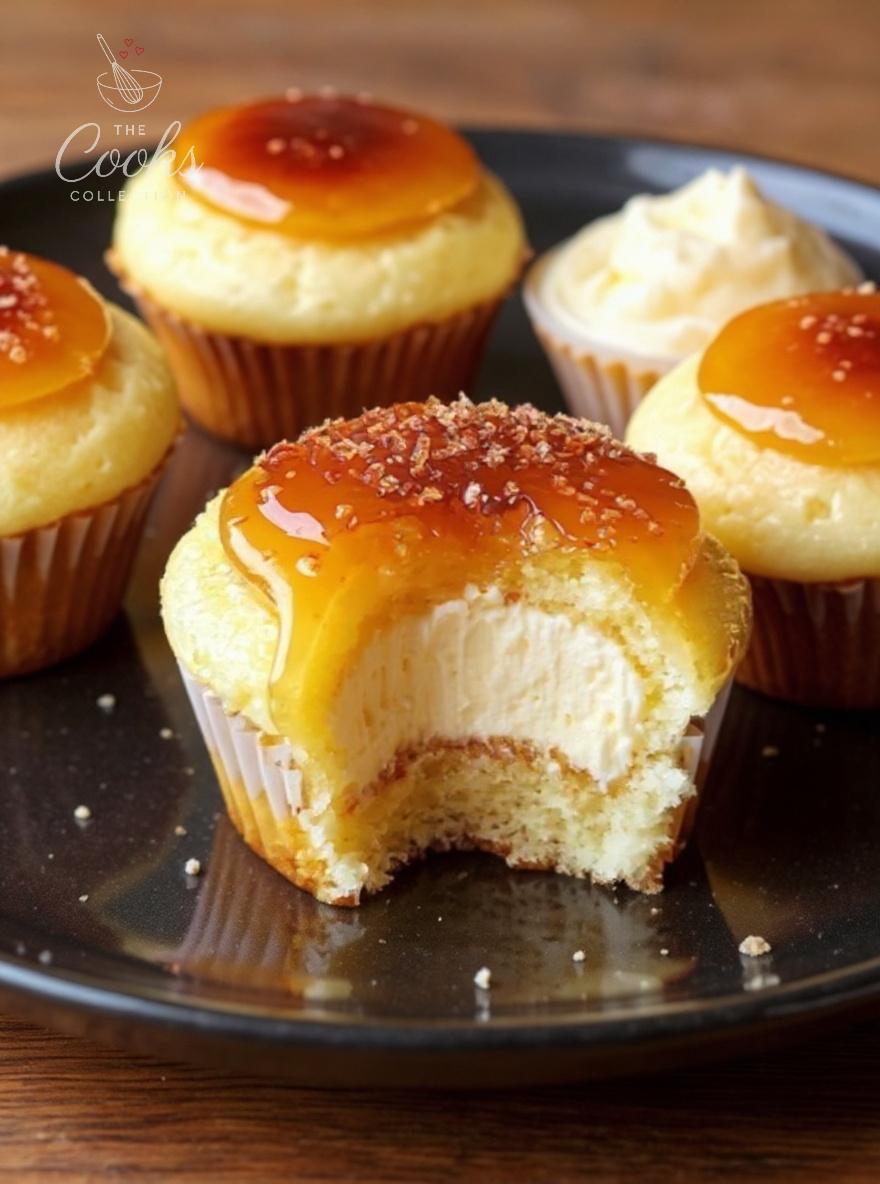
Crème Brûlée Cheesecake Cupcakes
Read this first: These look fancy but they are straight-shot simple. You bake a tender vanilla cupcake, carve a small well, pipe in an ultra-smooth cheesecake custard, then cap it. A short low-temp bake sets the custard without a water bath. A thin caramel disk goes on top and hardens into a shiny cap you can crack with a spoon. The texture contrast—pillowy crumb, cool custard, glassy caramel—is the point.
Why this recipe works
No water bath, no cracks
The cheesecake core is small and shielded by the cupcake walls. A six-minute bake at 300 F sets proteins slowly so the center stays creamy without a bain-marie. The cornstarch adds just enough insurance to prevent weeping.
Caramel cap you can make ahead
Instead of brûléeing each cupcake to order, you pour quick caramel disks on a silicone mat. They firm in minutes, store airtight, and stick perfectly when placed on chilled cupcakes. If you like the classic brûlée look, dust with a pinch of sugar and give a fast torch kiss.
Moist crumb that stays soft in the fridge
A small splash of oil in a butter-based batter keeps the texture soft even when chilled. A light brush of vanilla syrup adds insurance without turning the cake soggy.
Everything is measured in cups and tablespoons. Temperatures and times are dialed for a home oven.
Equipment
- Standard 12-cup muffin tin plus a second tin or two extra wells
- Paper liners
- Two mixing bowls, whisk, and rubber spatula
- Hand mixer for the cheesecake filling
- Small paring knife or 1-inch round cutter
- Small saucepan for syrup and caramel
- Silicone baking mat or lightly oiled foil for disks
- Kitchen torch (optional) or a hair dryer for softening disks
Ingredients (cups and tablespoons only)
Vanilla Cupcakes
- 1 1/2 cupsall-purpose flour
- 1 tspbaking powder
- 1/4 tspbaking soda
- 1/2 tspfine salt
- 1/2 cupunsalted butter, melted and cooled
- 3/4 cupgranulated sugar
- 2large eggs, room temp
- 1 tspvanilla extract
- 3/4 cupwhole milk, room temp
- 1 tbspneutral oil
Optional Moisture Brush
- 1/4 cupwater
- 2 tbspsugar
- 1/2 tspvanilla
Cheesecake Custard
- 8 ozcream cheese, brick style, room temp
- 1/3 cupgranulated sugar
- 1large egg yolk
- 1 tspvanilla
- 1/3 cupsour cream
- 1 tbspcornstarch
- pinchfine salt
Caramel Disks
- 1 cupgranulated sugar
- 1/4 cupwater
- 1 tbsplight corn syrup or honey
- 1/4 cupheavy cream, warmed
- 2 tbspunsalted butter
- pinchsalt
Step-by-Step Method
- Prep the tins. Heat the oven to 350 F. Line a 12-cup muffin pan and place two more liners in a second pan. Lightly mist liners with nonstick spray (optional, helps with clean peel).
- Mix the cupcake batter. Whisk flour, baking powder, baking soda, and salt. In a second bowl, whisk melted butter, sugar, eggs, vanilla, milk, and oil until smooth and emulsified. Fold in dry ingredients just until combined—no streaks, no overmixing.
- Fill and bake. Portion about 2 tablespoons batter into each liner (roughly 2/3 full). Bake 16 to 19 minutes. Tops should spring back and a toothpick near the edge returns moist crumbs. Do not overbake; you want a tender crumb that will chill well. Cool 5 minutes in the pan, then move to a rack.
- Optional syrup. Simmer water and sugar 2 minutes; cool and stir in vanilla. Brush each warm cupcake with a light coat. You are not soaking—just giving a moisture cushion for later refrigeration.
- Make the cheesecake filling. Beat cream cheese and sugar on medium until glossy and lump-free, about 1 minute. Beat in egg yolk, vanilla, sour cream, cornstarch, and salt until silky. Chill 10 minutes to thicken; it will pipe cleaner.
- Core the cupcakes. Using a small knife, cut a 1-inch circle, going about 3/4 of the way down, and lift out the plug. Trim off the bottom of the plug and save the top 1/4-inch as a lid. Keep the wall and base intact.
- Fill and set the custard. Pipe or spoon filling into each cavity to just below the rim. Cap with the saved cake lid. Arrange cupcakes back in the pans. Bake at 300 F for 6 minutes—this is enough to gently set the custard without drying the cake. Cool to room temp, then chill 30 to 45 minutes to firm up.
- Cook the caramel. Line a sheet pan with a silicone mat. Combine sugar, water, and corn syrup in a light-colored saucepan. Bring to a boil over medium without stirring; wash down any sugar crystals with a wet pastry brush. Cook to a medium amber color. Off heat, carefully whisk in warm cream and butter; return to low heat 30 seconds to smooth. Aim for a pourable but thick syrup.
- Pour disks. Working quickly, spoon 1 tablespoon caramel onto the silicone mat and spread into rounds about 2 inches across, slightly thicker in the center than the edges. You want 14 disks. Let cool 10 to 12 minutes until they lift cleanly with a thin spatula and are firm yet slightly bendy.
- Cap the cupcakes. Place a chilled cupcake near the tray and set a caramel disk on top. The cold cupcake helps the caramel seize and adhere. If a disk has set too hard, give it a 2-second pass with a hair dryer or a fast swipe with a torch held high.
- Optional brûlée speckle. Sprinkle a pinch of superfine sugar over each cap and give a quick kiss with the torch to blister the surface. Do not linger or you will melt the disk.
- Hold and serve. Refrigerate, uncovered, 10 minutes to fully set the caps. Cover loosely and keep chilled up to 24 hours. Serve cold so the cap stays snappy. Crack with a spoon like classic crème brûlée.
Timeline: cupcakes 20 minutes, cooling and coring 20 minutes, custard 10 minutes, short set bake 6 minutes plus chill, caramel 15 minutes, assembly 10 minutes.
Key Visual Cues
Edges lightly golden; centers spring back. A dry toothpick means you went too far. Err on moist—carryover heat finishes the bake.
After the 300 F bake, centers should jiggle slightly but not flow. Chilling firms them to a clean slice.
Disks should be glossy and firm enough to lift, with just a little flex. If they bend like taffy, cook the caramel a shade darker next time.
Substitutions and Variations
Espresso brûlée
Stir 1 tbsp instant espresso into the warm caramel before pouring. Add 1/2 tsp espresso powder to the cupcake batter for a latte profile.
Salted honey cap
Swap corn syrup with honey in the caramel and finish each disk with a few grains of flaky salt.
Lemon custard
Add 1 tbsp lemon juice and 1 tsp zest to the cheesecake filling; reduce vanilla to 1/2 tsp. Cap with pale caramel or a thin lemon curd spooned and torched lightly.
Chocolate shell
Skip caramel and spoon 1 tbsp warm ganache (1/2 cup chips + 1/4 cup cream) over each chilled cupcake. Not brûlée, but an easy glossy finish.
Gluten-free
Use a 1:1 gluten-free flour blend. Keep the batter slightly thicker by holding back 1 tbsp milk.
Dairy-light
Use lactose-free cream cheese and lactose-free whole milk. The caramel still uses butter; swap with 2 tbsp neutral oil for a firmer snap.
Make-Ahead, Storage, Freezer
- Day before: Bake, core, fill, and set. Keep covered and chilled without caps. Pour and store caramel disks airtight at room temp between sheets of parchment.
- Hold time: Capped cupcakes keep 24 hours chilled. After that, the cap can pick up fridge moisture and dull.
- Freeze: Freeze uncapped, custard-filled cupcakes on a tray until firm, then wrap and freeze up to 2 months. Thaw overnight in the fridge and cap with fresh caramel.
- Transport: Keep cold. Carry disks separately in a box and cap on site for the cleanest look.
Troubleshooting
- Caramel sticks to the mat and won’t lift: You poured it too thin or pulled too soon. Wait another 3 to 5 minutes. Next time, cook a shade darker and make slightly thicker puddles.
- Disks gooey on cupcakes: Cupcakes were warm or the fridge too humid. Chill cupcakes hard before capping. If needed, chill capped cupcakes uncovered 10 minutes to dry the surface.
- Custard leaked: You cored too deep or sliced through the base. Leave a good 1/2-inch bottom. The short set bake at 300 F also prevents leaking.
- Cheesecake grainy: Cream cheese was cold or overbeaten. Start at room temp and mix only to smooth. Cornstarch helps guard against curdling.
- Caps sliding: Use a tiny smear of caramel on the cake before placing the disk, or torch the underside of the disk for one second to tack it in place.
Nutrition (estimate per cupcake)
| Item | Amount (approx) |
|---|---|
| Calories | ~360 kcal |
| Total Fat | 20 g |
| Saturated Fat | 12 g |
| Carbohydrates | 40 g |
| Sugars | 29 g |
| Protein | 5 g |
| Sodium | ~220 mg |
Numbers swing with how thick you pour the caramel and how large you core the cakes.
FAQ
Do I need a torch?
No. The caramel disk gives crack and shine without torching. If you want freckles, dust with superfine sugar and hit with a very fast torch pass, or leave plain and glossy.
Can I skip the cornstarch in the custard?
You can, but a small amount keeps the custard smooth and stable with the short set bake. Without it, chill at least 1 hour before capping.
Why use both butter and oil in the batter?
Butter gives flavor; oil keeps the crumb soft when chilled. It is the combo that makes these still plush straight from the fridge.
How do I keep the caps from sticking to wrappers when stacking?
Chill the capped cupcakes uncovered 10 minutes, then box in a single layer with parchment dividers. Do not stack if you want perfect tops.
Can I flavor the custard?
Yes. Stir in 1 tbsp lemon juice and 1 tsp zest, or 2 tbsp caramel sauce (reduce sugar to 1/4 cup), or 1 tbsp cocoa sifted in.
Serving Notes
- Serve cold for maximum crack. At room temp the caps soften in about 20 minutes.
- Plate with a tiny pinch of flaky salt on the cap to sharpen the caramel.
- For photos, wipe the caramel edge with a warm knife to gloss it before shooting.
Yes, you can make minis: bake batter in a 24-cup mini pan 10 to 12 minutes, use a melon baller to core, bake filled minis at 300 F for 4 minutes, and pour nickel-size caramel caps.