Creamy Shrimp & Mushroom Pasta with Burrata
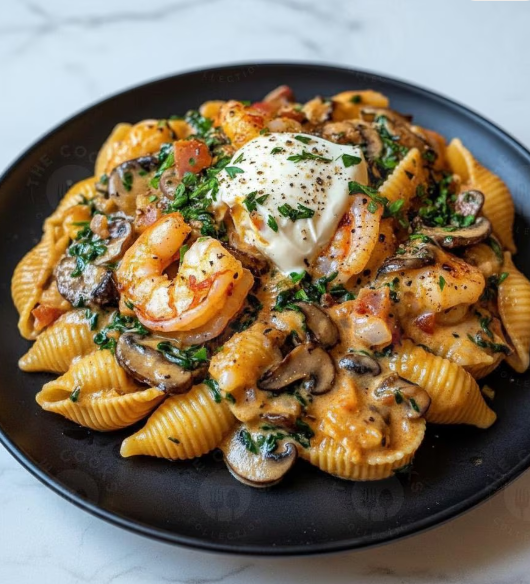
Creamy Shrimp & Mushroom Pasta with Burrata
This creamy shrimp and mushroom pasta with burrata achieves perfect texture and flavor balance through precise shrimp cooking, proper mushroom browning, and careful sauce emulsion. The method focuses on creating a luxurious cream sauce that clings to every strand of pasta while allowing the natural sweetness of shrimp and earthiness of mushrooms to shine through. The result is restaurant-quality pasta with striking visual appeal from the torn burrata centerpiece, balanced rich-savory flavor profile, and technical precision that ensures perfectly cooked proteins and ideal sauce consistency.
Why this recipe works
Shrimp cooking technique and timing. Large shrimp (21-25 count) provide the ideal meaty texture that stands up to the rich sauce without becoming rubbery. The quick sear over medium-high heat creates a lightly browned exterior while keeping the interior tender and moist. Removing shrimp from the pan after cooking prevents overcooking when they’re added back later. The pat-drying step before seasoning ensures proper browning rather than steaming, creating deeper flavor development through Maillard reaction. The 1-2 minute per side cooking time is calibrated to reach the perfect internal temperature of 120°F before carryover cooking completes the process.
Mushroom preparation and flavor development. Cremini mushrooms offer deeper flavor than white button mushrooms while remaining affordable and widely available. The sliced preparation maximizes surface area for browning, which develops umami compounds through caramelization. Cooking mushrooms in the same pan after shrimp utilizes the fond (browned bits) left from searing, incorporating those flavor compounds into the sauce. The initial high-heat cooking without moving allows proper browning, while the later stirring ensures even cooking. The mushroom’s natural moisture release and reabsorption helps concentrate their earthy flavor.
Sauce emulsion and consistency control. The combination of heavy cream, broth, and Parmesan creates a stable emulsion that coats the pasta without breaking. The reduced wine provides acidity that balances the richness while deglazing the pan. The pasta water reservation is crucial – the starch acts as a natural emulsifier and thickener, helping the sauce cling to each pasta strand. The gradual addition of pasta water allows precise control over sauce consistency, from creamy to more liquid based on preference. The final butter addition (monter au beurre) creates a glossy finish and enhances mouthfeel.
Burrata integration and temperature contrast. Adding room temperature burrata at the end provides dramatic visual appeal and creamy textural contrast to the warm pasta. The cool, soft interior of the burrata creates temperature variation that enhances the eating experience. Tearing rather than slicing the burrata creates rustic appearance and allows the creamy center to spill onto the pasta naturally. The mild, milky flavor of burrata complements rather than competes with the other ingredients, providing richness without overwhelming the shrimp and mushroom flavors.
Flavor balancing and layering. The lemon juice and zest provide bright acidity that cuts through the richness of the cream sauce. The fresh herbs (parsley and thyme) add aromatic complexity that dried herbs cannot match. The optional red pepper flakes introduce subtle heat that enhances other flavors without making the dish spicy. The Parmesan contributes umami depth and saltiness that enhances the natural flavors of all components. Each ingredient serves multiple purposes in the flavor profile, creating a dish greater than the sum of its parts.
Ingredients (cups & tablespoons only)
Pasta & Proteins
- 12 ozlinguine or fettuccine
- 1 lblarge shrimp, peeled
- 2 ballsburrata cheese
- 8 ozcremini mushrooms
Sauce & Aromatics
- 1 cupheavy cream
- 1/2 cupchicken broth
- 1/2 cupParmesan cheese
- 1/4 cupwhite wine
- 3 tbspunsalted butter
- 2 tbspolive oil
- 1 tbsplemon juice
- 1 tsplemon zest
- 3 clovesgarlic, minced
- 1 wholeshallot, chopped
Herbs & Seasonings
- 1/4 cupfresh parsley
- 2 tspfresh thyme
- 1/2 tspred pepper flakes
- to tastesalt & black pepper
Recipe
- Cook pasta: Bring large pot of salted water to boil (1 tablespoon salt per gallon). Add 12 oz linguine and cook according to package directions until al dente. Reserve 1 cup pasta water before draining. Do not rinse pasta.
- Prepare shrimp: Pat 1 lb shrimp dry with paper towels. Season generously with salt and black pepper. Heat 1 tbsp olive oil in large skillet over medium-high heat until shimmering.
- Sear shrimp: Add shrimp in single layer, working in batches if necessary. Cook 1-2 minutes per side until pink and opaque. Remove from skillet and set aside.
- Cook mushrooms: In same skillet, melt 1 tbsp butter with remaining 1 tbsp olive oil. Add 8 oz sliced mushrooms and cook without moving for 2-3 minutes until browned on one side.
- Add aromatics: Stir mushrooms and continue cooking until tender and browned. Add 1 chopped shallot and 3 cloves minced garlic, cooking 1 minute until fragrant.
- Deglaze pan: Add 1/4 cup white wine, scraping bottom of pan to release browned bits. Simmer until wine is reduced by half, about 2 minutes.
- Build sauce: Add 1/2 cup broth, 1 cup heavy cream, and 2 tsp fresh thyme. Simmer 3-4 minutes until slightly reduced. Stir in 1/2 cup Parmesan until melted and smooth.
- Combine elements: Return shrimp to skillet. Add cooked pasta and remaining 2 tbsp butter, tossing to combine and melt butter.
- Adjust consistency: Add 1 tbsp lemon juice, 1 tsp lemon zest, and pasta water 1/4 cup at a time until sauce reaches desired consistency.
- Final seasonings: Season with salt, pepper, and 1/2 tsp red pepper flakes if using. Stir in 1/4 cup chopped parsley.
- Serve immediately: Divide among bowls. Top each with torn burrata, additional herbs, and black pepper. The contrast of warm pasta and cool burrata is essential.
The sauce will continue to thicken as it sits. For leftovers, reserve extra pasta water to thin when reheating. The burrata should always be added fresh – do not incorporate into the pasta before storage as it will break down and become grainy.
Nutrition (estimated)
| Nutrient | Amount |
|---|---|
| Calories | ~680 kcal |
| Total Fat | 32 g |
| Saturated Fat | 15 g |
| Trans Fat | 0.5 g |
| Cholesterol | 285 mg |
| Sodium | 980 mg |
| Total Carbohydrates | 65 g |
| Dietary Fiber | 4 g |
| Total Sugars | 6 g |
| Added Sugars | 2 g |
| Protein | 38 g |
| Vitamin D | 2.5 mcg |
| Calcium | 420 mg |
| Iron | 4 mg |
| Potassium | 680 mg |
Nutrition calculated with standard ingredient measurements and includes all sauce components. Values are estimates and will vary based on specific brands and exact measurements. Using half-and-half instead of heavy cream will lower fat content by approximately 12g per serving.
Shrimp science & selection principles
Shrimp sizing
Large shrimp (21-25 count) ideal texture. Jumbo too chewy for pasta. Medium may overcook. Uniform sizing ensures even cooking. Shell-on retains moisture. deveining improves appearance.
Cooking dynamics
Pat drying ensures browning. Single layer prevents steaming. 1-2 minutes per side perfect. Internal temp 120°F ideal. Carryover cooking completes. Overcooking creates rubberiness.
Flavor development
Quick sear creates Maillard reaction. Fond contributes to sauce. Seasoning before cooking penetrates. Acid at end brightens. Herbs complement natural sweetness. Proper cooking enhances flavor.
Mushroom techniques & flavor extraction
Proper mushroom preparation and cooking transforms their texture and maximizes their earthy, umami qualities that form the foundational flavor base for this pasta sauce.
Mushroom cooking science
- Selection and cleaning: Cremini mushrooms offer deeper flavor than white buttons. Avoid washing – brush clean or wipe with damp cloth. Slicing evenly ensures consistent cooking.
- Browning technique: Start with hot pan and adequate fat. Don’t overcrowd – mushrooms steam rather than brown. Initial sear without moving creates caramelization.
- Moisture management: Mushrooms release water when heated. Continue cooking until liquid evaporates and mushrooms begin to sizzle again. This concentrates flavor.
- Flavor development stages: Initial browning creates Maillard compounds. Liquid release extracts flavors. Reabsorption concentrates umami. Final cooking deepens color and texture.
- Texture control: Cook until tender but still slightly firm. Overcooking makes mushrooms rubbery. Undercooking leaves them tough. Perfect cooking provides meaty bite.
The mushroom cooking process cannot be rushed. Proper browning and moisture evaporation takes 8-10 minutes total. Rushing this step results in watery sauce and less developed mushroom flavor that fails to provide the necessary umami foundation for the dish.
Sauce science & emulsion principles
The cream sauce achieves its luxurious texture and coating ability through careful emulsion creation, proper reduction, and strategic ingredient incorporation at specific temperatures.
Emulsion creation
Cream provides fat base. Broth adds liquid component. Parmesan acts as emulsifier. Pasta water starch stabilizes. Butter finish enriches. Proper technique prevents breaking.
Reduction timing
Wine reduction first for acidity. Cream reduction thickens naturally. Broth addition balances richness. Final adjustment with pasta water. Controlled heat prevents scorching.
Ingredient temperature
Room temperature cream incorporates better. Cold butter creates smoother finish. Warm pasta absorbs sauce effectively. Cool burrata provides contrast. Temperature management crucial.
Pasta cooking & sauce integration
Proper pasta preparation and integration with the sauce creates the cohesive dish where sauce clings to each strand rather than pooling separately, through starch utilization and timing coordination.
Pasta cooking stages and techniques
- Water preparation: Abundant water (1 gallon per pound) prevents sticking. Generous salt (1 tablespoon per gallon) seasons from within. Rolling boil before adding ensures even cooking.
- Cooking precision: Al dente texture (firm to bite) is crucial. Package times are guidelines – taste test frequently. Pasta continues cooking in sauce.
- Starch reservation: Reserve 1 cup pasta water before draining. This starchy liquid is the secret to perfect sauce consistency. The starch acts as natural thickener and binder.
- Sauce integration: Add pasta directly to sauce pan. The residual heat helps absorption. Tossing rather than stirring incorporates sauce evenly. Pasta should be slightly underdone.
- Final cooking in sauce: The last minute of cooking happens in the sauce. Pasta absorbs sauce flavors. Starch from pasta water thickens sauce. Creates cohesive dish rather than separated components.
- Consistency adjustment: Add pasta water gradually until desired consistency. Sauce should coat pasta thickly. Too thick: more pasta water. Too thin: continue cooking.
The coordination between pasta cooking and sauce preparation is crucial – ideally, the sauce is ready just as the pasta reaches al dente. This timing ensures the pasta integrates perfectly while maintaining ideal texture.
Common mistakes (and quick fixes)
- Rubbery shrimp: Overcooking or incorrect temperature. Cook 1-2 minutes per side only, remove from heat promptly. If overcooked, chop and mix into sauce rather than featuring whole.
- Watery sauce: Undercooked mushrooms or insufficient reduction. Cook mushrooms until liquid evaporates, simmer sauce longer. Thicken with slurry if needed.
- Broken sauce: Too high heat or rapid temperature changes. Maintain gentle simmer, incorporate dairy gradually. Whisk vigorously to re-emulsify.
- Bland flavor: Insufficient seasoning or fond development. Season in layers, deglaze pan properly. Boost with extra Parmesan, lemon, or herbs.
- Pasta sticking: Insufficient water or inadequate stirring. Use plenty of boiling water, stir frequently. Rinse with hot water if stuck together.
- Burrata breakdown: Added too early or mixed too vigorously. Add at serving only, tear gently. If broken, stir into sauce as creamy element.
- Mushroom steaming: Overcrowded pan or insufficient heat. Cook in batches if needed, ensure pan is hot. Pour off excess liquid if steaming occurs.
- Sauce too thick: Overcooked pasta water or too much reduction. Thin with additional broth or cream. Adjust consistency gradually.
Substitutions & variations
Different proteins
- Scallops: sweet delicate
- Chicken: classic alternative
- Salmon: rich omega-3
- Lobster: luxury upgrade
- Vegetarian: extra mushrooms
- Sausage: hearty flavor
Different mushrooms
- Shiitake: meaty texture
- Oyster: delicate flavor
- Portobello: robust earthiness
- Chanterelle: elegant seasonal
- Morel: luxury wild
- Mixed: complexity
Different cheeses
- Fresh mozzarella: milder
- Ricotta: lighter texture
- Goat cheese: tangy twist
- Taleggio: funky depth
- Feta: salty contrast
- Vegan: plant-based
Different pastas
- Pappardelle: broad ribbons
- Tagliatelle: elegant strands
- Rigatoni: sauce catcher
- Orecchiette: little cups
- Fusilli: spiral hold
- Gluten-free: dietary needs
Different sauces
- Tomato cream: rosé style
- Wine butter: lighter
- Pesto cream: herbal
- Dairy-free: coconut base
- Broth-based: lighter
- Blush sauce: tomato balance
Additional flavors
- Sun-dried tomatoes: sweet tang
- Spinach: color nutrients
- Artichokes: Mediterranean
- Peas: sweet pops
- Roasted peppers: smoky sweet
- Capers: briny accent
Serving & presentation techniques
Proper serving and presentation elevate this pasta from home cooking to restaurant-quality dining experience through careful plating, garnishing, and temperature management.
Presentation principles
- Plating technique: Use tongs to twirl pasta into nests. Create height in center of bowl. Arrange shrimp visibly around edges. Place mushrooms throughout for visual interest.
- Burrata presentation: Place whole burrata ball on top or tear into pieces. The creamy center should be visible. Drizzle with olive oil and black pepper for contrast.
- Garnish placement: Fresh herbs should be visible, not buried. Lemon zest adds color contrast. Extra Parmesan should be freshly grated at table. Red pepper flakes provide visual spice indication.
- Temperature management: Serve immediately after preparation. Warm bowls if possible. Pasta cools quickly – timing is crucial. Burrata should be room temperature for contrast.
- Sauce distribution: Sauce should coat pasta evenly without pooling. Adjust with pasta water if needed. Each bite should contain balanced components.
- Restaurant touches: Wipe plate edges clean. Drizzle with high-quality olive oil. Use microgreens for elegance. Serve with appropriate wine pairing.
The visual appeal comes from contrasting textures and colors – the white burrata against dark mushrooms, pink shrimp against creamy pasta, green herbs against the sauce. Each element should be visible and identifiable while creating a cohesive presentation.
Equipment notes & recommendations
Proper equipment selection significantly impacts the execution and quality of this pasta dish, from cooking vessels to preparation tools and serving ware.
Cooking equipment
Large skillet: adequate surface. Heavy bottom: even heating. Pasta pot: abundant water. Colander: efficient draining. Tongs: pasta handling. Ladle: sauce serving.
Preparation tools
Sharp knife: precise cuts. Cutting board: stable surface. Microplane: fine zesting. Measuring tools: accurate proportions. Mixing bowls: ingredient organization. Paper towels: shrimp drying.
Serving equipment
Warm bowls: temperature maintenance. Pasta bowls: proper proportions. Serving platter: family style. Grater: fresh Parmesan. Pepper mill: fresh grinding. Tongs: easy serving.
Storage & reheating guidelines
Proper storage and reheating techniques maintain the texture and flavor of leftover pasta while addressing the unique challenges of creamy sauces and delicate seafood.
Storage methods and timelines
- Fresh pasta storage: Store in airtight container in refrigerator for up to 3 days. Separate burrata and add fresh when serving. The sauce will thicken when chilled.
- Freezing considerations: Freezing not recommended for creamy pasta. Sauces may separate upon thawing. Shrimp becomes rubbery when frozen after cooking.
- Component storage: Store components separately for best results. Cooked shrimp: 2 days maximum. Sauce base: 3-4 days. Cook pasta fresh for leftovers.
- Reheating techniques: Gentle stovetop reheating with additional liquid. Add broth or cream gradually while stirring. Microwave causes uneven heating and texture changes.
- Texture restoration: Pasta absorbs sauce when stored. Add liquid when reheating. Fresh herbs should be added after reheating. Adjust seasoning after warming.
- Burrata handling: Never store mixed with pasta. Add fresh burrata to reheated pasta. Room temperature burrata provides best texture contrast.
The quality decreases significantly with storage due to the delicate nature of shrimp and cream sauce. For best results, prepare only what will be consumed immediately. If making ahead, prepare components separately and combine just before serving.
Frequently asked questions
Can I make this pasta ahead of time?
Components can be prepared in advance, but assembly should happen just before serving. The sauce base (without cream) can be made 1 day ahead. Shrimp should be cooked fresh. Pasta is best cooked just before serving. Assemble completely only when ready to eat.
What can I use instead of white wine?
Additional broth with a teaspoon of lemon juice works well. Vermouth provides similar flavor profile. For alcohol-free, use vegetable broth with a splash of white wine vinegar. The acidity is more important than the wine flavor itself.
How do I prevent the sauce from breaking?
Maintain gentle heat, don’t boil rapidly after adding cream. Incorporate dairy gradually. The pasta water starch helps stabilize the emulsion. If sauce breaks, remove from heat and whisk vigorously or add a tablespoon of cold butter.
Can I use frozen shrimp?
Yes, thaw completely in refrigerator overnight. Pat very dry before cooking. Frozen shrimp often contains more water, so thorough drying is crucial for proper browning. Avoid quick-thaw methods that affect texture.
What’s the best pasta shape for this sauce?
Long strands like linguine or fettuccine work well as they twirl easily and hold sauce. Short shapes with nooks like rigatoni or fusilli also work excellently. Avoid very delicate shapes that might break or thin strands that can’t support the hearty sauce.
How can I make this dish lighter?
Use half-and-half instead of heavy cream, reduce butter by half, increase broth proportion, use less Parmesan, and incorporate more vegetables like spinach or roasted peppers. The flavor will be less rich but still delicious.
Cook notes & professional tips
These insights from professional kitchens and extensive testing will help you achieve consistent, restaurant-quality results with this creamy shrimp and mushroom pasta.
Advanced techniques for perfect results
- Mise en place: Have all ingredients prepped before starting. This dish comes together quickly and cannot wait for chopping or measuring during cooking.
- Pan selection: Use a skillet large enough to hold all components eventually. Crowding during initial cooking stages causes steaming rather than browning.
- Temperature control: Learn to recognize visual cues for proper heat levels. Butter should foam but not brown immediately. Oil should shimmer but not smoke.
- Timing coordination: Start pasta water before beginning other components. The pasta should be ready just as the sauce finishes for ideal integration.
- Sauce consistency testing: The sauce should coat the back of a spoon. If it runs off immediately, it’s too thin. If it doesn’t move, it’s too thick.
- Seasoning adjustment: Taste at multiple stages and adjust seasoning at the end. Cream dulls salt perception, so final seasoning is crucial.
- Burrata temperature: Remove burrata from refrigerator 30-60 minutes before serving. Room temperature burrata provides the ideal creamy texture contrast.
- Wine pairing: Serve with the same wine used in cooking. A crisp Italian white like Pinot Grigio or Vermentino complements the dish perfectly.
The most common success factor is attention to detail in each step – properly dried shrimp, adequately browned mushrooms, carefully reduced sauce, and perfectly timed pasta. Rushing any component compromises the final dish, while methodical attention to each element creates extraordinary results.