Creamy Chicken Meatballs with Spinach Pasta
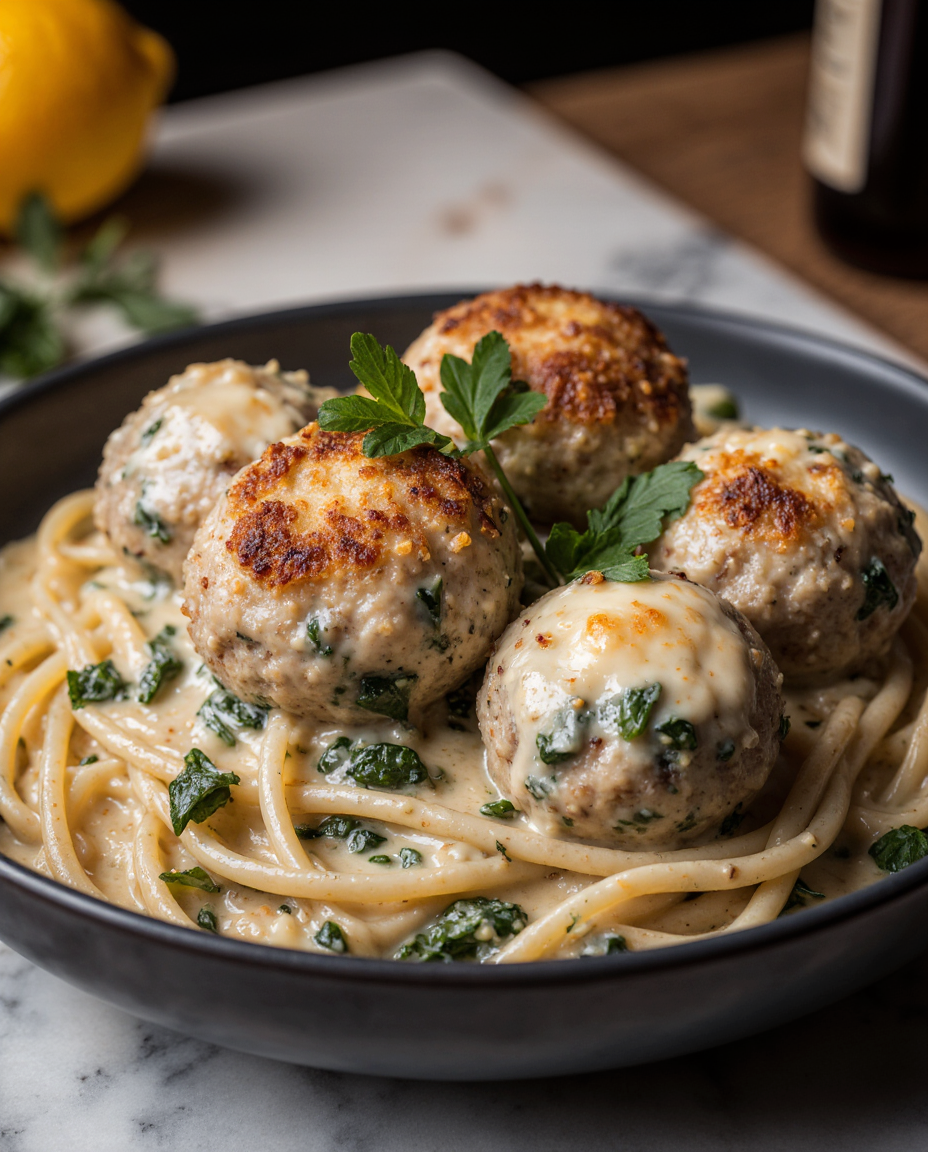
Creamy Chicken Meatballs with Spinach Pasta
This chicken meatball dish achieves tender texture through precise moisture balance and gentle cooking, while the creamy sauce maintains emulsion without breaking. The method focuses on chicken fat management that prevents dryness, roux development that creates stable sauce base, and pasta cooking that preserves spinach flavor and color. Everything here works for weeknight timing with techniques that ensure meatballs stay juicy, sauce stays creamy, and pasta integrates perfectly without becoming gummy or overcooked.
Why this recipe works
Chicken meatball moisture science. Ground chicken’s leanness requires careful moisture management. The milk-soaked breadcrumbs create a panade that releases liquid gradually during cooking, while the egg provides protein structure that holds the moisture in. This combination prevents the dryness that plagues most chicken meatballs without making them mushy.
Sauce emulsion stability. The roux-based sauce starts with equal parts butter and flour cooked to pale gold, which can absorb the liquid without breaking. Whole milk provides protein for body, while the Parmesan adds emulsifying power through its natural sodium citrate content. The heavy cream at the end enriches without risking the emulsion.
Pasta water utilization. The starchy pasta water serves multiple purposes: it loosens the sauce to proper coating consistency, helps the sauce adhere to the pasta, and provides natural thickener that enhances the creamy texture without additional fat or flour.
Sequential cooking efficiency. Browning meatballs first creates fond in the pan that flavors the sauce, while the rendered chicken fat replaces some butter in the roux. This layered approach builds complexity while minimizing cleanup and ingredient waste.
Spinach preservation. Adding fresh spinach at the end preserves its color, texture, and nutritional value. The residual heat from the pasta and sauce wilts it perfectly without making it mushy or bitter.
Ingredients (cups & tablespoons only)
Chicken Meatballs
- 1 lbground chicken
- 1/2 cupbreadcrumbs
- 1/4 cupParmesan, grated
- 1large egg
- 2 tbspmilk
- 2 tbspparsley, chopped
- 1 clovegarlic, minced
- 1 tspItalian seasoning
- 1/2 tspkosher salt
- 1/4 tspblack pepper
- 2 tbspolive oil
Cream Sauce
- 2 tbspbutter
- 2 tbspall-purpose flour
- 2 cupswhole milk
- 1/2 cupchicken broth
- 1/2 cupParmesan, grated
- 1/4 cupheavy cream
- 1/4 tspnutmeg, fresh grated
- to tastesalt & pepper
Pasta & Finish
- 12 ozspinach pasta
- 2 tbspkosher salt (for water)
- 2 cupsfresh spinach
- 1 tbsplemon juice
- 1/4 cuppasta water (reserved)
Garnishes
- 2 tbspParmesan, grated
- 1 tbspparsley, chopped
- 1 tsplemon zest
- 1 pinchred pepper flakes
Recipe
- Prepare meatball mixture: In large bowl, combine breadcrumbs and milk. Let stand 2 minutes until milk is absorbed. Add ground chicken, Parmesan, egg, parsley, garlic, Italian seasoning, salt, and pepper. Mix gently with hands until just combined—do not overwork.
- Form meatballs: Using damp hands, form mixture into 1-inch balls (about 20-24 total). Place on parchment-lined baking sheet. Refrigerate 15 minutes to firm up.
- Brown meatballs: Heat olive oil in large skillet over medium heat. Working in batches, brown meatballs on all sides, 6-8 minutes total. They don’t need to be cooked through—just nicely browned. Remove to clean plate.
- Start pasta water: Bring large pot of water to boil. Add 2 tbsp salt. Cook spinach pasta according to package directions until al dente. Reserve 1/2 cup pasta water before draining.
- Make roux: In same skillet used for meatballs, melt butter over medium heat. Sprinkle flour over butter and whisk constantly for 2 minutes until pale golden and fragrant.
- Build sauce: Gradually whisk in milk and chicken broth until smooth. Bring to simmer, whisking frequently, until thickened enough to coat back of spoon, 3-4 minutes.
- Finish sauce: Reduce heat to low. Whisk in Parmesan until melted. Stir in heavy cream and nutmeg. Season with salt and pepper. Return meatballs to sauce and simmer gently 5-7 minutes until cooked through.
- Combine: Add drained pasta to skillet with sauce. Toss to coat, adding reserved pasta water 2 tbsp at a time until sauce reaches desired consistency. Stir in fresh spinach and lemon juice until spinach wilts.
- Serve immediately garnished with additional Parmesan, parsley, lemon zest, and red pepper flakes.
Handle the meatball mixture gently—overworking develops tough proteins that make the meatballs dense rather than tender.
Meatball technique & texture control
Mixing method
Combine ingredients gently with hands until just uniform. Over-mixing develops myosin proteins that make meatballs tough. The mixture should be moist but hold its shape when formed.
Panade preparation
Soaking breadcrumbs in milk before adding to meat creates a paste that distributes moisture evenly during cooking. This prevents dry spots while keeping the meatballs tender.
Chilling importance
15 minutes in refrigerator firms the meatballs, preventing them from falling apart during browning. The cold temperature also helps them hold their round shape better.
Sauce emulsion & stability
Roux development. Cook butter and flour for 2 minutes until the raw flour taste disappears but before it takes on much color. This pale roux has maximum thickening power while maintaining neutral flavor that doesn’t compete with the Parmesan and chicken.
Liquid incorporation. Add milk and broth gradually while whisking constantly. Adding all at once can create lumps. The initial thickening should happen before the sauce comes to a full simmer—this ensures smooth texture.
Parmesan integration. Add Parmesan off heat or on very low heat to prevent separation. The cheese contains proteins and emulsifiers that help stabilize the sauce, but high heat can cause it to become grainy or oily.
Cream addition timing. Heavy cream is added last because it doesn’t need to cook—it just needs to warm through. Adding it earlier risks breaking the emulsion or developing a cooked cream flavor.
Temperature control. Maintain gentle heat once the sauce thickens. Boiling can cause the emulsion to break, resulting in a greasy, separated sauce rather than a creamy, cohesive one.
Pasta integration & timing
Water salting. Use 2 tablespoons kosher salt in the pasta water—this seasons the pasta from within rather than just the surface. The pasta should taste seasoned but not salty when tasted plain.
Doneness testing. Cook pasta 1 minute less than package directions for al dente texture. It will continue cooking when added to the hot sauce. Overcooked pasta becomes mushy and absorbs too much sauce.
Pasta water chemistry. The starchy pasta water contains dissolved starches that act as natural emulsifiers and thickeners. It helps the sauce cling to the pasta while thinning it to the perfect coating consistency.
Spinach wilting. Add fresh spinach at the very end, tossing with the hot pasta and sauce. The residual heat wilts it perfectly—cooking it earlier makes it bitter and mushy while losing its vibrant color.
Lemon juice timing. Add lemon juice after removing from heat to preserve its bright, fresh flavor. Cooking lemon juice makes it taste flat and less acidic.
Common mistakes (and quick fixes)
- Tough meatballs: Over-mixed or over-cooked. Mix gently and don’t compress when forming. Cook just until 165°F internal temperature.
- Broken sauce: Too high heat or rapid temperature changes. Maintain gentle heat and add ingredients gradually. To fix, remove from heat and whisk in 1 tbsp cold butter.
- Grainy sauce: Cheese added at too high temperature. Add Parmesan off heat and stir until melted before returning to low heat.
- Pasta sticking: Insufficient water or not stirring initially. Use large pot with plenty of boiling water and stir pasta during first minute of cooking.
- Dry meatballs: Too lean chicken or over-cooking. Use 85-90% lean chicken and check temperature at 8 minutes.
- Thin sauce: Insufficient roux cooking or too much liquid. Cook roux full 2 minutes and measure liquids precisely. Thicken with slurry if needed.
- Mushy spinach: Added too early or cooked too long. Add at very end and toss just until wilted.
Substitutions & variations
Different meats
- Ground turkey instead of chicken
- Pork + chicken mix for richer flavor
- Plant-based ground “meat”
Different cream sauces
- Add 1/4 cup sun-dried tomatoes
- 2 tbsp pesto swirled in at end
- 1/4 cup mushrooms with the roux
Different pasta shapes
- Regular fettuccine or linguine
- Penne or rigatoni for sauce capture
- Whole wheat for nuttier flavor
Vegan options
- Plant-based milk and cream
- Nutritional yeast instead of Parmesan
- Vegan butter for roux
Additional flavors
- 1 tsp lemon zest in meatballs
- 2 tbsp white wine in sauce
- 1/4 tsp smoked paprika for depth
Extra vegetables
- 1 cup peas added with spinach
- 1/2 cup roasted red peppers
- 1/4 cup artichoke hearts
When substituting ground meats, adjust cooking times based on fat content—higher fat meats may cook faster and release more liquid.
Serving & presentation
- Plating style: Use tongs to create a pasta nest in shallow bowls, then arrange meatballs around the edges. Spoon extra sauce over top.
- Garnish placement: Sprinkle Parmesan, parsley, and lemon zest evenly over the dish. Add red pepper flakes to one side for those who want heat.
- Temperature service: Serve immediately while the pasta is hot and the sauce is creamy. The dish doesn’t hold well for extended periods.
- Portion control: This makes 4 generous servings. For lighter appetites, it could serve 5-6 with a side salad.
- Accompaniments: Serve with crusty bread for sauce dipping and a simple green salad with vinaigrette to cut the richness.
Batching & make-ahead
Meatball preparation
Make and brown meatballs up to 2 days ahead. Store in refrigerator. Reheat gently in sauce.
Sauce base
Make sauce up to 1 day ahead. Store in airtight container. Reheat gently, whisking in extra milk if too thick.
Complete assembly
Not recommended—pasta continues to absorb sauce. For best results, cook pasta fresh and combine just before serving.
Equipment notes
- Skillet size: Use 12-inch skillet with deep sides for best results. It should hold meatballs in single layer with room for sauce.
- Pasta pot: Large 8-quart pot prevents pasta from sticking and allows proper water circulation for even cooking.
- Whisk selection: Balloon whisk works best for roux and sauce—it incorporates air and prevents lumps better than flat whisks.
- Measuring tools: Use dry measuring cups for flour and breadcrumbs, liquid measuring cup for milk and broth. The 2 tbsp flour measurement is critical for sauce thickness.
- Temperature control: Instant-read thermometer ensures meatballs reach 165°F without overcooking.
Nutrition (estimated)
| Nutrient | Amount |
|---|---|
| Calories | ~580 kcal |
| Total Fat | 28 g |
| Saturated Fat | 14 g |
| Carbohydrates | 45 g |
| Total Sugars | 6 g |
| Fiber | 4 g |
| Protein | 38 g |
| Sodium | ~720 mg |
| Calcium | ~35% DV |
| Iron | ~25% DV |
Numbers are estimates and will vary based on specific ingredients, especially cheese fat content, pasta brand, and exact meatball size. Using lower-fat dairy options reduces calories and fat content.
Storage & reheating
- Refrigeration: Store in airtight container up to 3 days. The pasta will absorb sauce, making it thicker.
- Freezing: Freeze meatballs and sauce separately for up to 3 months. Pasta doesn’t freeze well—it becomes mushy upon thawing.
- Reheating: Reheat gently in skillet with splash of milk or broth. Microwave can make sauce separate—stir frequently if using.
- Pasta refresh: If pasta seems dry, toss with 1-2 tbsp water or broth before reheating to restore creaminess.
- Spinach note: Fresh spinach won’t retain texture upon reheating—expect it to become very soft.
- Best consumed: Within 2 days for optimal texture. The quality declines noticeably after 3 days.
FAQ
Can I use ground chicken breast instead of mixed ground chicken?
Yes, but add 1 tbsp olive oil to the meatball mixture to compensate for the lower fat content. Chicken breast alone can produce dry meatballs unless you’re very careful with cooking time.
My sauce is too thin—how can I thicken it?
Make a slurry with 1 tbsp cornstarch and 2 tbsp cold water. Whisk into simmering sauce and cook 1-2 minutes until thickened. Alternatively, simmer longer to reduce.
Can I bake the meatballs instead of pan-frying?
Yes—bake at 400°F for 15-18 minutes on parchment-lined baking sheet. They’ll be slightly less flavorful without the fond from browning, but still good.
What if I don’t have spinach pasta?
Use regular fettuccine or linguine and increase the fresh spinach to 3 cups. The color and flavor will be similar, though the pasta itself won’t be green.
Can I make this gluten-free?
Yes—use gluten-free breadcrumbs and pasta, and substitute 1 tbsp cornstarch for the flour in the roux (mix with cold milk before adding).
Why did my sauce break and look oily?
Likely too high heat or rapid temperature change. Next time, maintain gentle heat and add cold ingredients gradually. To fix, remove from heat and whisk in 1 tbsp cold butter or cream.
Cook notes
- Handle meat gently—over-mixing makes tough meatballs.
- Cook roux properly—2 minutes until fragrant but not brown.
- Reserve pasta water—it’s essential for sauce consistency.
- Add spinach last—it wilts perfectly with residual heat.
- Serve immediately—pasta continues to absorb sauce over time.
- Check meatball temperature—165°F ensures safety without dryness.