Cranberry Walnut Loaf Cake with Vanilla Glaze
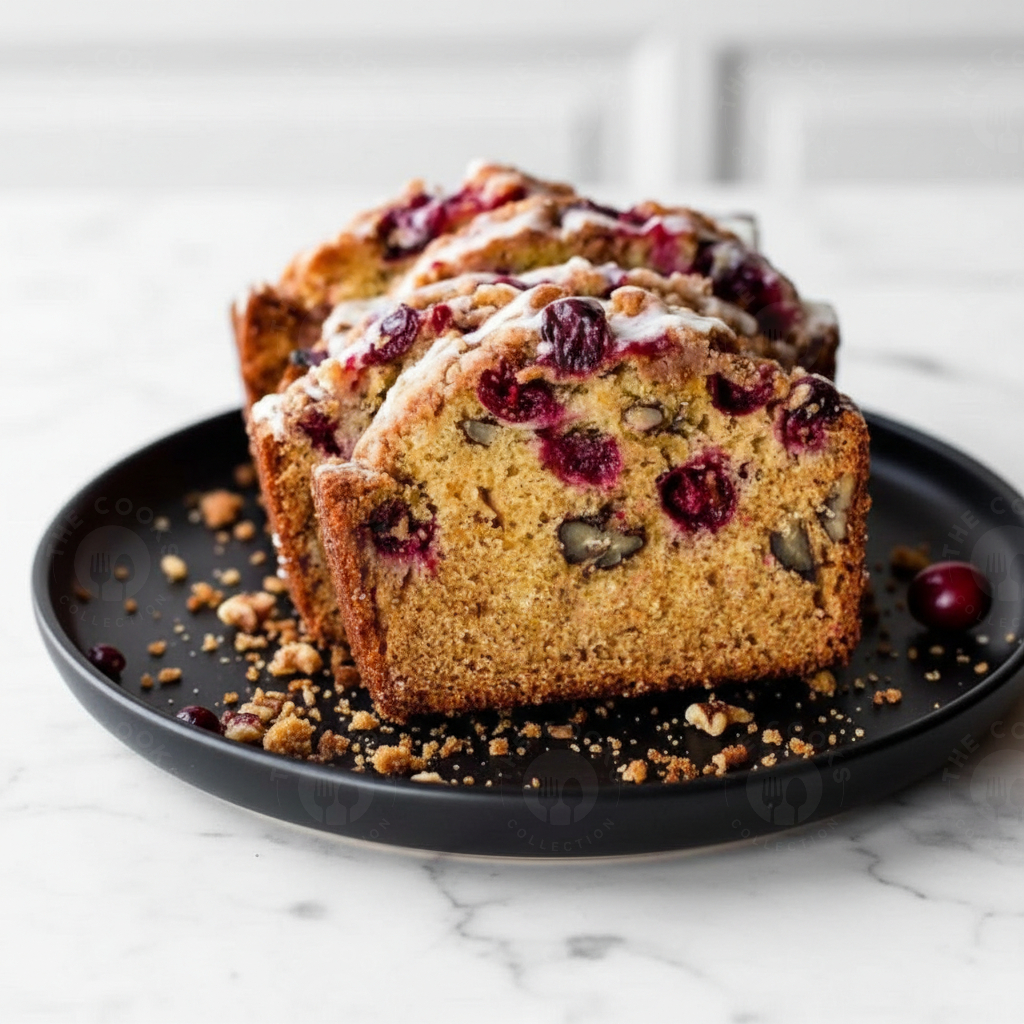
Cranberry Walnut Loaf Cake with Vanilla Glaze
This cranberry walnut loaf cake achieves perfect moisture and texture through precise ingredient ratios and careful mixing techniques. The method focuses on creating a tender, tight-crumbed cake that supports the tart cranberries and crunchy walnuts without becoming dense, using the sour cream and dual-leavening system that defines professional-quality loaf cakes. The result is an elegant loaf cake with balanced sweet-tart flavor profile, substantial yet tender crumb structure, and glossy vanilla glaze that complements rather than overwhelms the fruit and nut components.
Why this recipe works
Sour cream moisture science. The 1 cup of sour cream provides both fat and acidity that create an exceptionally moist, tender crumb while extending the cake’s shelf life. The lactic acid in sour cream tenderizes gluten strands, resulting in a finer, more delicate texture than cakes made with milk or buttermilk alone. The high fat content (approximately 20% in full-fat sour cream) coats flour particles, inhibiting gluten development and creating a rich, moist cake that stays fresh for days. This moisture retention is particularly important with cranberries, which release steam during baking and can dry out lesser cakes.
Dual-leavening system precision. The combination of baking powder and baking soda creates optimal rise and texture throughout the extended baking time required for loaf cakes. Baking powder provides the initial lift when the batter first hits the oven heat, while baking soda reacts with the acidic sour cream and cranberries to provide additional rise during the middle stages of baking. This dual action ensures the cake rises evenly without tunneling or collapsing, creating the tight, even crumb structure that characterizes professional bakery-style loaf cakes.
Fruit and nut distribution engineering. The 1½ cups cranberries to ¾ cup walnuts ratio provides abundant fruit and nut presence in every bite without overwhelming the cake structure. Tossing the cranberries and walnuts with a tablespoon of the measured flour before folding them into the batter creates a light coating that prevents them from sinking to the bottom during baking. This technique, combined with the thick batter consistency from the sour cream, ensures even distribution from top to bottom, creating consistent texture and flavor throughout the loaf.
Sugar balance and flavor development. The ¾ cup granulated sugar provides sufficient sweetness to balance the tart cranberries without making the cake cloyingly sweet. This moderate sugar level allows the natural tartness of the cranberries and the bitterness of the walnuts to shine through, creating a sophisticated flavor profile that appeals to adult palates. The sugar also contributes to moisture retention and creates a tender crumb by absorbing liquid and delaying gluten formation during mixing.
Glaze consistency and application timing. The vanilla glaze uses a 2:1 ratio of powdered sugar to liquid that creates a thick but pourable consistency ideal for loaf cakes. Applying the glaze to a completely cooled cake allows it to set properly without being absorbed into the crumb, creating a professional-looking finish that adds visual appeal and a touch of sweetness without making the cake too sweet. The glaze’s simplicity allows the cranberry and walnut flavors to remain the stars while providing a beautiful glossy finish.
Ingredients (cups & tablespoons only)
Loaf Cake
- 2 cupsall-purpose flour
- 1½ tspbaking powder
- ½ tspbaking soda
- ½ tspsalt
- ½ cupunsalted butter, softened
- ¾ cupgranulated sugar
- 2 largeeggs, room temperature
- 1 tspvanilla extract
- 1 cupsour cream
- 1½ cupsfresh cranberries
- ¾ cupwalnuts, chopped
Vanilla Glaze
- 1 cuppowdered sugar
- 2-3 tbspmilk
- ½ tspvanilla extract
Optional Additions
- 1 tsporange zest
- ½ tspcinnamon
- ¼ tspnutmeg
Recipe
- Prepare pan and oven: Preheat oven to 350°F (175°C). Grease and flour 9×5 inch loaf pan, tapping out excess flour. Proper preparation prevents sticking and ensures easy removal.
- Combine dry ingredients: In medium bowl, whisk together 2 cups flour, 1½ tsp baking powder, ½ tsp baking soda, and ½ tsp salt. Whisking aerates and evenly distributes leaveners.
- Cream butter and sugar: In large bowl, cream ½ cup softened butter and ¾ cup sugar until light and fluffy, 2-3 minutes. This creates air pockets for proper rise.
- Add eggs and vanilla: Beat in 2 eggs one at a time, fully incorporating each before adding the next. Mix in 1 tsp vanilla extract. Room temperature ingredients incorporate better.
- Incorporate sour cream: Add 1 cup sour cream and mix until just combined. The batter may look curdled – this is normal and will correct when flour is added.
- Combine wet and dry: Gradually add dry ingredients to wet ingredients, mixing until just combined. Overmixing develops gluten and creates toughness.
- Prepare additions: Toss 1½ cups cranberries and ¾ cup walnuts with 1 tbsp of the measured flour. This coating prevents sinking during baking.
- Fold in additions: Gently fold floured cranberries and walnuts into batter until evenly distributed. Be gentle to avoid crushing berries and overmixing.
- Bake: Pour batter into prepared pan and smooth top. Bake 55-65 minutes until golden brown and toothpick inserted in center comes out clean.
- Cool properly: Cool in pan on wire rack for 15 minutes, then remove from pan and cool completely. This prevents steaming and ensures proper texture.
- Make glaze: Whisk 1 cup powdered sugar, 2 tbsp milk, and ½ tsp vanilla until smooth. Add more milk if needed for pourable consistency.
- Glaze cake: Drizzle glaze over completely cooled cake. Let set 30 minutes before slicing for clean cuts.
The cake is done when golden brown, pulling away slightly from pan edges, and a toothpick inserted in the center comes out clean or with a few moist crumbs. If the top browns too quickly, tent loosely with foil during the last 15 minutes of baking.
Nutrition (estimated)
| Nutrient | Amount |
|---|---|
| Calories | ~320 kcal |
| Total Fat | 14 g |
| Saturated Fat | 6 g |
| Trans Fat | 0 g |
| Cholesterol | 55 mg |
| Sodium | 220 mg |
| Total Carbohydrates | 45 g |
| Dietary Fiber | 2 g |
| Total Sugars | 28 g |
| Added Sugars | 22 g |
| Protein | 5 g |
| Vitamin D | 0.3 mcg |
| Calcium | 60 mg |
| Iron | 1.5 mg |
| Potassium | 110 mg |
Nutrition calculated with standard ingredient measurements and includes glaze. Values are estimates and will vary based on specific brands and exact measurements. Using reduced-fat sour cream will lower fat content by approximately 3g per serving.
Moisture science & shelf life
Sour cream function
High fat content coats flour. Acidity tenderizes gluten. Lactic acid extends freshness. Moisture retention superior to milk. Creates velvety texture. Extends shelf life significantly.
Sugar’s role
Absorbs and retains moisture. Delays gluten development. Contributes to tender crumb. Balances fruit tartness. Promotes browning. Extends freshness through hydration.
Fruit moisture
Cranberries release steam. Creates natural moisture pockets. Tartness balances sweetness. Fresh berries provide juice. Frozen berries work similarly. Distribution affects texture.
Mixing techniques & gluten development
Proper mixing technique is crucial for creating the ideal loaf cake texture – tender enough to melt in your mouth yet structured enough to support the fruit and nut additions without collapsing.
Mixing stages and purposes
- Creaming stage: Butter and sugar beaten until light and pale. Incorporates air for leavening. Creates emulsion for even ingredient distribution. Should take 2-3 minutes at medium speed.
- Egg incorporation: Eggs added one at a time to maintain emulsion. Room temperature eggs incorporate better. Each egg should be fully absorbed before adding the next. Prevents curdling.
- Liquid addition: Sour cream and vanilla added at this stage. Mix until just combined. Some curdling may occur but will resolve with flour addition. Don’t overmix.
- Flour incorporation: Dry ingredients added gradually. Mix until just combined – some streaks may remain. Overmixing develops gluten and creates toughness.
- Fruit and nut folding: Gentle incorporation to maintain air. Floured additions prevent sinking. Some berry breakage is acceptable. Stop when evenly distributed.
The mixing method follows the “creaming method” used for pound cakes and butter cakes. This creates a fine, tender crumb with good structure. The key is knowing when to stop mixing – as soon as the flour is incorporated and additions are distributed.
Fruit distribution & preparation techniques
Even distribution of cranberries and walnuts throughout the loaf ensures every slice contains the perfect balance of cake, fruit, and nuts without sinking or clustering.
Flour coating
Light coating prevents sinking. Use tablespoon from measured flour. Toss gently to coat evenly. Excess flour absorbs berry moisture. Creates suspension in batter. Essential for even distribution.
Folding technique
Use spatula not mixer. Cut through center and fold over. Rotate bowl periodically. Some berries will break. Stop when evenly distributed. Overmixing causes sinking.
Size considerations
Whole cranberries ideal. Halved berries more distribution. Chopped nuts better than whole. Uniform size ensures even baking. Large pieces may sink. Small pieces distribute better.
Baking science & doneness testing
The 350°F baking temperature and 55-65 minute timeframe create the ideal environment for a loaf cake to rise evenly, set properly, and develop perfect texture and color.
Baking stages and transformations
- Initial rise (0-15 minutes): Baking powder creates first rise. Oven spring occurs. Cake begins to set around edges. Color starts developing.
- Structure set (15-35 minutes): Proteins coagulate, structure firms. Baking soda reacts with acids. Cake continues rising slowly. Top begins to dome.
- Color development (35-50 minutes): Maillard reaction creates browning. Sugar caramelizes slightly. Crust forms and hardens. Aroma develops fully.
- Final set (50-65 minutes): Interior finishes cooking. Fruit softens and releases juice. Structure becomes stable. Doneness tests accurate.
- Carryover cooking: Internal temperature continues rising. Residual heat completes cooking. Moisture redistributes. Texture improves during cooling.
The relatively long, slow bake at 350°F is essential for a loaf cake’s dense structure. Higher temperatures would create a thick, hard crust before the interior cooked through, while lower temperatures wouldn’t create sufficient oven spring and would result in a dense, gummy texture.
Common mistakes (and quick fixes)
- Dense, heavy cake: Overmixed batter or expired leaveners. Use fresh ingredients, mix gently. Dense cake makes excellent trifle or bread pudding.
- Fruit sunk to bottom: Not floured or batter too thin. Always flour additions, ensure proper batter consistency. Sunk fruit still tastes good.
- Cracked top: Oven too hot or overmixed. Reduce temperature, mix less. Cracked tops are traditional in pound cakes.
- Dry texture: Overbaked or too much flour. Check early, measure flour correctly. Dry cake can be brushed with simple syrup.
- Pale coloring: Oven too cool or underbaked. Verify temperature, bake longer. Pale cake still tastes wonderful.
- Gummy stripe at bottom: Underbaked or fruit moisture. Bake longer, ensure fruit distribution. Gummy layer can be trimmed.
- Burnt edges: Oven too hot or dark pan. Reduce temperature, use light pan. Burnt edges can be trimmed off.
- Sticking to pan: Insufficient greasing or removed too soon. Grease thoroughly, cool properly. Stuck pieces can be reassembled.
Substitutions & variations
Different fruits
- Blueberries: classic pairing
- Raspberries: delicate texture
- Chopped apples: fall variation
- Dried cherries: intense flavor
- Peaches: summer favorite
- Mixed berries: complexity
Different nuts
- Pecans: Southern style
- Almonds: subtle flavor
- Hazelnuts: sophisticated
- Pistachios: colorful
- Macadamia: rich butteriness
- No nuts: allergy friendly
Different dairy
- Greek yogurt: tangy alternative
- Buttermilk: traditional
- Creme fraiche: luxurious
- Vegan yogurt: plant-based
- Coconut cream: tropical
- Mascarpone: ultra-rich
Different flavors
- Orange zest: bright citrus
- Lemon glaze: tangy contrast
- Almond extract: sophisticated
- Cardamom: exotic spice
- Ginger: warm spice
- Maple glaze: autumnal
Special diets
- Gluten-free: GF flour blend
- Vegan: plant-based substitutes
- Dairy-free: vegan alternatives
- Reduced sugar: sugar alternatives
- Whole wheat: healthier option
- Nut-free: seed alternatives
Different forms
- Muffins: individual portions
- Bundt cake: elegant presentation
- Mini loaves: gift giving
- Round cake: layer cake style
- Squares: easy serving
- Skillet cake: rustic appeal
Any substitution may affect cooking time, texture, and appearance. Gluten-free flours often require additional binding agents. Liquid substitutions may require adjustment of flour amount. Always test for doneness rather than relying solely on timer.
Serving & presentation
Plating ideas
Cake stand: elegant elevation. Wood board: rustic charm. Vintage plate: nostalgic appeal. Slate slab: modern presentation. Tiered stand: party ready. Individual slices: easy serving.
Garnish options
Fresh cranberries: seasonal. Candied walnuts: crunchy. Mint sprigs: fresh contrast. Edible flowers: elegant. Powdered sugar: simple classic. Citrus twists: colorful.
Accompaniments
Whipped cream: classic. Vanilla ice cream: indulgence. Coffee: bitter balance. Tea: elegant pairing. Sweet wine: dessert course. Hot chocolate: cozy comfort.
Equipment notes
- Loaf pans: Light-colored metal promotes even baking. Dark pans may require temperature reduction. Non-stick coating helpful but still requires greasing. Standard 9×5 inch size ideal.
- Mixing bowls: Large bowl for wet ingredients. Medium bowl for dry ingredients. Glass bowls show color development. Non-slip bottoms prevent movement during mixing.
- Measuring tools: Dry measuring cups for flour and sugar. Liquid measuring cup for sour cream. Measuring spoons for small quantities. Scale for most accuracy.
- Mixer options: Stand mixer for easy creaming. Hand mixer works perfectly. Whisk and spoon possible with extra effort. Don’t overmix with powerful mixers.
- Cooling racks: Wire racks allow air circulation. Essential for proper cooling before glazing. Prevents soggy bottom. Multiple racks helpful for multiple loaves.
- Testing tools: Toothpicks simplest doneness test. Cake tester more reliable. Instant-read thermometer most accurate (200-205°F internal temperature).
Storage & shelf life
- Room temperature: Store in airtight container up to 3 days. The glaze helps retain moisture. Best texture at room temperature. Cover cut ends with plastic wrap.
- Refrigeration: Refrigerate up to 1 week in airtight container. The sour cream and fruit make refrigeration advisable in warm climates. Bring to room temperature before serving.
- Freezing unglazed: Freeze unglazed loaf up to 3 months. Wrap tightly in plastic then foil. Thaw at room temperature before glazing. Texture maintains well.
- Freezing glazed: Freeze glazed loaf up to 2 months. Place in single layer to freeze solid before wrapping. Glaze may become slightly opaque upon thawing.
- Slice freezing: Freeze individual slices for easy serving. Place on parchment-lined sheet to freeze, then transfer to bags. Perfect for single servings.
Frequently asked questions
Can I use frozen cranberries instead of fresh?
Yes, frozen cranberries work very well. Use them directly from frozen – do not thaw. The freezing process actually helps them hold their shape better during baking. You may need to add 5-10 minutes to the baking time since frozen berries cool the batter slightly.
Why did my cake sink in the middle?
This usually indicates underbaking, too much leavening, or opening the oven door too early. Ensure your baking powder and soda are fresh, bake until fully done, and avoid opening the oven during the first 45 minutes of baking.
Can I make this without nuts for allergies?
Absolutely! Simply omit the walnuts. The cake will be slightly less textured but equally delicious. You could add ¼ cup of rolled oats for some texture if desired, or simply enjoy the cranberry-studded cake as is.
My glaze is too thin/too thick – how can I fix it?
Too thin: add more powdered sugar 1 tablespoon at a time. Too thick: add more milk 1 teaspoon at a time. The ideal consistency should be thick but pourable – it should ribbon off the whisk and hold its shape briefly before settling.
Can I prepare the batter ahead of time?
It’s best to bake immediately after mixing. The leaveners begin working as soon as they contact the liquid ingredients. If you must delay, refrigerate the batter for up to 2 hours, but expect slightly less rise.
Why is my cake dry?
Overbaking is the most common cause. Check for doneness 5-10 minutes before the minimum baking time. Also ensure you’re measuring flour correctly (spoon and level method) and not overmixing the batter.
Can I double this recipe?
Yes, it doubles well for two loaves. You may need to add 5-10 minutes to the baking time. Mix the batter in two batches if your bowl isn’t large enough to accommodate the doubled volume comfortably.
Baker notes & pro tips
Ingredient temperature
Room temperature ingredients incorporate better and create more volume. Take eggs and sour cream out 1-2 hours before baking. Cold ingredients can cause curdling and dense texture.
Flour measurement
For most accurate results, use the spoon-and-level method: spoon flour into measuring cup, then level with straight edge. Don’t scoop directly from bag – this compacts flour.
Doneness testing
Use multiple tests: toothpick should come out clean, edges should pull away from pan, top should spring back when lightly pressed, and internal temperature should be 200-205°F.