Cherry Crumble Cake
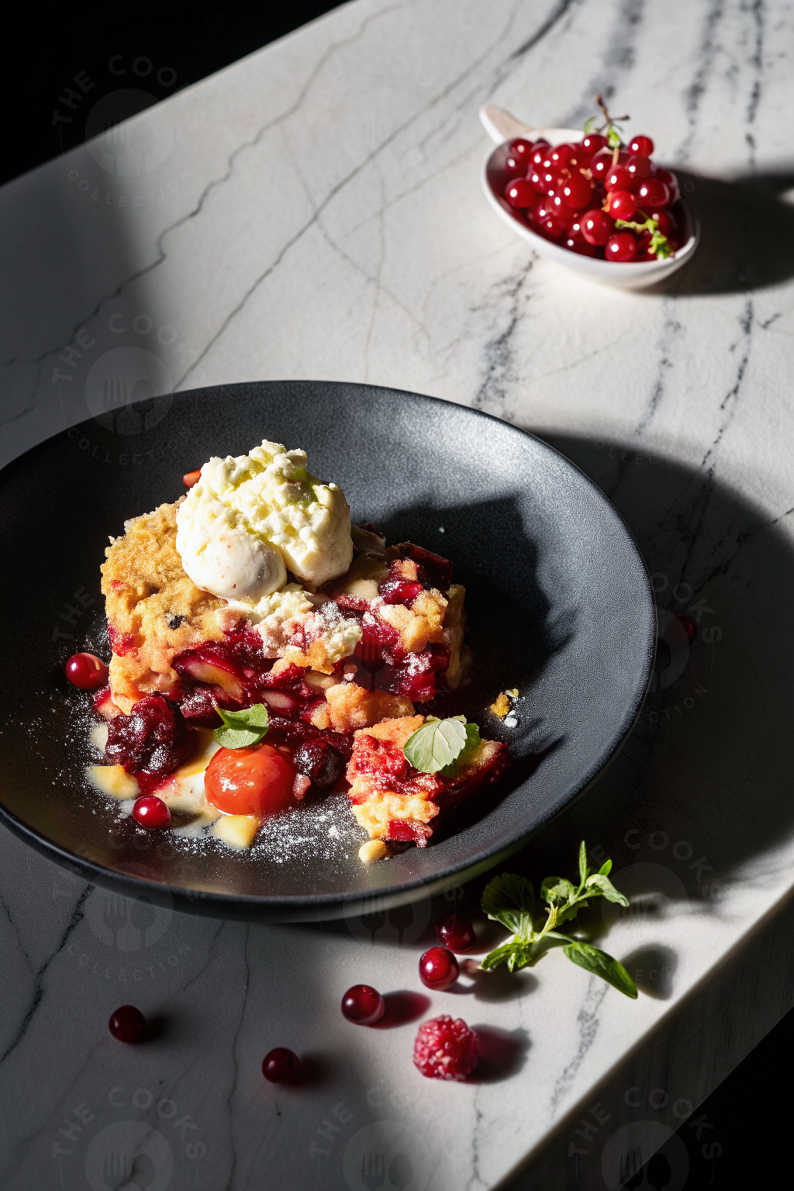
Cherry Crumble Slice with Vanilla Bean Ice Cream
This cherry crumble slice achieves perfect texture contrast through precise butter temperature control and cherry juice management. The method focuses on creating a sturdy yet tender crumble base that supports juicy cherry filling without becoming soggy, using cold butter techniques and proper cornstarch activation. The result is individual portions with crisp oat topping, sweet-tart cherry center, and warm-cold contrast from vanilla ice cream that delivers summer fruit dessert perfection in every bite.
Why this recipe works
Double-duty crumble technique. Using the same mixture for both base and topping creates harmonious texture and flavor throughout the dessert. The bottom layer gets pressed firmly to create a solid foundation that absorbs cherry juices without becoming mushy, while the top layer remains loose and crumbly to develop a crisp, golden-brown crust. This approach ensures every bite includes both the tender base and crunchy topping, creating perfect textural balance. The 50/50 split between pressed base and loose topping provides ideal structural support while maximizing the desirable crumble texture.
Cherry juice management. The combination of cornstarch and lemon juice creates the perfect cherry filling consistency. Cornstarch thickens the natural cherry juices released during baking, preventing a soggy bottom while creating a glossy, sliceable filling. The lemon juice enhances the cherry flavor and provides acidity that balances the sweetness, while also helping activate the cornstarch’s thickening power. The 1 tablespoon cornstarch to 4 cups cherries ratio creates just enough thickening to hold the slices together without making the filling gummy or starchy.
Butter temperature science. Using cold butter is crucial for achieving the perfect crumble texture. When cold butter pieces melt during baking, they create steam pockets that result in a flaky, tender crust. The butter also coats the flour particles, preventing gluten development that would make the crumble tough. Cutting the butter into the dry ingredients until it resembles coarse crumbs (with some pea-sized pieces remaining) ensures varied texture in the final product—some crisp flakes, some tender morsels.
Oat integration strategy. Adding rolled oats to the crumble provides both texture and flavor complexity. The oats contribute a nutty flavor that complements the sweet cherries and buttery crust, while their chewy texture contrasts beautifully with the crisp flour-butter mixture. Stirring them in after the butter is cut in prevents them from breaking down too much, preserving their distinct texture. The 1:2 oat to flour ratio (1/2 cup oats to 1 cup flour) provides noticeable oat presence without overwhelming the classic crumble character.
Baking temperature optimization. The 375°F oven temperature creates the ideal environment for simultaneous cooking processes. It’s hot enough to quickly set the crumble structure and activate the cornstarch thickening, while gentle enough to cook the cherries through without burning the topping. The 35-40 minute baking time allows the cherries to release their juices and bubble through the topping, creating those desirable caramelized spots while ensuring the bottom crust cooks through completely.
Ingredients (cups & tablespoons only)
Crumble Base & Topping
- 1 cupall-purpose flour
- 1/2 cupgranulated sugar
- 1/4 tspsalt
- 1/2 cupcold unsalted butter
- 1/2 cuprolled oats
Cherry Filling & Serving
- 4 cupsfresh cherries
- 1/4 cupgranulated sugar
- 1 tbspcornstarch
- 1 tsplemon juice
- As neededvanilla bean ice cream
- As neededfresh mint leaves
- Optionaladditional berries
Recipe
- Prep oven and pan: Preheat oven to 375°F (190°C). Use an 8×8 inch baking pan – no need to grease it as the butter in the crumble prevents sticking.
- Make crumble mixture: In large bowl, combine 1 cup flour, 1/2 cup sugar, and 1/4 tsp salt. Cut in 1/2 cup cold cubed butter using pastry blender or fingers until mixture resembles coarse crumbs with some pea-sized pieces.
- Add oats: Stir in 1/2 cup rolled oats until evenly distributed. The mixture should look dry and crumbly, not pasty.
- Prepare cherry filling: In separate bowl, combine 4 cups pitted cherries, 1/4 cup sugar, 1 tbsp cornstarch, and 1 tsp lemon juice. Toss gently until cherries are evenly coated.
- Assemble base layer: Press exactly half of the crumble mixture firmly into the bottom of the baking pan. Use the bottom of a measuring cup to create an even, compact layer.
- Add cherry layer: Spread the cherry filling evenly over the crumble base, including all juices from the bowl.
- Add topping: Sprinkle the remaining crumble mixture evenly over the cherries. Don’t press down – leave it loose for maximum crispness.
- Bake: Bake 35-40 minutes until topping is golden brown and cherry filling is bubbling around edges. Rotate pan halfway for even browning.
- Cool properly: Let cool on wire rack for at least 30 minutes before slicing. This allows the filling to set for clean cuts.
- Serve: Cut into 9 squares. Serve warm with vanilla bean ice cream, garnished with fresh mint and optional berries.
The crumble will be very juicy when it first comes out of the oven but will thicken as it cools. For the neatest slices, wait until it’s completely cool or nearly cool before cutting.
Nutrition (estimated)
| Nutrient | Amount |
|---|---|
| Calories | ~450 kcal |
| Total Fat | 20 g |
| Saturated Fat | 12 g |
| Trans Fat | 0 g |
| Cholesterol | 50 mg |
| Sodium | 85 mg |
| Total Carbohydrates | 65 g |
| Dietary Fiber | 3 g |
| Total Sugars | 40 g |
| Added Sugars | 25 g |
| Protein | 5 g |
| Vitamin D | 0.3 mcg |
| Calcium | 45 mg |
| Iron | 2 mg |
| Potassium | 250 mg |
Nutrition calculated with premium vanilla bean ice cream. Using light ice cream will reduce calories and fat content. Values are estimates based on standard ingredient measurements.
Cherry selection & preparation
Cherry types
Bing cherries: sweet, dark red. Rainier: yellow-red, milder. Morello: sour, for baking. Sweet cherries work best for this recipe. Choose firm, plump cherries with green stems if possible.
Pitting techniques
Cherry pitter: fastest, cleanest. Paper clip: unfold and push through. Chopstick: push through stem end. Knife: cut around pit and twist. Bottle method: place over bottle and push with chopstick.
Seasonal notes
Peak season: June-July. Off-season: frozen work well. Frozen cherries: don’t thaw completely. Canned cherries: drain well, reduce sugar. Each type requires slight adjustment to sugar and cornstarch.
Crumble science & texture development
Creating the perfect crumble texture involves understanding how each ingredient and technique contributes to the final result, from the compact base to the crisp topping.
Texture contributors
- Butter temperature: Cold butter creates steam pockets for flakiness. Melted butter makes a denser, cookie-like texture.
- Flour type: All-purpose provides ideal protein content. Whole wheat adds nuttiness but may make denser crumble.
- Sugar role: Granulated sugar promotes browning and crispness. Brown sugar adds moisture and chewiness.
- Oat function: Rolled oats provide chewiness and absorb excess moisture. Quick oats break down more, creating finer texture.
- Mixing technique: Undermixing leaves large butter pieces for flakiness. Overmixing creates uniform but tougher texture.
The ideal crumble should have varied texture – some fine crumbs, some pea-sized butter pieces, and some larger clusters. This variety creates the most interesting eating experience with multiple textures in each bite.
Filling techniques & juice control
Managing the cherry juices is crucial for achieving sliceable portions that hold their shape while maintaining the fruit’s fresh flavor and vibrant color.
Thickening agents
Cornstarch: clear, glossy result. Flour: opaque, more traditional. Tapioca: very clear, chewy texture. Arrowroot: similar to cornstarch. Instant clearjel: professional, heat-stable. Each has different properties.
Fruit preparation
Pit completely: no broken teeth. Uniform size: even cooking. Sugar maceration: draws out juices. Cornstarch coating: even thickening. Lemon juice: flavor enhancement and color preservation.
Juice management
Natural juices: provide liquid for thickening. Sugar draws out more juice. Cornstarch needs adequate liquid to activate. Too dry: add tablespoon water. Too wet: add extra cornstarch.
Baking methods & doneness indicators
The 375°F baking temperature creates the ideal environment for simultaneous crust development, fruit cooking, and juice thickening through careful heat management.
Baking stages
- Initial heating (0-10 minutes): Butter begins to melt, base sets. Cherries start releasing juices. Oven spring occurs.
- Juice release (10-20 minutes): Cherries bubble, juices thin out. Cornstarch begins to swell. Topping begins to brown.
- Thickening phase (20-30 minutes): Cornstarch reaches full thickening power. Bubbles become slower and larger. Topping achieves golden color.
- Caramelization (30-40 minutes): Edges darken, juices thicken substantially. Fruit becomes tender but intact. Aroma develops fully.
- Final set (cooling): Firming completes, clean slicing possible. Flavors meld and intensify. Texture perfects.
The most reliable doneness indicator is visual: look for steady, thick bubbling around the edges and a evenly golden-brown topping. The bubbling should look viscous, not watery.
Common mistakes (and quick fixes)
- Soggy bottom: Insufficient base pressing or underbaking. Press base firmly, extend baking time. If soggy, serve in bowls rather than slices.
- Runny filling: Insufficient cornstarch or underbaking. Add extra cornstarch, bake longer. Runny filling still tastes delicious with ice cream.
- Burnt topping: Oven too hot or baking too long. Reduce temperature, cover with foil. Scrape off burnt bits if minimal.
- Pale crumble: Butter too incorporated or insufficient sugar. Leave larger butter pieces, verify sugar amount. Pale crumble still tastes good.
- Tough base: Overmixed or too much pressing. Mix until just combined, press firmly but don’t compact. Tough base can be broken up.
- Cherries too tart: Underripe fruit or insufficient sugar. Add extra sugar, use riper fruit. Tart filling balances sweet ice cream.
- Dry crumble: Too much flour or overbaking. Measure flour correctly, reduce baking time. Dry crumble can be moistened with extra butter.
- Sticking to pan: Wrong pan type or insufficient fat. Use light-colored metal pan, ensure adequate butter. If stuck, warm slightly to release.
Substitutions & variations
Different fruits
- Peaches: summer classic
- Blueberries: antioxidant-rich
- Apples: autumn favorite
- Mixed berries: colorful
Different toppings
- Nuts: almonds or pecans
- Spices: cinnamon or cardamom
- Coconut: tropical twist
- Graham crackers: s’mores style
Different flours
- Whole wheat: nuttier flavor
- Almond flour: gluten-free
- Oat flour: heartier texture
- Gluten-free blend: 1:1 substitution
Different sweeteners
- Brown sugar: caramel notes
- Maple syrup: liquid adjustment
- Honey: distinct flavor
- Coconut sugar: lower glycemic
Special diets
- Vegan: plant-based butter
- Gluten-free: GF flour blend
- Dairy-free: vegan butter, ice cream
- Reduced sugar: sugar alternatives
Different presentations
- Individual ramekins: portion control
- Bar form: easier serving
- Skillet style: rustic presentation
- Parfait layers: deconstructed
Any substitution may affect cooking time, texture, and flavor balance. When substituting fruits, adjust sugar and thickener based on natural sweetness and juiciness.
Serving & presentation
Ice cream options
Vanilla bean: classic pairing. Buttermilk: tangy contrast. Almond: nutty complement. Cherry: double fruit. Cinnamon: warm spice. Choose based on desired flavor profile.
Garnish ideas
Fresh mint: color and freshness. Toasted nuts: crunch. Chocolate shavings: decadent. Edible flowers: elegant. Citrus zest: brightness. Whipped cream: classic.
Presentation styles
Square slices: clean, modern. Rustic scoops: casual. Individual dishes: restaurant style. Family-style: sharing platter. Tiered: special occasion. Each creates different dining experience.
Equipment notes
- Baking pan: 8×8 inch metal pan provides ideal thickness. Glass or ceramic may require longer baking. Dark metal promotes browning. Light metal provides most control.
- Mixing bowls: Large for crumble, medium for cherries. Non-slip bottoms prevent movement. Glass shows color development and mixing progress.
- Pastry blender: Ideal for cutting in butter. Two knives work as alternative. Food processor can be used but may overmix. Fingers work but warm butter.
- Measuring tools: Dry measuring cups for flour and sugar. Liquid measuring cup optional. Measuring spoons for small quantities. Scale for most accuracy with fruit.
- Cherry pitter: Spring-loaded easiest to use. Straw method works in pinch. Knife technique effective but slower. Choose based on volume and patience.
- Cooling rack: Essential for proper cooling. Allows air circulation underneath. Prevents soggy bottom. Metal conducts heat away efficiently.
- Serving tools: Sharp knife for clean slices. Offset spatula for lifting servings. Ice cream scoop for perfect spheres. Tongs for garnish placement.
Storage & reheating
- Room temperature: Store covered up to 2 days. The crumble maintains best texture at room temperature. Cover loosely to prevent sogginess.
- Refrigeration: Store up to 5 days. The crumble will firm up when chilled. Bring to room temperature or warm before serving for best texture.
- Freezing: Freeze individual slices up to 3 months. Wrap tightly in plastic then foil. Thaw at room temperature or reheat from frozen.
- Reheating methods: Oven preferred – 350°F for 10-15 minutes until warm. Microwave makes topping soft – use only if necessary. Toaster oven works well for single servings.
- Make ahead: Prepare crumble mixture up to 3 days ahead and refrigerate. Pit cherries day before. Assemble and bake day of serving for freshest results.
Frequently asked questions
Can I use frozen cherries instead of fresh?
Yes, but don’t thaw them completely. Frozen cherries will release more liquid, so you may need to increase the cornstarch to 1 1/2 tablespoons. The baking time may need to be extended by 5-10 minutes.
Why is my crumble topping not crispy?
This usually means the butter was too warm or the crumble was overmixed. Ensure butter is cold and work quickly. Also, don’t press the topping down – leave it loose for maximum air circulation and crispness.
Can I make this without oats?
Absolutely! Simply increase the flour by 1/4 cup to maintain the dry-to-wet ratio. The texture will be more shortbread-like and less chewy, but still delicious.
How can I make the crumble more nutritious?
Use whole wheat flour, reduce sugar by 1/4 cup, and add 1/4 cup chopped nuts to the topping. The flavor will be heartier and more complex while reducing refined carbohydrates.
My cherries are very sweet – should I reduce the sugar?
Yes, you can reduce the sugar in the filling by 1-2 tablespoons if using very ripe, sweet cherries. Taste one first to gauge sweetness level before adjusting.
Can I prepare this in advance and bake later?
Yes! Assemble the entire crumble, cover tightly, and refrigerate up to 24 hours before baking. You may need to add 5-10 minutes to the baking time since it will be cold from the refrigerator.
Why use both granulated sugar in the base and filling?
The base sugar promotes browning and crispness, while the filling sugar balances the cherry tartness and helps draw out juices for the cornstarch to thicken. They serve different purposes in the recipe.
Cook notes & pro tips
Seasonal adaptations
Summer: use fresh cherries at peak. Spring: rhubarb-cherry combination. Autumn: apple-cherry blend. Winter: frozen cherries with warm spices. Each season offers unique fruit combinations.
Texture secrets
For extra-crisp topping, add 2 tablespoons of the crumble mixture during the last 10 minutes of baking. For chewier texture, use old-fashioned oats rather than quick-cooking.
Timing tips
Pit cherries while oven preheats to save time. Make double crumble mixture and freeze half for future use. Bake while eating dinner for perfect warm dessert timing.