Cannoli with Pistachio & Chocolate Chips
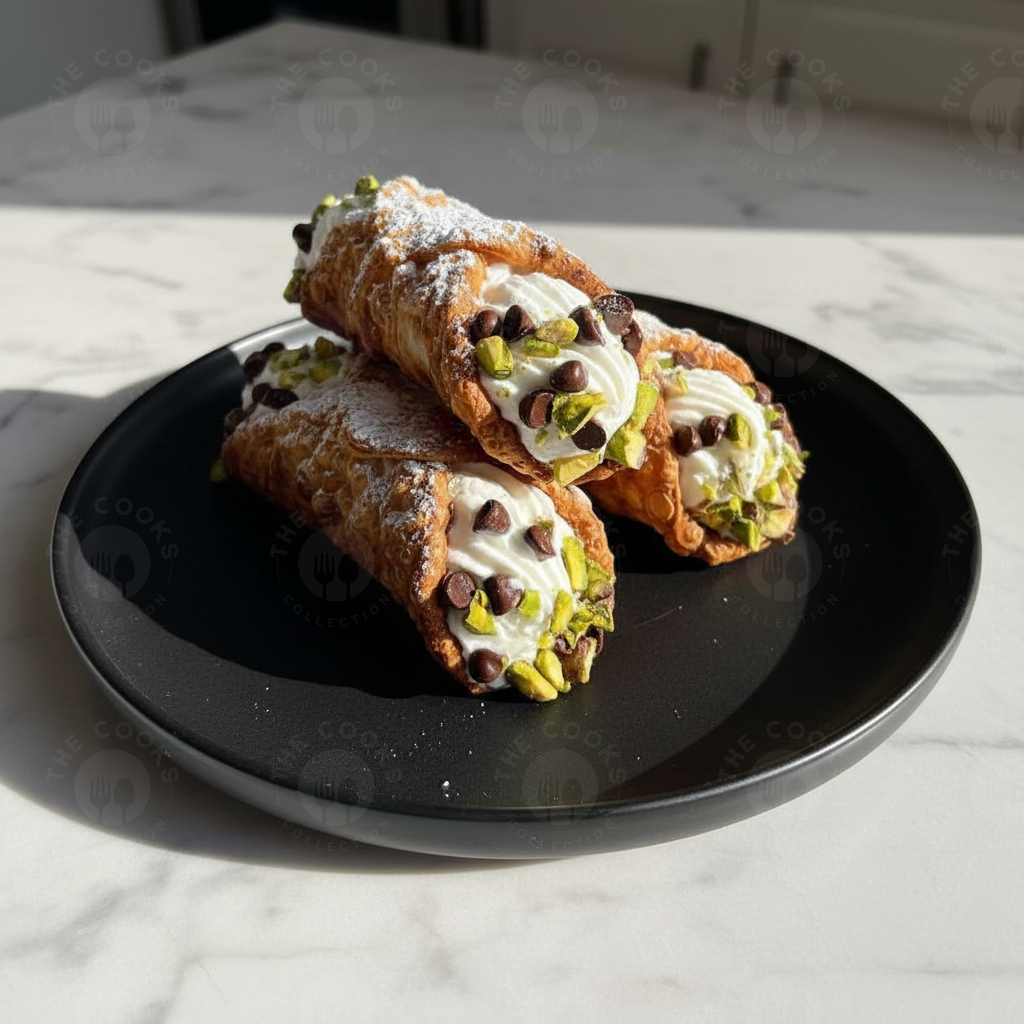
Cannoli with Pistachio & Chocolate Chips
These cannoli with pistachio and chocolate chips achieve perfect texture and flavor balance through precise dough hydration, controlled frying temperature, and proper ricotta preparation. The method focuses on creating shells that shatter delicately while maintaining structural integrity, paired with a filling that’s creamy yet stable enough to pipe cleanly. The result is authentic Sicilian cannoli with striking visual appeal from the pistachio-crusted ends, balanced sweet-rich flavor profile, and technical precision that ensures consistent frying and filling results.
Why this recipe works
Dough hydration and gluten development. The wine-based dough creates a tender yet strong structure that can withstand frying without becoming tough. The 1/2 cup wine to 1 1/2 cups flour ratio provides just enough liquid to hydrate the flour while the alcohol inhibits gluten formation, resulting in shells that are crisp rather than chewy. The minimal kneading time (just until smooth) prevents overdevelopment of gluten strands that would make the shells tough. The 30-minute rest allows the gluten to relax and the flour to fully hydrate, making the dough easier to roll thinly without springing back.
Ricotta preparation and moisture control. The 2-hour draining process is crucial for removing excess whey that would make the filling watery and cause shells to become soggy. Whole milk ricotta provides the ideal fat content for creamy texture without being overly rich. The combination of powdered sugar and granulated sugar creates the perfect sweetness balance – powdered sugar dissolves completely for smooth texture while granulated sugar provides structure. The 1-hour chilling after mixing allows the flavors to meld and the filling to firm up slightly for easier piping.
Frying temperature precision and oil selection. The 375°F frying temperature creates rapid vaporization of the dough’s moisture, causing the shells to puff and become hollow while developing a delicate, shatter-crisp texture. Vegetable oil’s high smoke point and neutral flavor make it ideal for achieving golden-brown color without imparting off-flavors. The 2-minute frying time per side is calibrated to cook the shells through without burning, allowing the interior to dry completely while the exterior achieves the characteristic blistered appearance of authentic cannoli shells.
Texture contrast and component timing. The crisp shell against the creamy filling creates the signature cannoli experience. Filling shells immediately before serving prevents sogginess – the moisture from the ricotta would gradually soften the fried pastry. The chopped pistachios provide textural contrast and visual appeal while the mini chocolate chips offer occasional sweet bursts. The dusting of powdered sugar adds visual elegance and a final touch of sweetness that complements rather than overwhelms the other flavors.
Flavor balancing and authenticity. The subtle cinnamon enhances the ricotta’s natural flavor without dominating, while the vanilla provides aromatic complexity. The ratio of pistachios to chocolate chips (1:1) creates balanced flavor distribution where neither overwhelms the other. The dry white wine in the dough contributes subtle complexity that water cannot replicate, while the alcohol evaporates during frying, leaving no alcoholic taste. This careful balancing creates a sophisticated flavor profile that honors traditional Sicilian cannoli while incorporating the popular pistachio-chocolate variation.
Ingredients (cups & tablespoons only)
Cannoli Shells
- 1 1/2 cupsall-purpose flour
- 1 tbspgranulated sugar
- 1/4 tspsalt
- 2 tbspunsalted butter
- 1/2 cupdry white wine
- 1 egg whitelightly beaten
- 2 quartsvegetable oil
Cannoli Filling
- 2 cupswhole milk ricotta
- 1/2 cuppowdered sugar
- 1/4 cupgranulated sugar
- 1 tspvanilla extract
- 1/2 tspcinnamon
- 1/4 cupmini chocolate chips
- 1/4 cuppistachios, chopped
For Assembly
- 1/4 cuppistachios, chopped
- 2 tbsppowdered sugar
Recipe
- Drain ricotta: Line fine mesh strainer with double layer cheesecloth. Add 2 cups ricotta, cover with plastic, and refrigerate for 2 hours. Discard drained liquid.
- Make dough: Whisk together 1 1/2 cups flour, 1 tbsp sugar, and 1/4 tsp salt. Cut in 2 tbsp cold butter until mixture resembles coarse crumbs.
- Add liquid: Make well in center of dry ingredients. Gradually add 1/2 cup white wine, mixing with fork until dough comes together.
- Knead and rest: Turn dough onto floured surface. Knead gently until smooth, about 2-3 minutes. Wrap in plastic and rest 30 minutes at room temperature.
- Roll dough: Divide dough in half. Roll each portion very thin (1/16-inch) on floured surface. Use pasta machine for perfect consistency if available.
- Cut circles: Using 4-inch round cutter, cut dough into circles. Re-roll scraps once. You should have 12-14 circles total.
- Form shells: Lightly brush edges of circles with beaten egg white. Wrap each around cannoli form, pressing edges to seal securely.
- Heat oil: Heat 2 quarts vegetable oil in heavy pot to 375°F. Use thermometer for accuracy – temperature is crucial.
- Fry shells: Carefully lower 2-3 shells at a time into hot oil. Fry 2 minutes per side until golden brown and blistered. Drain on wire rack.
- Cool and remove forms: Let shells cool completely on rack. Gently twist and remove metal forms once cool enough to handle.
- Prepare filling: Beat drained ricotta with 1/2 cup powdered sugar, 1/4 cup granulated sugar, 1 tsp vanilla, and 1/2 tsp cinnamon until smooth.
- Add mix-ins: Fold in 1/4 cup mini chocolate chips and 2 tbsp chopped pistachios. Chill filling 1 hour to firm up.
- Fill cannoli: Transfer filling to pastry bag fitted with large star tip. Pipe into cooled shells from both ends.
- Garnish and serve: Dip ends in remaining chopped pistachios. Dust with powdered sugar and serve immediately.
The shells will stay crisp for several hours if stored properly, but will gradually soften once filled. For best results, fill cannoli no more than 30 minutes before serving. Unfilled shells can be stored in airtight container for up to 2 days.
Nutrition (estimated)
| Nutrient | Amount |
|---|---|
| Calories | ~280 kcal |
| Total Fat | 18 g |
| Saturated Fat | 8 g |
| Trans Fat | 0 g |
| Cholesterol | 35 mg |
| Sodium | 85 mg |
| Total Carbohydrates | 22 g |
| Dietary Fiber | 1 g |
| Total Sugars | 12 g |
| Added Sugars | 10 g |
| Protein | 8 g |
| Vitamin D | 0.2 mcg |
| Calcium | 150 mg |
| Iron | 1 mg |
| Potassium | 120 mg |
Nutrition calculated with standard ingredient measurements and assumes some oil absorption during frying. Values are estimates and will vary based on specific brands and exact measurements. Using part-skim ricotta will lower fat content by approximately 4g per cannoli.
Shell science & dough principles
Dough hydration
Wine inhibits gluten formation. Proper ratio creates tender crispness. Resting allows full hydration. Thin rolling ensures hollow centers. Egg white seal prevents opening. Correct thickness crucial for texture.
Frying dynamics
375°F creates steam explosion. Rapid cooking prevents oil absorption. Proper blisters indicate correct temperature. Even browning ensures doneness. Draining preserves crispness. Temperature control is essential.
Shell structure
Hollow center allows filling space. Crisp exterior shatters nicely. Light texture comes from steam. Golden color indicates caramelization. Blistered surface traditional. Structural integrity supports filling.
Filling science & ricotta preparation
Creating the perfect cannoli filling requires precise moisture control, proper sweetener balance, and careful ingredient incorporation to achieve a creamy yet stable texture that pipes cleanly without making shells soggy.
Filling preparation science
- Ricotta selection: Whole milk ricotta provides the ideal fat content (10-13%) for creamy texture. Avoid skim ricotta which can be grainy and lacks richness. Fresh ricotta is superior to mass-produced versions.
- Draining technique: The 2-hour draining removes excess whey that would otherwise make shells soggy. Cheesecloth provides the ideal balance of drainage and protection. Refrigerated draining prevents spoilage.
- Sugar balance: Powdered sugar dissolves completely for smooth texture while granulated sugar provides body and stability. The 3:1 ratio of powdered to granulated sugar creates perfect sweetness and texture.
- Flavor development: The vanilla and cinnamon should enhance rather than dominate the ricotta flavor. The 1-hour chilling allows flavors to meld and the filling to firm up slightly for easier piping.
- Mix-in incorporation: Mini chocolate chips provide even distribution without overwhelming. Chopped pistachios should be fine enough to pipe easily but coarse enough for textural interest.
The filling will continue to firm up during chilling as the sugars dissolve and hydrate. Do not overmix after chilling as this can make the filling too loose. If filling becomes too stiff, let stand at room temperature for 15 minutes before piping.
Frying techniques & temperature control
Proper frying creates the characteristic blistered, hollow shells that define authentic cannoli through precise temperature management, oil selection, and timing control.
Oil selection
Vegetable oil: neutral flavor. High smoke point essential. Fresh oil prevents off-flavors. Proper quantity ensures even frying. Temperature stability crucial. Quality affects final taste.
Frying stages
Initial sizzle: moisture release. Puffing: steam expansion. Blistering: surface characteristic. Coloring: Maillard reaction. Final crispness: moisture evaporation. Perfect timing: golden brown.
Temperature factors
375°F ideal for steam creation. Too cool: greasy shells. Too hot: burned exterior. Thermometer essential for accuracy. Batch frying affects temperature. Recovery time between batches crucial.
Flavor balancing & traditional techniques
Creating authentic cannoli flavor requires understanding the traditional Sicilian balance of creamy, sweet, and textural elements while incorporating modern variations like pistachio and chocolate.
Flavor development principles
- Traditional vs modern: Authentic Sicilian cannoli typically feature just ricotta, sugar, and sometimes candied fruit or chocolate. The pistachio-chocolate variation represents a popular modern adaptation that maintains the essential character while adding complementary flavors.
- Sweetness calibration: The total sugar should enhance the ricotta’s natural mild sweetness without overwhelming it. The combination of powdered and granulated sugars provides both immediate sweetness and structural support.
- Spice integration: Cinnamon should be subtle – enough to add complexity but not enough to be identifiable as a distinct flavor. The vanilla enhances the dairy notes without adding artificial taste.
- Nut and chocolate balance: Pistachios provide earthy, slightly salty contrast to the sweet filling. Mini chocolate chips offer bitter-sweet bursts that complement rather than compete with the pistachios.
- Texture harmony: The crisp shell against creamy filling creates the fundamental cannoli experience. The chopped pistachios add crunch while the chocolate chips provide occasional chewy contrast.
The essence of great cannoli lies in the balance between the stark, shattering crispness of the shell and the rich, creamy filling. The additional elements should enhance this fundamental contrast rather than distract from it.
Common mistakes (and quick fixes)
- Soggy shells: Filled too early or insufficient ricotta draining. Fill immediately before serving, ensure proper draining time. If shells become soggy, briefly re-crisp in 350°F oven.
- Tough dough: Overkneading or insufficient resting. Knead only until smooth, rest full 30 minutes. If tough, shells will be hard rather than crisp.
- Shells opening during frying: Insufficient egg white seal or oil too hot. Ensure edges are well sealed, maintain proper temperature. Use tongs to hold closed if necessary.
- Greasy shells: Oil temperature too low or overcrowding. Maintain 375°F, fry in small batches. Drain thoroughly on wire rack rather than paper towels.
- Pale shells: Oil temperature too low or insufficient frying time. Use thermometer, fry until properly golden. Pale shells lack flavor development.
- Watery filling: Insufficient draining or overmixing after chilling. Drain ricotta fully, mix gently after chilling. If watery, add tablespoon of powdered sugar.
- Filling too stiff: Over-drained ricotta or too much sugar. Use proper draining time, measure sugars accurately. If stiff, fold in teaspoon of cream.
- Shells not hollow: Dough too thick or insufficient steam. Roll dough very thin, ensure proper oil temperature. Some hollow space is essential.
Substitutions & variations
Different shells
- Store-bought: time-saving
- Chocolate dough: cocoa addition
- Whole wheat: nutty flavor
- Marsala wine: traditional Sicilian
- Vodka dough: extra tender
- Baked shells: healthier option
Different fillings
- Mascarpone-ricotta: extra rich
- Chocolate ricotta: cocoa powder
- Lemon zest: bright citrus
- Orange blossom: floral notes
- Candied fruit: traditional
- Vanilla bean: premium
Different nuts
- Toasted almonds: classic
- Hazelnuts: rich pairing
- Walnuts: earthy contrast
- Pecans: buttery sweet
- Macadamia: luxury option
- Mixed nuts: complexity
Different chocolates
- Dark chocolate: sophisticated
- White chocolate: sweet contrast
- Chocolate shavings: elegant
- Cocoa nibs: bitter crunch
- Chocolate curls: decorative
- Chocolate drizzle: visual appeal
Additional flavors
- Espresso powder: coffee notes
- Amaretto: almond liqueur
- Rose water: Middle Eastern
- Cardamom: exotic spice
- Orange zest: citrus brightness
- Honey: natural sweetener
Different presentations
- Mini cannoli: party size
- Cannoli chips: deconstructed
- Cannoli dip: interactive
- Chocolate-dipped: luxury
- Multi-colored: festive
- Plated dessert: restaurant style
Serving & presentation techniques
Proper serving and presentation elevate homemade cannoli from simple dessert to impressive culinary creation through careful assembly, garnishing, and plating techniques.
Presentation principles
- Assembly timing: Fill cannoli no more than 30 minutes before serving. The shells will gradually soften from the filling’s moisture, losing their characteristic crispness if filled too far in advance.
- Garnish placement: Dip both ends in chopped pistachios for balanced appearance. Dust with powdered sugar just before serving using a fine-mesh sieve for even coverage.
- Plating arrangements: Arrange on decorative platter with doily for traditional presentation. Individual plates allow for artistic placement. Cake stands create height and drama.
- Temperature serving: Serve at cool room temperature. Over-chilled filling can mute flavors, while warm filling may make shells soggy faster.
- Accompaniment options: Fresh berries provide color and acidity contrast. Chocolate sauce for dipping adds luxury. Espresso or dessert wine complement the flavors.
- Portion control: Standard cannoli are substantial desserts. For multi-course meals, consider mini cannoli. For buffets, full-size makes impressive presentation.
The visual appeal comes from the contrast between the white powdered sugar, green pistachios, golden shells, and visible filling. Clean plating and careful garnish placement create professional appearance that matches the sophisticated flavor profile.
Equipment notes & recommendations
Proper equipment selection significantly impacts the ease of preparation and final quality of cannoli, from dough preparation to frying and filling tools.
Dough equipment
Pasta machine: even thinning. Rolling pin: traditional method. Round cutters: consistent size. Cannoli forms: metal tubes. Pastry brush: egg wash. Mixing bowls: various sizes.
Frying equipment
Heavy pot: temperature stability. Thermometer: crucial accuracy. Spider strainer: safe removal. Wire rack: proper draining. Tongs: shell handling. Newspaper: cleanup preparation.
Filling equipment
Cheesecloth: ricotta draining. Fine mesh sieve: smooth texture. Pastry bags: professional filling. Star tips: decorative ends. Rubber spatula: thorough mixing. Measuring tools: accuracy.
Storage & shelf life guidelines
Proper storage techniques maintain the texture and flavor of cannoli components while addressing the unique challenge of keeping shells crisp and filling fresh.
Storage methods and timelines
- Unfilled shells: Store in airtight container at room temperature for up to 3 days. Place parchment between layers to prevent sticking. Do not refrigerate as moisture will soften shells.
- Filling only: Store in airtight container in refrigerator for up to 3 days. Press plastic wrap directly on surface to prevent skin formation. Stir gently before using.
- Assembled cannoli: Best served immediately. If necessary, store unfilled for up to 2 hours. The shells will gradually soften but remain edible.
- Freezing options: Freeze unfilled shells for up to 1 month. Thaw at room temperature. Filling does not freeze well due to texture changes.
- Component preparation: Shells can be made 2 days ahead. Filling can be made 1 day ahead. Assemble maximum 30 minutes before serving.
- Transportation tips: Transport components separately. Assemble on location. Use rigid containers for shells to prevent breakage.
The quality decreases significantly once assembled due to moisture migration from filling to shells. For best results, plan to assemble just before serving. The shells will lose their characteristic crispness within 1-2 hours of filling, though the flavor remains excellent for several hours.
Frequently asked questions
Can I make cannoli without cannoli forms?
While forms create the traditional tube shape, you can improvise with clean, empty aluminum cans (smooth edges) or wooden dowels. The metal conducts heat well for even cooking. Without forms, the shells may not maintain their hollow center.
What’s the difference between Sicilian and American cannoli?
Traditional Sicilian cannoli often feature just ricotta and sugar, sometimes with candied fruit or pistachios. American versions typically add chocolate chips and are often sweeter. The shell technique remains similar, though Sicilian versions may include Marsala wine in the dough.
Can I bake the shells instead of frying?
Baked shells will have different texture – more cookie-like than crisp and blistered. If baking, brush with oil and bake at 375°F until golden. The result is paler and less traditional but can be good for dietary restrictions.
Why did my shells not puff up?
Common causes include: dough too thick, oil temperature too low, or insufficient gluten development. Ensure proper rolling thickness, maintain 375°F oil, and knead dough until smooth but not tough.
Can I use store-bought shells?
Yes, quality store-bought shells work well and save significant time. Look for shells with good blistering and golden color. Fill just before serving as commercial shells may soften faster than homemade.
How do I get perfectly smooth filling?
Ensure ricotta is well-drained, use powdered sugar (not granulated), and press through fine mesh sieve after mixing. Some graininess is natural in traditional cannoli, but sieving creates ultra-smooth texture.
Baker notes & professional tips
These insights from professional bakers and extensive testing will help you achieve consistent, authentic results with these cannoli with pistachio and chocolate chips.
Advanced techniques for perfect results
- Dough resting: The 30-minute rest is essential for gluten relaxation. For even better results, rest dough overnight in refrigerator, then bring to room temperature before rolling.
- Rolling precision: Use pasta machine on thinnest setting for perfectly even shells. If rolling by hand, measure thickness with ruler – 1/16-inch is ideal.
- Oil maintenance: Use fresh oil for each batch. Straining and reusing oil can impart off-flavors. The small amount of wine in dough can affect oil quality over multiple uses.
- Filling technique: Use pastry bag with large star tip for professional appearance. Fill from both ends for even distribution. Wipe tips clean for neat presentation.
- Shell storage: Store unfilled shells with silica gel packet to maintain crispness. Avoid plastic containers which can trap moisture.
- Flavor enhancements: Add teaspoon of orange zest to filling for brightness. Soak raisins in rum and add for traditional variation. Use high-quality vanilla for best flavor.
- Texture optimization: For extra crisp shells, add tablespoon of vodka to dough. The alcohol evaporates during frying, creating lighter texture.
- Scaling recipes: This recipe doubles well. Fry in batches to maintain oil temperature. Work efficiently as dough can dry out if left exposed too long.
The most common success factor is patience – allowing proper draining time, dough resting, and component preparation. Rushing any step compromises the delicate texture balance that defines exceptional cannoli. While time-consuming, the extraordinary results justify the effort, creating a dessert that transcends the sum of its parts through careful attention to traditional techniques and modern refinements.