Bacon-Wrapped Chicken Bites
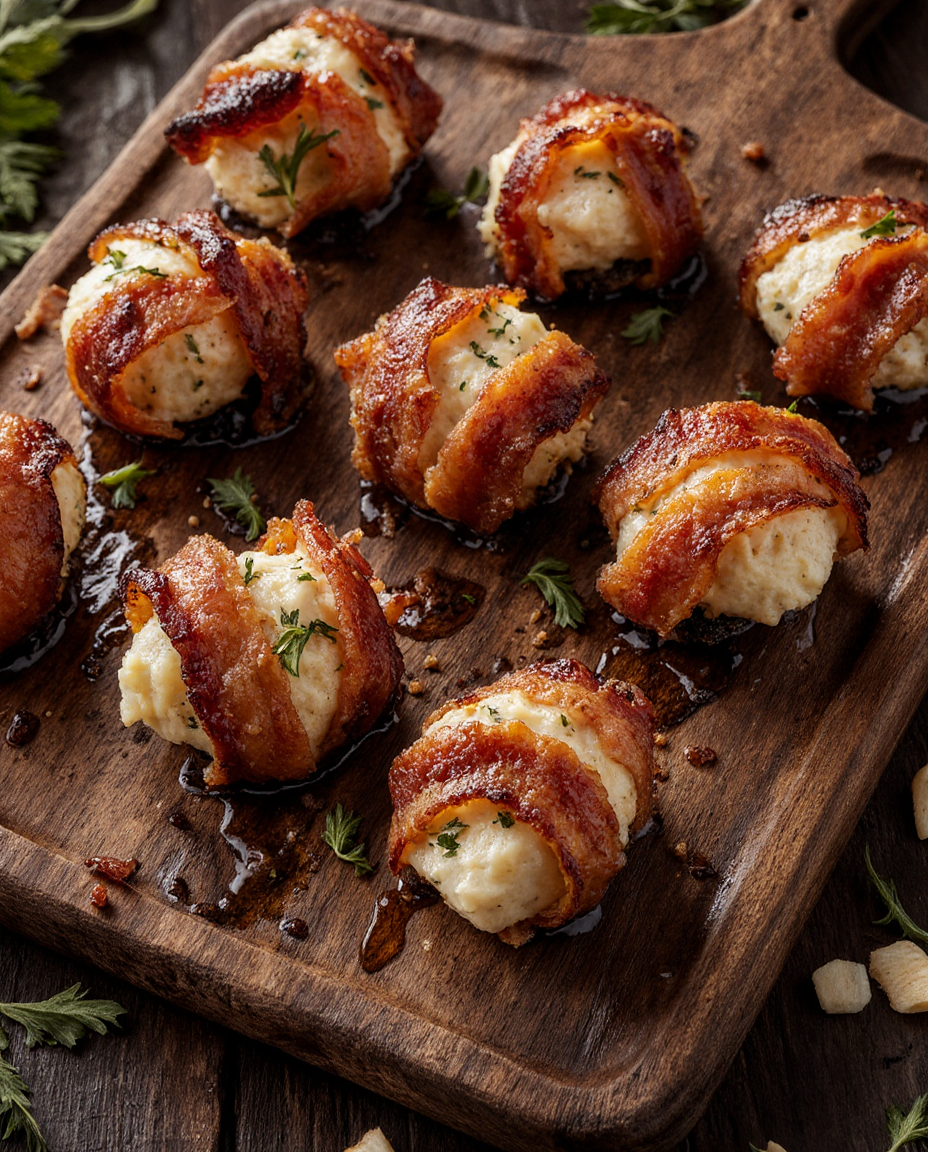
Bacon-Wrapped Chicken Bites
These bacon-wrapped chicken bites achieve perfect texture contrast through precise cooking temperature control and bacon selection. The method focuses on using thin-cut bacon that crisps completely while protecting the chicken from drying out, elevated baking for even air circulation, and sugar application timing that creates caramelization without burning. The result is crispy, salty bacon wrapped around juicy, seasoned chicken with a sweet-spicy glaze that balances the richness.
Why this recipe works
Bacon thickness optimization. Using thin-cut bacon rather than thick-cut ensures the bacon crisps completely before the chicken overcooks. Thin bacon (approximately 1/16 inch thick) renders its fat and becomes crispy in 20-25 minutes at 400°F—the same time it takes for 1-inch chicken cubes to reach 165°F internally. Thick-cut bacon would require longer cooking, resulting in dry, overcooked chicken. The bacon acts as both flavoring agent and protective barrier, basting the chicken with its rendered fat while shielding it from direct oven heat.
Elevated baking method. Placing the bacon-wrapped bites on a wire rack over a baking sheet allows hot air to circulate on all sides, ensuring even crisping. This elevation prevents the bacon from steaming in its own rendered fat and promotes uniform browning. The rack also allows excess fat to drip away, resulting in crispier bacon rather than greasy results. This technique mimics the effect of a broiler pan without specialized equipment.
Sugar application timing. Adding the brown sugar glaze during the final 5 minutes of cooking prevents burning while achieving perfect caramelization. Brown sugar contains molasses that burns around 350°F, but the 400°F oven temperature is necessary for proper bacon rendering. By applying the sugar late in the cooking process, it melts and caramelizes without reaching its smoke point. The chili powder in the glaze provides subtle heat that balances the sweetness and enhances the smoky bacon flavor.
Chicken cube geometry. Cutting the chicken into uniform 1-inch cubes ensures even cooking and proper bacon coverage. This size allows the chicken to cook through at the same rate the bacon crisps, and provides the ideal surface area for bacon wrapping—large enough to require only half a bacon slice per piece, but small enough to be bite-sized. The consistent geometry also means consistent cooking times and textures across all pieces.
Seasoning penetration strategy. Seasoning the chicken cubes before wrapping allows the spices to penetrate the meat while cooking. The bacon wrapping prevents the seasonings from burning while still allowing flavor transfer. The smoked paprika complements the bacon’s smokiness, while the garlic powder adds savory depth that stands up to the strong bacon flavor. This layered seasoning approach creates complexity rather than one-dimensional saltiness.
Ingredients (cups & tablespoons only)
Chicken & Seasoning
- 1.5 lbschicken breast
- 1 tbspolive oil
- 1 tspgarlic powder
- 1 tspsmoked paprika
- 1/2 tspblack pepper
- 1/2 tspsalt
Bacon & Glaze
- 12 slicesthin-cut bacon
- 1/4 cupbrown sugar
- 1 tspchili powder
- 24toothpicks
Recipe
- Prep chicken: Preheat oven to 400°F. Cut 1.5 lbs chicken breast into uniform 1-inch cubes. Pat dry with paper towels to ensure seasoning adherence and better browning.
- Season chicken: In medium bowl, toss chicken cubes with 1 tbsp olive oil until lightly coated. Add 1 tsp garlic powder, 1 tsp smoked paprika, 1/2 tsp black pepper, and 1/2 tsp salt. Mix until evenly seasoned.
- Prepare bacon: Cut 12 slices thin-cut bacon in half crosswise to create 24 half-slices. The shorter length makes wrapping easier and ensures proper coverage without excessive overlapping.
- Wrap chicken: Wrap each seasoned chicken cube with one half-slice of bacon. Stretch bacon slightly as you wrap to ensure tight contact. Secure with toothpick through the bacon seam and into the chicken.
- Arrange for baking: Place wire rack over rimmed baking sheet. Arrange bacon-wrapped chicken bites in single layer with space between each. The rack elevation ensures even air circulation.
- Initial bake: Bake 15-20 minutes until bacon begins to crisp and render fat. The chicken should be nearly cooked through at this stage (internal temperature about 155°F).
- Prepare glaze: While bites bake, combine 1/4 cup brown sugar and 1 tsp chili powder in small bowl. Mix thoroughly to break up any sugar lumps and ensure even distribution.
- Apply glaze: Remove baking sheet from oven. Sprinkle brown sugar mixture evenly over bacon-wrapped bites. Return to oven for final 5-10 minutes of baking.
- Caramelize finish: If desired, switch oven to broil for final 1-2 minutes to caramelize the sugar. Watch carefully to prevent burning. The bacon should be crispy and the sugar melted.
- Rest and serve: Remove from oven and let rest 5 minutes. This allows juices to redistribute and sugar to set slightly. Serve warm with toothpicks intact for easy handling.
The total cooking time may vary by 5 minutes depending on bacon thickness and chicken cube size. The bacon should be crispy and the chicken should reach 165°F internally.
Nutrition (estimated)
| Nutrient | Amount |
|---|---|
| Calories | ~280 kcal |
| Total Fat | 18 g |
| Saturated Fat | 6 g |
| Trans Fat | 0 g |
| Cholesterol | 75 mg |
| Sodium | 580 mg |
| Total Carbohydrates | 8 g |
| Dietary Fiber | 0 g |
| Total Sugars | 7 g |
| Added Sugars | 6 g |
| Protein | 22 g |
| Vitamin D | 0.2 mcg |
| Calcium | 15 mg |
| Iron | 1 mg |
| Potassium | 280 mg |
Nutrition calculated with thin-cut bacon and standard ingredient measurements. Values are estimates and will vary based on specific bacon brand and chicken size.
Bacon selection & preparation
Bacon types
Thin-cut: ideal, crisps perfectly. Regular: works with watchful timing. Thick-cut: not recommended, won’t crisp. Center-cut: leaner, less shrinkage. Applewood smoked: enhanced flavor.
Preparation techniques
Cut cold bacon for clean slices. Stretch slightly when wrapping for tight fit. Partially freeze if too soft to handle. Use kitchen shears for easy cutting. Pat dry if particularly wet.
Cooking characteristics
Thin-cut renders in 20-25 min at 400°F. Regular may need 25-30 min. Sugar content affects browning. Smoked varieties add flavor depth. Lean bacon produces less grease but may be drier.
Wrapping techniques & toothpick placement
Proper wrapping ensures the bacon cooks evenly and stays secured during baking. The goal is complete coverage with minimal overlap and secure attachment that withstands the rendering process.
Wrapping methods
- Spiral wrap: Wrap bacon around chicken in spiral pattern, covering entire surface. Most even coverage but requires longer bacon pieces.
- Single wrap: Wrap once around center, ends meeting on one side. Quickest method, works well with proper toothpick placement.
- Diagonal wrap: Wrap at angle across chicken cube. Provides good coverage with standard half-slice length.
- Double wrap: Use two shorter pieces for complete coverage. More secure but double the toothpicks and potential overlap.
Regardless of method, ensure the bacon seam is placed downward on the rack for optimal cooking and to help keep the wrap secure during baking.
Cooking science & temperature control
The 400°F oven temperature creates the ideal environment for simultaneous bacon crisping and chicken cooking through careful heat transfer management and fat rendering control.
Cooking stages
- Initial phase (0-10 minutes): Bacon begins rendering fat, chicken starts cooking from outside in
- Middle phase (10-20 minutes): Bacon continues crisping, chicken reaches 145-155°F internally
- Final phase (20-25 minutes): Bacon becomes crispy, chicken reaches 165°F, sugar caramelizes
- Broil phase (1-2 minutes): Sugar melts completely, bacon achieves final crispness
- Rest phase (5 minutes): Juices redistribute, sugar sets, carryover cooking completes
The wire rack is crucial—it allows hot air to circulate underneath while letting fat drip away, preventing the bottom from becoming soggy from sitting in rendered bacon grease.
Glaze timing & sugar chemistry
The brown sugar glaze transforms through caramelization during the final cooking stages, creating a sweet-spicy coating that complements the salty bacon. Timing is critical to prevent burning.
Sugar stages
Melting: sugar liquefies (250-300°F). Caramelization: develops flavor (320-350°F). Burning: bitter flavors (350°F+). The oven at 400°F provides rapid transformation that must be carefully timed.
Application methods
Sprinkling: most even, minimal handling. Brushing: requires melted sugar base. Dipping: messy but thorough. Dusting: light, delicate coating. Layering: multiple applications for thicker glaze.
Flavor balancing
Brown sugar: molasses depth. Chili powder: heat balance. Smoked paprika: complements bacon. Garlic powder: savory counterpoint. Salt: enhances all flavors. Adjust ratios to taste preference.
Common mistakes (and quick fixes)
- Soggy bacon: Overcrowded pan or no rack. Use wire rack and space pieces properly. If already soggy, broil 2-3 minutes to crisp.
- Burnt sugar: Applied too early or broiled too long. Add sugar only last 5-10 minutes. Watch carefully during broiling—it happens quickly.
- Dry chicken: Overcooked or wrong bacon thickness. Use thin-cut bacon and check temperature. Chicken continues cooking during resting.
- Bacon unwrapping: Insufficient toothpick security or wrong wrapping. Use toothpicks through both bacon and chicken. Place seam-side down on rack.
- Uneven cooking: Different sized chicken cubes or bacon thickness. Cut uniform pieces and use consistent bacon. Rotate pan if oven has hot spots.
- Greasy results: Wrong bacon type or no rack drainage. Use leaner bacon or center-cut. Ensure proper rack elevation for drainage.
- Bland chicken: Insufficient seasoning or not tossed properly. Season before wrapping and ensure even coating. The bacon saltiness needs seasoned chicken base.
- Sticking to rack: Sugar contact or insufficient bacon coverage. Use parchment on rack if sugar drips. Ensure complete bacon coverage on bottom.
Substitutions & variations
Different meats
- Chicken thighs: richer, more forgiving
- Pork tenderloin: similar cooking time
- Shrimp: reduce time to 12-15 min
- Scallops: quick, delicate
Different wrappings
- Pancetta: Italian, less smoky
- Prosciutto: delicate, salty
- Turkey bacon: leaner option
- Bacon strips: pre-cooked, faster
Different coatings
- Maple syrup: classic sweet
- Hot honey: spicy-sweet
- BBQ rub: savory option
- Everything seasoning: savory
Stuffed variations
- Jalapeño: spicy kick
- Cheese: melty center
- Date: sweet surprise
- Water chestnut: crunchy
Different techniques
- Air fryer: 375°F 15-18 min
- Grill: smoky flavor
- Skewers: easier serving
- Pan-fry: quicker, smaller batches
Special diets
- Lower sodium: reduced-salt bacon
- Lower sugar: sugar-free glaze
- Keto: sugar-free sweetener
- Paleo: coconut sugar + sugar-free bacon
Any substitution may affect cooking time, texture, and flavor balance. When substituting bacon types, adjust cooking time based on thickness and fat content.
Serving & presentation
Dipping sauces
Ranch: cool, classic. BBQ: smoky, sweet. Honey mustard: tangy, sweet. Blue cheese: sharp, creamy. Sriracha mayo: spicy, rich. Teriyaki: Asian-inspired.
Presentation styles
Skewer display: upright in base. Platter: arranged with garnishes. Individual: on small plates. Buffet: in chafing dish. Mini cups: portioned servings.
Garnish ideas
Fresh parsley: color contrast. Lemon wedges: bright acidity. Chili threads: visual heat. Microgreens: delicate finish. Sesame seeds: texture, appearance.
Equipment notes
- Baking sheet: Rimmed sheet contains drippings and prevents oven mess. Heavy-gauge aluminum provides even heating. Dark sheets promote browning but watch for burning.
- Wire rack: Essential for crispy bacon. Choose oven-safe rack that fits baking sheet. Non-stick coating prevents sticking but isn’t necessary with proper bacon coverage.
- Toothpicks: Standard wooden toothpicks work well. Soak in water 30 minutes to prevent burning. Colored picks easier to spot and remove. Consider decorative picks for parties.
- Cutting tools: Sharp chef’s knife for clean chicken cuts. Kitchen shears for easy bacon cutting. Cutting board with juice groove contains mess.
- Mixing bowls: Medium bowl for chicken seasoning. Small bowl for sugar mixture. Glass or stainless steel won’t absorb flavors or stains.
- Measuring tools: Dry measuring cups for sugar. Measuring spoons for spices. Digital scale most accurate for chicken portions.
- Thermometer: Instant-read thermometer ensures food safety. Test thickest chicken piece away from bacon. 165°F is target temperature.
Storage & reheating
- Refrigeration: Store in airtight container up to 4 days. Cool completely before covering. The bacon may soften slightly when chilled—this is normal.
- Freezing: Freeze up to 3 months. Arrange in single layer on parchment-lined sheet to freeze solid, then transfer to freezer bags. Thaw in refrigerator overnight.
- Reheating methods: Oven preferred—375°F for 10-12 minutes until hot. Air fryer excellent for restoring crispiness. Microwave makes bacon rubbery—avoid if possible.
- Crisp restoration: For leftover bites, broil 2-3 minutes after reheating to restore bacon crispiness. Watch carefully to prevent sugar burning.