Baked Apples with Cranberry Crumble & Yogurt Cream
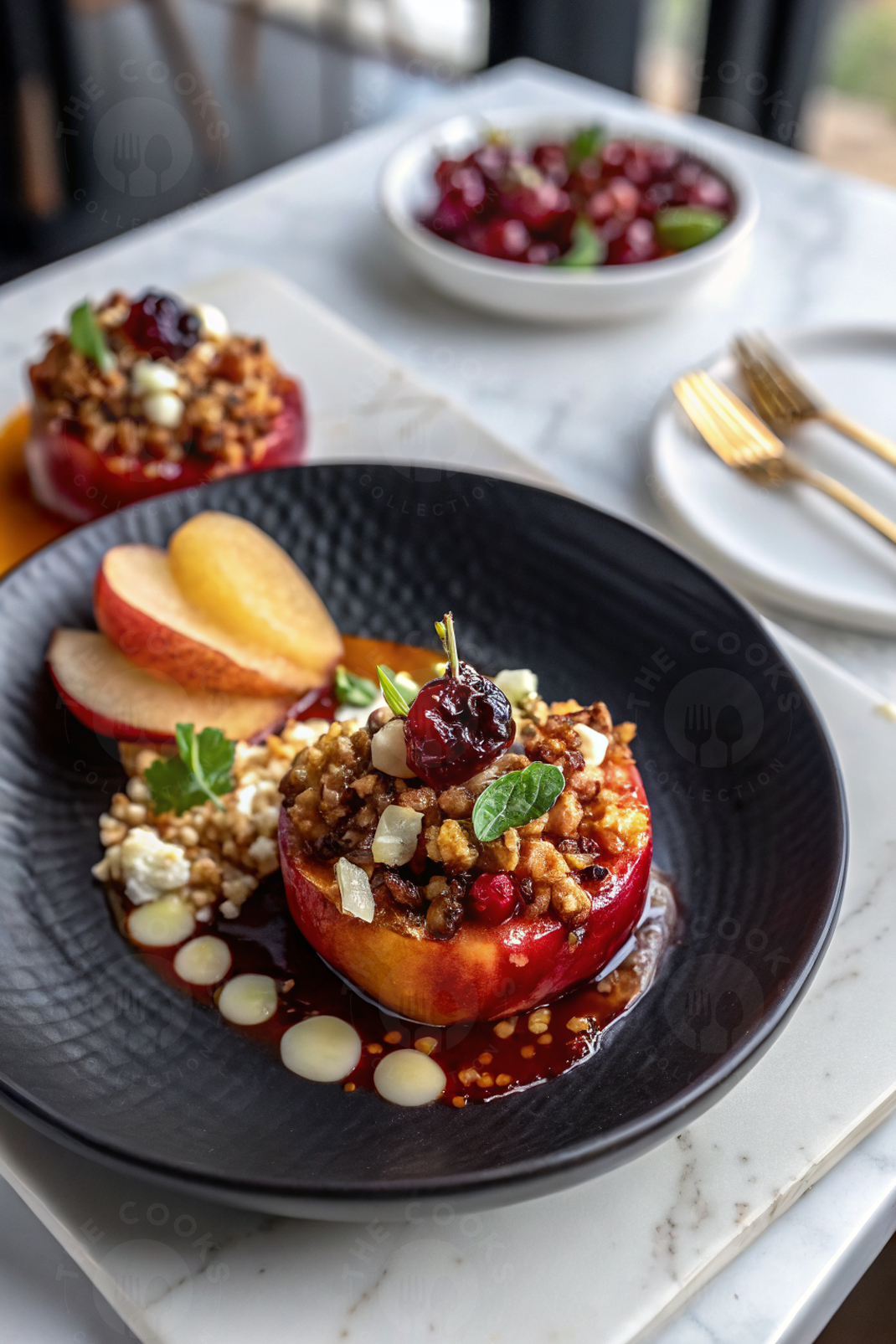
Baked Apples with Cranberry Crumble & Yogurt Cream
These baked apples with cranberry crumble and yogurt cream transform simple autumn fruits into an elegant dessert that balances comforting warmth with bright, sophisticated flavors. The method focuses on proper apple preparation to achieve ideal texture, strategic layering of tart cranberry filling and crunchy oat topping, and a light yogurt cream that provides creamy contrast without heaviness. The result captures the essence of traditional baked apples while introducing contemporary elements—the cranberries’ vibrant tartness cutting through the natural sweetness, the crumble adding textural complexity, and the yogurt cream offering a protein-rich alternative to traditional ice cream or whipped cream—creating a dessert that feels both nostalgic and refreshingly modern.
Why this recipe works
Apple selection and preparation. Choosing the right apple variety is crucial for successful baked apples—firm, dense varieties like Honeycrisp or Granny Smith maintain their structure during baking while becoming tender enough to eat with a spoon. The coring technique that leaves the bottom intact creates a natural cup that contains the filling while allowing the apple to steam from within, ensuring even cooking throughout. Scoring the skin around the equator prevents splitting as the apples expand during baking, maintaining their beautiful presentation. This careful preparation transforms raw apples into perfect edible vessels that hold their shape while becoming meltingly tender.
Cranberry filling balance. The cranberry filling provides the essential tart counterpoint to the apples’ natural sweetness, creating flavor complexity that elevates the dish beyond simple baked fruit. Fresh or frozen cranberries work equally well, with the frozen option actually providing more reliable results year-round. The maple syrup sweetens the intensely tart berries just enough to make them palatable while allowing their bright, complex flavor to shine through. The cinnamon adds warmth that bridges the sweet apples and tart cranberries, creating a harmonious flavor profile that tastes both comforting and sophisticated.
Crumble texture and function. The oat-based crumble serves multiple purposes beyond just adding crunch. It creates a protective lid that helps steam the apples while preventing the filling from drying out. The combination of old-fashioned oats and almond flour provides excellent texture—the oats maintain some chewiness while the almond flour creates a tender, shortbread-like crumb. The cold butter ensures the crumble stays distinct and crunchy rather than melting into a paste, while the walnuts add another layer of texture and nutty flavor that complements both the apples and cranberries.
Yogurt cream innovation. The yogurt cream represents a modern take on traditional dessert sauces, offering creaminess and richness without the heaviness of whipped cream or ice cream. Greek yogurt provides substantial protein that makes the dessert more satisfying, while its tanginess balances the sweetness of the baked components. The honey adds natural sweetness that complements rather than overwhelms the other flavors, and the vanilla provides aromatic depth that ties all the elements together. This sauce creates the luxurious mouthfeel expected in dessert while keeping the overall dish relatively light and nutritious.
Temperature and texture contrast. The final magic of this dessert lies in the serving temperature contrast—the warm, tender apples and crispy crumble against the cool, creamy yogurt sauce creates a sensory experience that feels truly special. This contrast elevates what could be a simple fruit dessert into something that delights multiple senses simultaneously, with the warm spices and aromas filling the kitchen and the varied textures providing continual interest throughout each bite.
Ingredients
Apples & Filling
- 4 largebaking apples
- 1 cupfresh cranberries
- ¼ cupmaple syrup
- 1 tspcinnamon, divided
- ¼ tspnutmeg
- Pinchsalt
Crumble & Cream
- ½ cupold-fashioned oats
- ¼ cupalmond flour
- 3 tbspcold butter
- 2 tbspbrown sugar
- ¼ cupchopped walnuts
- 1 cupGreek yogurt
- 2 tbsphoney
- 1 tspvanilla extract
Recipe
- Prepare oven and apples: Preheat oven to 375°F (190°C). Wash apples thoroughly. Using apple corer or small knife, remove core from top, stopping about ½ inch from bottom to create a well. Score skin around equator with knife to prevent splitting.
- Make cranberry filling: In small bowl, combine cranberries, maple syrup, and ½ teaspoon cinnamon. Mix until cranberries are evenly coated. If using frozen cranberries, no need to thaw—they’ll release more juice during baking.
- Prepare crumble topping: In separate bowl, combine oats, almond flour, remaining ½ teaspoon cinnamon, brown sugar, and chopped walnuts. Add cold cubed butter and work with fingers or pastry cutter until mixture resembles coarse crumbs with some pea-sized pieces.
- Assemble apples: Place apples in baking dish just large enough to hold them snugly. Divide cranberry mixture among apples, stuffing into cavities. Top generously with crumble mixture, pressing lightly to adhere.
- Bake: Pour ½ cup water into bottom of baking dish around apples (not over them). Bake 35-40 minutes until apples are tender when pierced with knife but still hold their shape, and crumble is golden brown.
- Make yogurt cream: While apples bake, whisk Greek yogurt with honey and vanilla extract until smooth and creamy. Cover and refrigerate until serving to allow flavors to meld.
- Check doneness: Apples are done when skin is slightly wrinkled and flesh yields easily to knife point. Crumble should be crisp and lightly browned. If crumble browns too quickly, tent loosely with foil.
- Rest and serve: Let apples rest 5-10 minutes before serving—they’ll be extremely hot inside. Serve warm with generous dollops of yogurt cream, allowing it to melt slightly into the warm apples and crumble.
The apples are perfectly baked when tender but not collapsing—a paring knife should slide into the flesh with little resistance. The cranberries will have burst and created a saucy filling, while the crumble should be crisp and golden. The water in the baking dish creates steam that helps cook the apples evenly and prevents the cranberry juice from burning.
Nutrition (estimated)
| Nutrient | Amount |
|---|---|
| Calories | ~285 kcal |
| Total Fat | 8 g |
| Saturated Fat | 4 g |
| Trans Fat | 0 g |
| Cholesterol | 15 mg |
| Sodium | 45 mg |
| Total Carbohydrates | 52 g |
| Dietary Fiber | 6 g |
| Total Sugars | 38 g |
| Added Sugars | 18 g |
| Protein | 5 g |
| Vitamin C | 12 mg |
| Calcium | 80 mg |
| Iron | 1 mg |
| Potassium | 280 mg |
Nutrition calculated with standard ingredient measurements. Values are estimates and will vary based on specific brands and exact measurements. Using low-fat Greek yogurt and reducing maple syrup will lower calorie and sugar content significantly.
Apple selection & preparation science
Choosing the right apple variety and preparing it correctly ensures perfect texture and flavor development during baking.
Apple variety characteristics
- Honeycrisp: Excellent balance of sweet and tart. Firm texture holds shape perfectly. Thin skin becomes tender without toughness. Large size ideal for stuffing. Widely available most of the year.
- Granny Smith: Very tart flavor contrasts beautifully with sweet fillings. Extremely firm flesh maintains structure. Thick skin provides textural contrast. Becomes pleasantly tangy when baked.
- Braeburn: Complex spicy-sweet flavor. Crisp texture similar to Honeycrisp. Holds shape exceptionally well. Skin becomes tender without separating. Excellent all-purpose baking apple.
- Jonagold: Sweet-tart balance with honey notes. Tender-crisp texture becomes creamy when baked. Thin skin virtually disappears. Parent of Honeycrisp with similar qualities.
- Pink Lady: Distinctive tart-sweet flavor. Very firm texture holds up well. Attractive pink skin adds color. Slow to brown when cut. Reliable year-round option.
- Avoid for baking: Red Delicious (becomes mushy), McIntosh (disintegrates), Golden Delicious (too soft), Gala (not sturdy enough). These varieties lack the structural integrity needed.
The ideal baking apple should be firm enough to hold its shape during 40 minutes of baking while becoming tender enough to eat with a spoon. It should have a good balance of sweet and tart flavors that complement rather than compete with the filling. The skin should be thin enough to become tender but thick enough to help the apple maintain its structure. Testing different varieties helps you find your personal preference for the perfect baked apple experience.
Baking science & temperature control
Understanding the physical and chemical changes during baking ensures perfectly cooked apples with ideal texture and flavor development.
Heat penetration phase
Oven heat reaches apple surface. Internal temperature rises slowly. Pectin in cell walls begins to break down. Starches convert to sugars. Natural juices start to release. Skin begins to soften and wrinkle.
Texture transformation
Cell walls break down completely. Flesh becomes tender and creamy. Internal steam helps cook from inside. Apples soften but maintain shape. Pectin creates natural sauce with juices. Perfect eating texture develops.
Flavor development
Natural sugars caramelize. Tartness mellows significantly. Spices release volatile oils. Maple syrup infuses throughout. Cranberries burst and create sauce. Complex flavor compounds form.
Crumble technique & texture mastery
Creating the perfect crumble involves understanding fat distribution, ingredient ratios, and baking dynamics for ideal texture and flavor.
Crumble composition stages
- Dry ingredient combination: Oats provide structure and chew. Almond flour adds tenderness and nutty flavor. Brown sugar offers moisture and caramel notes. Spices distribute evenly among dry components. Walnuts contribute crunch and richness.
- Fat incorporation: Cold butter is essential for flakiness. Work quickly to prevent melting. Leave varying sized pieces for texture diversity. Pea-sized pieces create best crumb structure. Coarse crumbs provide optimal crunch.
- Baking transformation: Butter melts and creates steam. Oats toast and become crisp. Sugar caramelizes on surface. Nuts toast and release oils. Structure sets into crunchy topping. Golden brown color develops.
- Texture balance: Some large chunks for substantial crunch. Fine crumbs for even coverage. Oats maintain slight chewiness. Nuts provide additional crunch. Almond flour creates tender background. Perfect contrast to soft apples.
- Flavor development: Butter develops nutty notes. Brown sugar caramelizes beautifully. Toasted oat flavor emerges. Walnuts become fragrant and crisp. Spices bloom and intensify. Balanced sweet and savory profile.
The crumble serves multiple functions beyond just adding texture—it protects the filling from direct heat, helps steam the apples, absorbs excess juices, and provides visual appeal. The combination of oats and almond flour creates a gluten-free crumble that’s naturally tender yet crunchy, while the walnuts add another layer of texture and rich flavor that complements both the apples and cranberries perfectly.
Common mistakes (and quick fixes)
- Mushy apples: Overbaked or wrong variety. Check earlier, use firmer apples. Overcooked apples still taste good—serve as apple sauce with crumble.
- Split apples: Not scored or too much filling. Score skin, don’t overstuff. Split apples taste fine—embrace the rustic appearance.
- Soggy crumble: Too much juice or underbaked. Pat fruit dry, bake longer. Crisp under broiler for 1-2 minutes if needed.
- Burnt topping: Oven too hot or wrong rack position. Use middle rack, check earlier. Remove burnt bits, still edible underneath.
- Too tart: Not enough sweetener or wrong apples. Add more honey or maple syrup at table. Sweeten to taste when serving.
- Dry apples: Not enough internal moisture or overbaked. Add water to pan, check earlier. Serve with extra yogurt cream for moisture.
Substitutions & variations
Fruit variations
Pears instead of apples for delicate flavor. Mixed berries instead of cranberries. Dried cherries or apricots for intensity. Fresh peaches for summer version. Plums for tart-sweet balance. Quince for floral notes.
Crumble alternatives
Pecans or almonds instead of walnuts. Coconut flakes for tropical twist. Graham cracker crumbs for classic flavor. Pumpkin seeds for nut-free option. Spelt flour for whole grain. Coconut oil for vegan version.
Sauce options
Whipped coconut cream for vegan. Vanilla ice cream for classic. Custard sauce for indulgence. Caramel sauce for decadence. Lemon curd for brightness. Maple cream for simplicity.
Serving & presentation
Beautiful presentation transforms this humble dessert into restaurant-worthy fare that delights both the eyes and palate.
Plating techniques
- Individual presentation: Place each apple in shallow bowl. Drizzle yogurt cream around base. Let some cream pool attractively. Garnish with extra cranberries and walnuts. Dust with cinnamon for color contrast.
- Sauce application: Dollop yogurt cream beside apple rather than on top. Use spoon to create elegant swirls. Leave some crumble visible. Drizzle with extra honey or maple syrup. Create height with garnishes.
- Garnish selection: Fresh mint leaves for color contrast. Extra toasted walnuts for crunch. Pomegranate seeds for jewel-like brightness. Orange zest for citrus notes. Edible flowers for special occasions. Cinnamon stick for aroma.
- Temperature contrast: Serve apples warm from oven. Yogurt cream should be chilled. The temperature difference enhances experience. Warm plates if serving without bowls. Consider room temperature for components.
- Family style option: Arrange apples on large platter. Serve yogurt cream in pretty bowl. Let guests help themselves. More casual but equally delicious. Perfect for holiday gatherings.
The natural beauty of baked apples makes presentation straightforward—the golden brown crumble against the tender apple flesh creates its own visual appeal. Focus on clean plating that showcases the different components rather than hiding them. The contrast between the warm apples and cool cream is both visual and sensory, creating a dining experience that feels special and carefully considered.
Equipment notes
Essential tools
Apple corer for clean centers. Baking dish with high sides. Mixing bowls for prep. Measuring cups and spoons. Pastry cutter for crumble. Sharp knife for scoring.
Helpful additions
Oven thermometer for accuracy. Glass baking dish for even heating. Small whisk for yogurt cream. Melon baller for precise coring. Pastry brush for glazing. Kitchen scale for precision.
Alternative methods
Slow cooker for all-day cooking. Air fryer for quicker results. Cast iron for rustic presentation. Ramekins for individual portions. Grill for smoky flavor. Microwave for quick version.
Storage & reheating
Proper storage maintains quality while understanding reheating limitations helps manage expectations for leftovers.
Storage guidelines
- Refrigeration: Cool completely before storing. Keep apples and yogurt cream separate. Apples last 3-4 days refrigerated. Yogurt cream lasts 5-7 days. Crumble may soften but still tasty.
- Freezing: Baked apples freeze surprisingly well. Freeze on tray before bagging. Reheat from frozen in oven. Yogurt cream doesn’t freeze well. Crumble can be frozen separately for other uses.
- Reheating methods: Oven at 350°F for 15-20 minutes preserves texture. Air fryer excellent for recrisping crumble. Microwave quick but makes apples mushy. Toaster oven perfect for single servings.
- Leftover transformations: Chop and mix with oatmeal for breakfast. Blend into smoothies for flavor. Use as ice cream topping when chilled. Mix into yogurt parfaits. Serve over pancakes or waffles.
- Meal prep adaptation: Core and stuff apples ahead. Refrigerate unbaked up to 24 hours. Add 5-10 minutes to baking time. Make crumble ahead and freeze. Yogurt cream improves with rest.
The apples will soften further when stored and reheated, but they remain delicious. The crumble will lose some crispness but can be refreshed in oven or air fryer. For best results, store components separately and assemble just before serving. The yogurt cream may separate slightly when stored—just whisk vigorously before serving to restore creamy consistency.
Frequently asked questions
Can I use dried cranberries instead of fresh?
Yes, but adjust the liquid. Soak dried cranberries in hot water or orange juice for 15 minutes to plump them first. Reduce the maple syrup slightly since dried cranberries are sweeter. The texture will be chewier rather than saucy, but still delicious.
What if I don’t have almond flour?
All-purpose flour works perfectly as a substitute. Use the same amount by volume. The crumble will be slightly more traditional and less tender, but equally delicious. Oat flour or whole wheat flour also work well for different nutritional profiles.
Can I make this vegan?
Absolutely. Use coconut oil instead of butter in the crumble, and coconut yogurt instead of Greek yogurt. Ensure your maple syrup is vegan (most are). The results are equally delicious with a slight coconut flavor that complements the apples beautifully.
How do I prevent the apples from splitting?
Scoring the skin around the equator is the most effective method. This gives the skin a place to expand as the apple softens and swells. Also, don’t overstuff the apples—leave about ¼ inch of space at the top for expansion during baking.
Can I prepare these ahead of time?
Yes, up to 24 hours in advance. Prepare the apples completely but don’t bake them. Cover tightly and refrigerate. Add 5-10 minutes to the baking time since you’re starting with cold apples. The yogurt cream actually improves when made ahead.
Pro tips for perfect baked apples
- Apple uniformity: Choose apples of similar size and shape for even cooking. If one is significantly larger, consider baking it separately or adjusting the cooking time. Uniformity ensures all apples finish baking simultaneously.
- Core completely: Remove all seeds and tough membrane from the center. An apple corer works best, but a small knife and melon baller also work. Leaving any seeds or tough parts creates unpleasant textures in the finished dessert.
- Don’t skip the water: The water in the baking dish creates essential steam that helps cook the apples evenly and prevents the cranberry juices from burning and creating bitter flavors. It also makes cleanup much easier.
- Test doneness properly: Use a thin knife rather than a skewer to test doneness. The knife should slide into the flesh of the apple with little resistance, but the apple should still hold its shape rather than collapsing.
- Rest before serving: Let the apples rest 5-10 minutes after baking. They’ll be extremely hot inside, and resting allows the flavors to meld and the structure to set slightly for easier serving.
- Customize sweetness: Taste your apples before baking—some varieties are sweeter than others. Adjust the maple syrup in the filling accordingly. You can always add more sweetener at the table if needed.
These baked apples with cranberry crumble and yogurt cream represent the perfect intersection of health-conscious eating and dessert indulgence. They demonstrate that desserts can be both nutritious and deeply satisfying, using whole food ingredients to create complex flavors and textures that rival much richer traditional desserts. The method teaches fundamental baking principles—the importance of fruit selection, the science of crumble making, and the art of sauce preparation—while delivering consistently impressive results. This recipe builds confidence in the kitchen while providing a versatile template that can be adapted to different fruits, seasons, and dietary needs, ensuring it will become a trusted favorite for everything from simple family dinners to special occasion desserts.