Crispy Salmon & Cheese Potato Croquettes
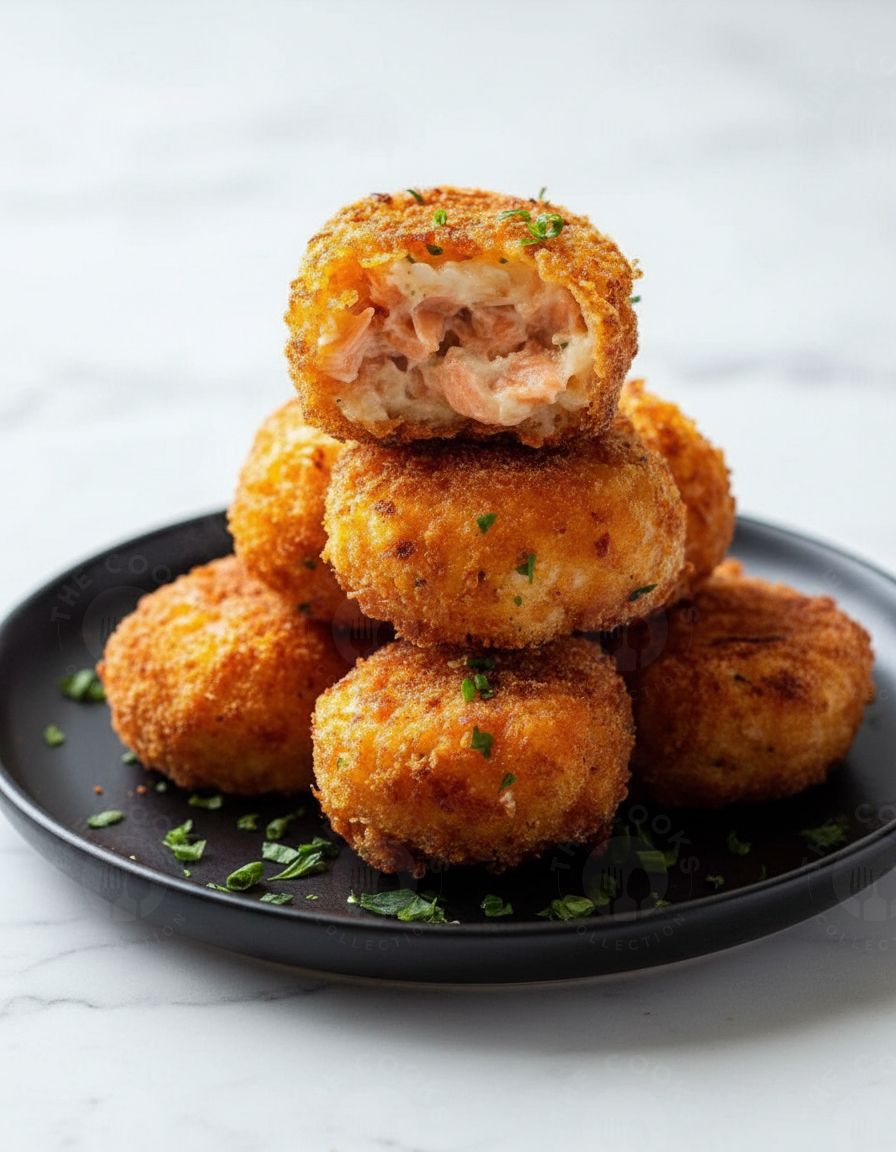
Crispy Salmon & Cheese Potato Croquettes
These salmon and cheese potato croquettes achieve perfect texture and flavor balance through precise potato preparation, strategic binding agents, and controlled frying techniques. The method focuses on creating crisp, golden exteriors that give way to creamy, flavorful interiors featuring flaked salmon and melted cheese, using the starch-to-moisture ratio that defines exceptional croquette structure. The result is elegant appetizers with sophisticated flavor profile, satisfying textural contrast, and the structural integrity that maintains shape through frying while delivering moist, perfectly cooked interiors.
Why this recipe works
Potato structure and moisture control. Using cooled, previously prepared mashed potatoes provides the ideal base for croquette formation. The starches in cooked and cooled potatoes have retrograded, creating a firmer structure that holds its shape during frying while still delivering creamy texture inside. The 3 cups potato to 1½ cups salmon ratio creates a balanced mixture where the potatoes provide structure and creaminess while allowing the salmon flavor to shine through. The cooling process is crucial—warm potatoes would create a sticky, unworkable mixture that falls apart during shaping and frying.
Salmon preparation and flavor integration. Flaking the cooked salmon rather than chopping it preserves the delicate texture and allows for even distribution throughout the potato base. The 1½ cups measurement ensures substantial salmon presence in every bite without overwhelming the other components. Using previously cooked salmon—whether leftover from another meal or specifically prepared—allows for better flavor integration and texture control. The natural oils in salmon contribute to moisture and richness while the flaked texture creates pleasant variation against the creamy potato background.
Cheese selection and melting properties. Sharp cheddar cheese provides both flavor intensity and excellent melting characteristics. The 1 cup shredded cheese distributes evenly throughout the mixture, creating pockets of melted goodness within each croquette. Cheddar’s relatively low moisture content compared to softer cheeses prevents excess liquid from weakening the croquette structure. The cheese also acts as a secondary binding agent, helping to hold the croquettes together while contributing to the rich, savory flavor profile.
Herb and seasoning balance. The combination of fresh dill and lemon zest specifically complements the salmon while cutting through the richness of the potatoes and cheese. Dill’s bright, slightly anise-like flavor is a classic pairing with salmon, while lemon zest adds citrus notes without the acidity that might curdle the dairy components during frying. The 2 tablespoons fresh dill to 1 teaspoon lemon zest ratio provides noticeable herbaceousness without overwhelming the delicate salmon flavor. Garlic powder adds savory depth without the moisture and potential burning issues of fresh garlic.
Breading system and frying technique. The three-stage breading process—flour, egg, panko—creates a protective crust that seals in moisture while achieving maximum crispiness. The flour provides the initial adhesion layer, the egg acts as the binding glue, and the panko creates the final crispy exterior. Panko’s larger, flakier crumbs create a lighter, crispier coating than traditional breadcrumbs. The 350°F frying temperature is ideal for achieving golden-brown exteriors while thoroughly heating the interiors without burning the coating or causing cheese leakage.
Ingredients
Croquette Mixture
- 3 cupsmashed potatoes, cooled
- 1½ cupscooked salmon, flaked
- 1 cupsharp cheddar, shredded
- ¼ cupgreen onions, sliced
- 2 tbspfresh dill, chopped
- 1 tsplemon zest
- 1 tspDijon mustard
- ½ tspgarlic powder
Breading Station
- ½ cupall-purpose flour
- 2 largeeggs, beaten
- 1½ cupspanko breadcrumbs
- ½ tsppaprika
For Frying & Serving
- 2 cupsvegetable oil
- 1 cuptartar sauce
- 2lemons, wedged
Recipe
- Prepare mixture: In large bowl, combine 3 cups cooled mashed potatoes, 1½ cups flaked salmon, 1 cup shredded cheddar, ¼ cup green onions, 2 tbsp dill, 1 tsp lemon zest, 1 tsp Dijon mustard, and ½ tsp garlic powder.
- Mix gently: Using hands or spatula, mix until just combined. Do not overmix—some potato lumps and salmon flakes should remain visible for texture.
- Chill mixture: Cover and refrigerate for 30 minutes. This firms the mixture for easier shaping and helps flavors meld.
- Shape croquettes: Using damp hands, portion about 3 tablespoons mixture per croquette. Shape into 2-inch logs or balls. Place on parchment-lined tray.
- Set up breading: Place ½ cup flour in first shallow dish. Place 2 beaten eggs in second dish. Combine 1½ cups panko with ½ tsp paprika in third dish.
- Bread croquettes: Roll each croquette in flour, shaking off excess. Dip in beaten egg, allowing excess to drip off. Roll in panko mixture, pressing gently to adhere.
- Chill breaded: Return breaded croquettes to tray and chill 15 minutes. This sets the coating and prevents falling apart during frying.
- Heat oil: In heavy pot or deep fryer, heat 2 cups oil to 350°F. Use thermometer for accuracy—proper temperature is crucial.
- Fry in batches: Carefully add 4-5 croquettes at a time. Fry 3-4 minutes until golden brown, turning occasionally for even coloring.
- Drain and serve: Remove with slotted spoon and drain on paper towels. Serve immediately with lemon wedges and tartar sauce.
The croquettes are done when deeply golden brown and crisp. They should feel firm when gently pressed. If the coating browns too quickly, reduce oil temperature slightly. The cheese inside will be perfectly melted and the salmon heated through.
Nutrition (estimated)
| Nutrient | Amount |
|---|---|
| Calories | ~280 kcal |
| Total Fat | 16 g |
| Saturated Fat | 5 g |
| Trans Fat | 0 g |
| Cholesterol | 75 mg |
| Sodium | 380 mg |
| Total Carbohydrates | 20 g |
| Dietary Fiber | 2 g |
| Total Sugars | 2 g |
| Added Sugars | 0 g |
| Protein | 14 g |
| Vitamin D | 4 mcg |
| Calcium | 150 mg |
| Iron | 1.5 mg |
| Potassium | 420 mg |
Nutrition calculated with standard ingredient measurements and includes approximately 1 tablespoon oil absorption per serving. Values are estimates and will vary based on specific brands, exact measurements, and frying time. Baking instead of frying reduces fat content by approximately 8g per serving.
Potato science & texture control
Starch retrogradation
Cooled potatoes develop structure. Starch molecules realign. Texture becomes firmer. Binding capacity increases. Moisture distribution improves. Frying stability enhances significantly.
Potato varieties
Russet: high starch, fluffy. Yukon Gold: medium starch, creamy. Red potatoes: waxy, firm. Fingerling: dense, nutty. Sweet potatoes: sweet, moist. Choose based on desired texture.
Moisture management
Excess moisture causes splitting. Proper draining essential. Cooling reduces wetness. Added ingredients absorb liquid. Breading seals in steam. Perfect balance creates ideal texture.
Binding techniques & structural integrity
Creating croquettes that hold their shape during frying requires understanding how each ingredient contributes to the overall structure and using proper techniques to maximize binding without compromising texture.
Binding components and functions
- Potato starch: Primary natural binder. Retrograded starch creates matrix. Provides structural foundation. Must be properly cooled first. Ratio to other ingredients crucial. Overworking breaks down structure.
- Egg in breading: Creates adhesive layer. Proteins coagulate during frying. Forms seal that contains moisture. Must completely coat surface. Excess causes clumping. Proper draining essential.
- Cheese proteins: Secondary binding agent. Melts and helps cohesion. Adds structural integrity. Low-moisture cheeses work best. Distribution affects binding. Flavor contribution bonus.
- Salmon texture: Flakes interlock with potato. Natural oils aid moisture. Protein contributes to structure. Even distribution important. Size of flakes affects binding. Over-flaking reduces texture.
- Chilling process: Firms all components. Allows starch to set. Makes shaping easier. Prevents falling apart. Enhances flavor development. Critical success factor.
The key to perfect binding is the synergy between components. Each element contributes to the structural matrix while maintaining its unique textural characteristics. Overmixing is the most common mistake—it breaks down the potato structure and creates a paste-like consistency that won’t hold its shape during frying.
Breading methods & coating science
The three-stage breading process creates a protective, crispy exterior through careful layering and proper technique that ensures adhesion and even cooking.
Flour layer
Creates dry surface for egg adhesion. Absorbs surface moisture. Provides initial crispness. Even coating essential. Shake off excess thoroughly. Missing spots cause coating failure.
Egg wash
Acts as edible glue. Proteins create binding layer. Must completely coat surface. Allow excess to drip off. Double coating possible. Proper consistency crucial.
Panko coating
Large flakes create crispiness. Irregular shapes prevent packing. Lightly toast for extra crunch. Press gently to adhere. Creates protective shell. Superior to regular breadcrumbs.
Frying science & temperature control
Proper frying technique creates the characteristic crispy exterior while ensuring thorough heating of the interior without oil saturation or burning.
Frying stages and transformations
- Initial immersion (0-30 seconds): Immediate crust formation. Proteins in egg wash set. Moisture seal created. Panko begins to crisp. Structure stabilizes.
- Heat penetration (30 seconds-2 minutes): Heat moves inward. Interior temperature rises. Cheese begins melting. Salmon heats through. Potatoes warm evenly.
- Color development (2-3 minutes): Maillard reaction occurs. Golden brown color develops. Flavors intensify. Texture becomes crisp. Doneness approaches.
- Final crisping (3-4 minutes): Perfect color achieved. Interior reaches safe temperature. Cheese fully melted. Structure firm but tender. Ready to remove.
- Draining phase: Excess oil drips off. Interior steam escapes. Texture sets permanently. Serve immediately ideal. Hold briefly if needed.
The 350°F oil temperature represents the ideal balance between exterior browning and interior cooking. Lower temperatures result in greasy, pale croquettes, while higher temperatures burn the coating before the interior heats through. Using a thermometer is essential for consistent results.
Common mistakes (and quick fixes)
- Falling apart during frying: Insufficient chilling or overmixing. Chill longer, mix gently. Fallen apart croquettes make excellent hash.
- Greasy texture: Oil temperature too low or overcrowding. Maintain proper temperature, fry in batches. Blot with paper towels to reduce grease.
- Burnt coating: Oil too hot or frying too long. Use thermometer, watch carefully. Scrape off burnt bits if minimal.
- Raw interior: Frying too quickly or croquettes too large. Fry at proper temperature, make smaller sizes. Finish in 350°F oven if needed.
- Cheese leakage: Overfilling or improper sealing. Use less cheese, ensure complete coating. Leaked cheese creates crispy bits.
- Soggy coating: Insufficient draining or holding too long. Drain properly, serve immediately. Recrisp in air fryer if needed.
- Bland flavor: Underseasoned or poor quality ingredients. Season aggressively, use quality components. Serve with flavorful sauces.
- Uneven browning: Irregular shapes or poor oil circulation. Shape consistently, don’t overcrowd. Turn frequently for even color.
Substitutions & variations
Different proteins
- Tuna: canned or fresh
- Cod: mild white fish
- Shrimp: chopped small
- Crab: luxurious option
- Chicken: cooked, shredded
- Vegetarian: lentils or beans
Different cheeses
- Gruyère: nutty sophistication
- Pepper Jack: spicy kick
- Mozzarella: stretchy melt
- Feta: tangy contrast
- Smoked Gouda: depth
- Blue cheese: bold flavor
Different herbs
- Parsley: fresh, clean
- Chives: onion subtlety
- Tarragon: anise notes
- Basil: sweet aroma
- Cilantro: bright citrus
- Mint: refreshing twist
Different techniques
- Baking: healthier option
- Air frying: less oil
- Pan frying: shallow oil
- Deep frying: traditional
- Broiling: quick browning
- Skillet: cast iron crisp
Special diets
- Gluten-free: GF breadcrumbs
- Dairy-free: vegan cheese
- Egg-free: flax egg
- Low-carb: almond coating
- Vegetarian: fish alternatives
- Keto: pork rind crumbs
Different cuisines
- Mediterranean: feta, oregano
- Asian: ginger, scallions
- Mexican: pepper Jack, cilantro
- Indian: curry, cilantro
- French: herbs de Provence
- Italian: Parmesan, basil
Any substitution may affect cooking time, texture, and flavor. Gluten-free coatings may require additional