Raspberry Cheesecake Stuffed French Toast
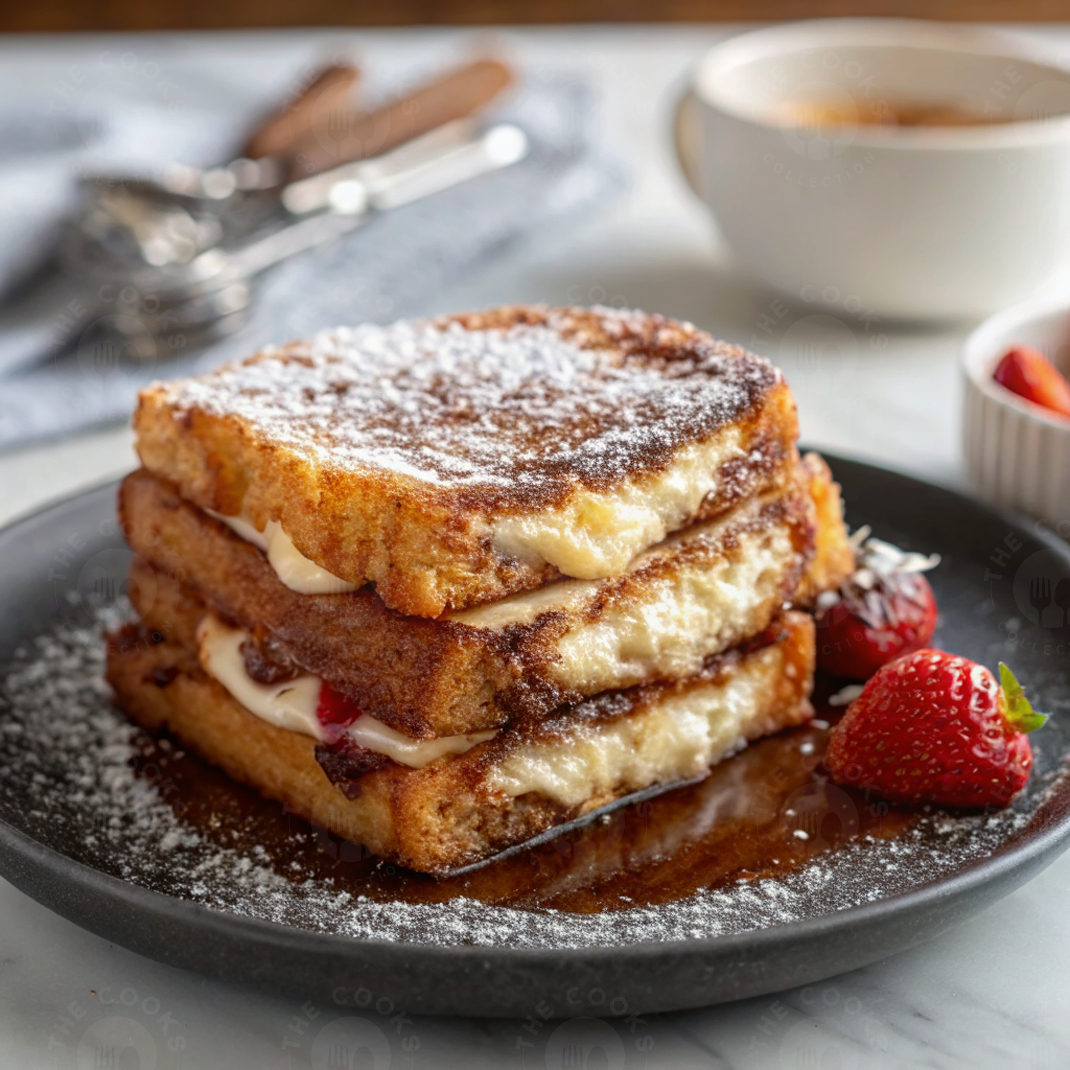
Raspberry Cheesecake Stuffed French Toast
This raspberry cheesecake stuffed french toast achieves perfect texture and flavor balance through precise bread selection, controlled filling distribution, and optimal custard absorption. The method focuses on creating crisp, golden-brown exteriors that give way to warm, creamy cheesecake filling with bursts of tart raspberry, using the rich egg-to-dairy ratio that defines exceptional french toast. The result is luxurious stuffed french toast with striking visual appeal, balanced sweet-tart flavor profile, and structural integrity that maintains the filling within each slice until the first satisfying cut reveals the creamy interior.
Why this recipe works
Bread structure and absorption. Brioche’s high egg and butter content creates the ideal texture for stuffed french toast – sturdy enough to contain the filling yet porous enough to absorb the custard mixture without becoming soggy. The 1-inch thickness provides sufficient interior space for the cheesecake filling while maintaining structural integrity during the flipping process. Unlike regular bread, brioche’s tight crumb prevents the filling from leaking out during cooking, while its richness complements rather than competes with the creamy filling. The slight sweetness of brioche also reduces the need for additional sugar in the custard mixture, allowing the raspberry and cream cheese flavors to dominate.
Filling viscosity and stability. The cream cheese to powdered sugar ratio (8 oz to 1/4 cup) creates a filling that’s thick enough to stay contained within the bread pocket yet soft enough to become warm and creamy when cooked. The minimal sugar allows the tangy cream cheese flavor to shine while providing just enough sweetness to balance the tart raspberries. The combination of raspberry preserves and fresh berries provides both concentrated fruit flavor and textural variation – the preserves create a smooth base while the fresh berries offer occasional bursts of tartness. This dual approach to the fruit component ensures consistent raspberry flavor throughout each bite without making the filling too wet.
Custard composition and absorption. The 3:1 ratio of whole milk to heavy cream in the custard mixture provides adequate protein for setting while the cream adds richness that prevents the french toast from drying out during cooking. The three eggs create a stable emulsion that coats the bread evenly, with the proteins coagulating at around 150°F to form a protective crust that seals in the filling. The 45-60 second soaking time per side is calibrated to achieve maximum custard absorption without compromising the bread’s structure – too little time results in dry interior, while too much causes breakdown and potential filling leakage.
Temperature control and cooking technique. Cooking at medium heat allows the french toast to develop a golden-brown crust while gently warming the cheesecake filling to the ideal temperature of 130-140°F. This temperature range makes the filling soft and spreadable without causing the cream cheese to separate or become greasy. The 4-5 minute cooking time per side creates sufficient Maillard reaction for flavor development while ensuring the egg custard cooks through completely. The initial butter temperature is crucial – it should be hot enough to sizzle when the french toast is added but not so hot that the exterior browns before the interior custard sets.
Flavor balance and layering. The cinnamon and nutmeg in the custard provide warm spice notes that complement the raspberry without overwhelming it, while the vanilla enhances the cream cheese’s natural flavor. The minimal sugar in both the filling and custard allows the maple syrup added at serving to provide the primary sweetness, giving diners control over the final flavor profile. This layered approach to sweetness – subtle in the preparation, pronounced at serving – creates a more sophisticated flavor experience than uniformly sweet french toast.
Ingredients (cups & tablespoons only)
French Toast Base
- 8 slicesbrioche bread, 1-inch thick
- 3 largeeggs
- 3/4 cupwhole milk
- 1/4 cupheavy cream
- 1 tspground cinnamon
- 1/4 tspnutmeg
- 1 tbspgranulated sugar
- 4 tbspunsalted butter
Cheesecake Filling
- 8 ozcream cheese, softened
- 1/4 cuppowdered sugar
- 1/2 cupraspberry preserves
- 1 cupfresh raspberries
- 1 tspvanilla extract
For Serving
- 1/2 cupmaple syrup
- 2 tbsppowdered sugar
- 1/2 cupfresh raspberries
Recipe
- Prepare filling: In medium bowl, beat 8 oz softened cream cheese, 1/4 cup powdered sugar, and 1 tsp vanilla until smooth and creamy. The cream cheese must be fully softened to avoid lumps.
- Add raspberries: Gently fold in 1/2 cup raspberry preserves and 1 cup fresh raspberries. Be careful not to overmix – some berry pieces should remain intact for texture variation.
- Prepare bread: Using serrated knife, cut horizontal pocket in each brioche slice. Cut through center but not through edges, leaving 1/2-inch border on all sides.
- Fill bread: Spoon 2-3 tablespoons filling into each bread pocket. Spread evenly but don’t overfill. Gently press edges to seal.
- Make custard: In shallow baking dish, whisk 3 eggs, 3/4 cup milk, 1/4 cup cream, 1 tsp cinnamon, 1/4 tsp nutmeg, and 1 tbsp sugar until completely combined.
- Soak bread: Place stuffed bread in custard mixture. Soak 45-60 seconds per side until saturated but still intact. Don’t oversoak or bread may fall apart.
- Heat pan: Melt 2 tbsp butter in large skillet over medium heat. Butter should foam but not brown. Proper temperature is crucial for even cooking.
- Cook first side: Add stuffed french toast to skillet. Don’t overcrowd – cook in batches if needed. Cook 4-5 minutes until golden brown.
- Flip carefully: Use wide spatula to flip french toast. Add remaining butter to pan. Cook second side 4-5 minutes until golden and filling is warm.
- Check doneness: French toast should be firm to touch and golden brown. Filling should be warm but not leaking. Internal temperature should be 160°F.
- Serve immediately: Dust with powdered sugar, top with fresh raspberries, and serve with warm maple syrup. The contrast of temperatures and textures is essential.
The filling will be very soft when warm but will firm up slightly as it cools. For clean slices when serving multiple people, let rest 2-3 minutes after cooking before cutting. The residual heat will continue to warm the filling gently.
Nutrition (estimated)
| Nutrient | Amount |
|---|---|
| Calories | ~480 kcal |
| Total Fat | 28 g |
| Saturated Fat | 15 g |
| Trans Fat | 0.5 g |
| Cholesterol | 215 mg |
| Sodium | 420 mg |
| Total Carbohydrates | 45 g |
| Dietary Fiber | 3 g |
| Total Sugars | 25 g |
| Added Sugars | 18 g |
| Protein | 14 g |
| Vitamin D | 1.2 mcg |
| Calcium | 150 mg |
| Iron | 2 mg |
| Potassium | 240 mg |
Nutrition calculated with standard ingredient measurements and includes 2 tablespoons maple syrup per serving. Values are estimates and will vary based on specific brands and exact measurements. Using reduced-fat cream cheese will lower fat content by approximately 8g per serving.
Bread science & selection principles
Brioche structure
High egg content provides protein structure. Butter creates tender crumb. Enriched dough withstands soaking. Tight grain prevents leakage. Slight sweetness complements filling. Sturdy yet absorbent perfect balance.
Absorption dynamics
Day-old bread absorbs better. 1-inch thickness ideal capacity. Crust protects during flipping. Interior soaks evenly. Custard penetration controlled. Structural integrity maintained throughout cooking.
Alternative breads
Challah: similar enriched dough. French bread: sturdy but less rich. Texas toast: good thickness. Sourdough: tangy contrast. Pound cake: ultra decadent. Croissants: very flaky texture.
Filling techniques & consistency control
Creating the perfect raspberry cheesecake filling requires precise temperature control, proper mixing technique, and careful fruit incorporation to achieve a creamy, stable filling that stays contained within the bread during cooking.
Filling preparation science
- Cream cheese temperature: Must be at 65-70°F for smooth incorporation. Cold cream cheese creates lumps that won’t incorporate properly. Too warm and the filling becomes greasy.
- Mixing technique: Beat cream cheese alone first to aerate, then add powdered sugar. Scrape bowl frequently to ensure no lumps remain. Overmixing incorporates too much air.
- Fruit incorporation: Fold preserves and berries gently to maintain texture. Some berry breakage is desirable for flavor distribution, but many should remain whole for bursts of fruit.
- Consistency check: Filling should hold its shape when scooped but spread easily. Too thick: add teaspoon milk. Too thin: chill 15 minutes or add tablespoon powdered sugar.
- Flavor balancing: The tartness of raspberries should balance cream cheese richness. If berries are very tart, increase powdered sugar by tablespoon. If very sweet, add teaspoon lemon juice.
The filling will firm up when chilled, making it easier to work with if preparing in advance. If the filling becomes too soft while working, refrigerate the stuffed bread for 15-20 minutes before dipping in custard to help maintain structure during cooking.
Soaking methods & custard absorption
The custard soaking process transforms ordinary bread into rich french toast through controlled liquid absorption, protein coagulation, and flavor infusion while maintaining structural integrity for the stuffed variation.
Custard composition
Eggs provide structure through proteins. Milk adds hydration and tenderness. Cream contributes richness and flavor. Sugar promotes browning. Spices infuse flavor throughout. Proper ratio ensures set texture.
Absorption timing
45 seconds: light absorption, crisp texture. 60 seconds: medium absorption, balanced texture. 75 seconds: heavy absorption, custardy interior. Over 90 seconds: structural breakdown risk. Adjust based on bread freshness.
Temperature factors
Room temperature ingredients blend better. Cold custard slows absorption. Warm bread absorbs faster. Chilled filling protects during soaking. Proper temperature control prevents sogginess.
Cooking science & temperature control
The stovetop cooking process creates the characteristic golden-brown crust while gently warming the filling through careful heat management and proper technique to achieve perfect texture and doneness.
Cooking stages and transformations
- Initial contact (0-1 minute): Butter sizzles, bread begins to cook. Custard proteins start to coagulate. Filling begins to warm from bottom heat. Maillard reaction initiates.
- Crust formation (1-3 minutes): Golden-brown color develops. Proteins set creating protective layer. Bread structure firms up. Filling continues warming gradually.
- Interior cooking (3-4 minutes): Heat penetrates to center. Custard fully sets. Filling reaches optimal temperature. Bread becomes tender but structured.
- Flip point (4-5 minutes): First side perfectly browned. Structure stable enough to flip. Filling warmed but not leaking. Ready for second side cooking.
- Second side development (5-9 minutes): Repeat process on second side. Even heating throughout. Filling reaches serving temperature. Final texture achieved.
- Resting phase: Carryover cooking continues. Filling sets slightly. Easier to slice cleanly. Flavors meld together.
The medium heat setting is crucial for allowing the interior to cook through before the exterior becomes too dark. High heat creates burnt exteriors with cold filling, while low heat results in pale, greasy french toast with overcooked, separated filling.
Common mistakes (and quick fixes)
- Filling leakage: Overfilled or improper sealing. Use less filling, press edges firmly. If leaking, cook seam-side down first. Leaked filling can become crispy garnish.
- Soggy bread: Oversoaking or insufficient cooking. Reduce soaking time, increase cooking temperature. Soggy centers can be finished in 350°F oven for 5 minutes.
- Burnt exterior: Heat too high or insufficient butter. Reduce heat, add more butter. Burnt spots can be scraped off, still edible underneath.
- Cold filling: Too thick filling or short cooking time. Let filling come to room temperature, cook longer over lower heat. Microwave briefly if already cooked.
- Bread falling apart: Too fresh or oversoaked. Use day-old bread, reduce soaking time. Falling apart pieces can become french toast bake.
- Lumpy filling: Cream cheese too cold or insufficient mixing. Ensure proper softening, beat longer. Lumps can be pressed through sieve or embraced as texture.
- Pale coloring: Insufficient cooking or low heat. Cook longer, ensure proper heat. Pale toast still tastes good, just less visual appeal.
- Greasy texture: Too much butter or low heat. Use less butter, increase heat. Blot with paper towels to remove excess grease.
Substitutions & variations
Different fruits
- Strawberry: classic pairing
- Blueberry: antioxidant rich
- Peach: summer favorite
- Mixed berry: complexity
- Apple cinnamon: fall variation
- Lemon curd: bright alternative
Different cheeses
- Mascarpone: Italian luxury
- Ricotta: lighter texture
- Goat cheese: tangy twist
- Boursin: herbed option
- Neufchâtel: reduced fat
- Vegan cream cheese: plant-based
Different breads
- Challah: traditional Jewish
- Croissants: buttery flakes
- Baguette: crusty contrast
- Pannetone: holiday special
- Gluten-free: dietary needs
- Cinnamon bread: spiced base
Different custards
- Orange zest: citrus brightness
- Almond extract: sophisticated
- Cardamom: exotic spice