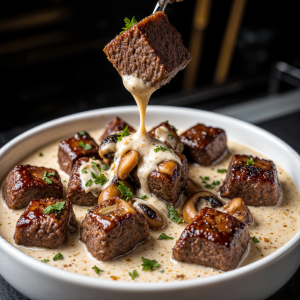
Creamy Mushroom & Steak Bites
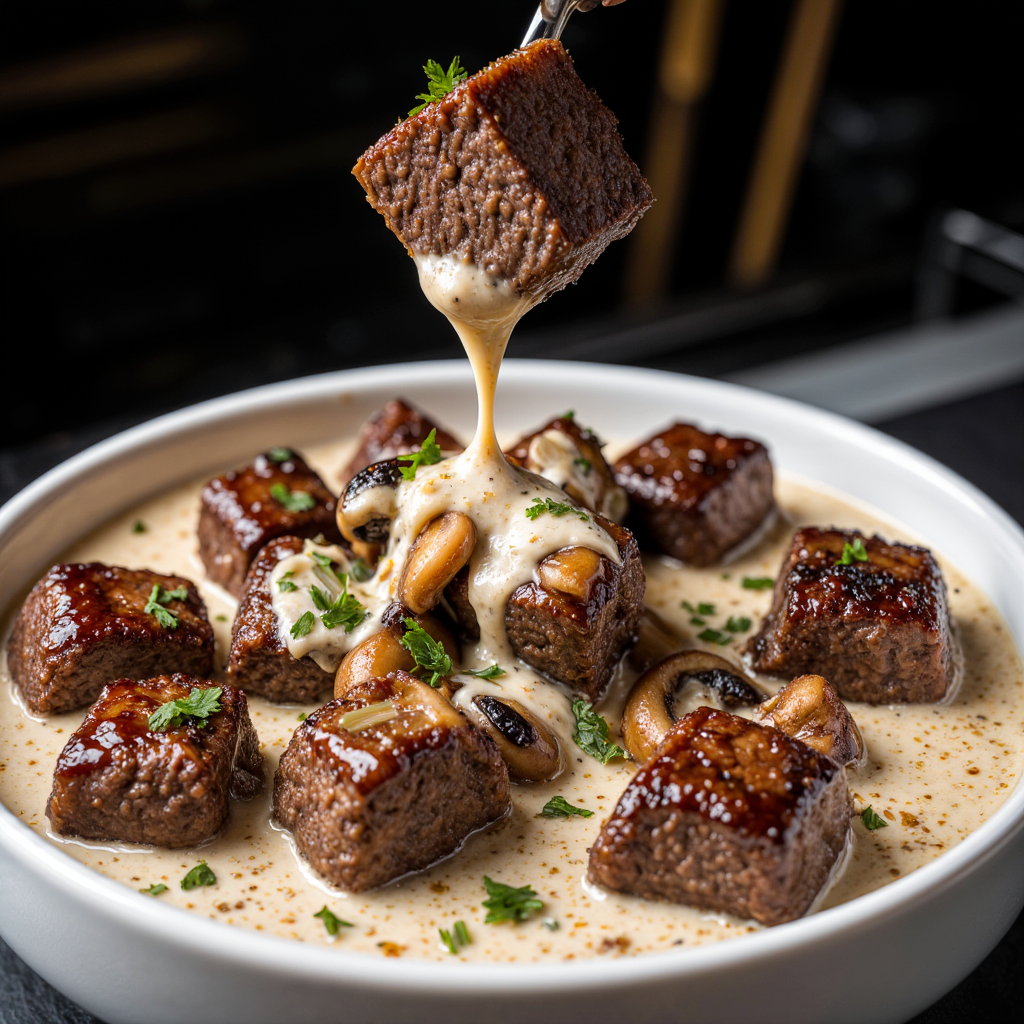
Creamy Mushroom & Steak Bites
These steak bites achieve restaurant-quality texture through precise searing temperature control and proper resting before saucing. The method focuses on developing deep fond in the pan for sauce foundation, creating creamy emulsion that clings to the steak without breaking, and balancing the earthy mushrooms with bright acidic notes. The steak cooks in two stages—initial high-heat sear for crust development, then gentle finish in the sauce to reach perfect medium-rare throughout.
Why this recipe works
Two-stage cooking method. Searing the steak bites first at high heat creates Maillard reaction—the chemical process that develops complex, savory flavors and appealing brown crust. Removing the steak before it’s fully cooked allows it to finish gently in the sauce, preventing overcooking and ensuring even medium-rare doneness throughout. This technique separates the high-heat searing phase from the gentle simmering phase, giving control over both crust development and final temperature.
Fond utilization. The browned bits left in the pan after searing (fond) contain concentrated flavor compounds that form the foundation of the sauce. Deglazing with beef broth dissolves these bits into the liquid, creating a deeply flavored base that would be impossible to achieve otherwise. This process extracts maximum flavor from every component, transforming simple ingredients into complex sauce.
Emulsion stability. The sauce achieves perfect consistency through careful fat incorporation. The butter and steak drippings provide richness, while the mustard acts as an emulsifier to keep the cream and pan juices combined. The Parmesan cheese adds both flavor and thickening power through its proteins and starches. The result is a sauce that coats the steak evenly without separating or becoming greasy.
Mushroom moisture management. Sliced mushrooms release significant water when heated, which can dilute sauces if not properly handled. Cooking them until golden brown evaporates this moisture while developing deep, earthy flavors through caramelization. The dry surface then readily absorbs the sauce flavors, making the mushrooms flavor carriers rather than diluters.
Acid balance. The Worcestershire sauce and Dijon mustard provide acidic counterpoints to the rich cream and beef flavors. This balance prevents the dish from feeling heavy or cloying. The acidity also helps brighten the earthy mushroom notes and cut through the fat, creating a more complex and appetizing flavor profile.
Ingredients (cups & tablespoons only)
Steak & Seasoning
- 1.5 lbssirloin steak, 1-inch cubes
- 2 tbspolive oil
- 1 tspsalt
- 1/2 tspblack pepper
- 1/2 tspgarlic powder
Mushroom Base
- 1 lbcremini mushrooms, sliced
- 2 tbspbutter
- 3 clovesgarlic, minced
- 1shallot, finely diced
- 1 tspfresh thyme leaves
Cream Sauce
- 1 cupbeef broth
- 1/2 cupheavy cream
- 2 tbspWorcestershire sauce
- 1 tbspDijon mustard
- 1/4 cupParmesan cheese, grated
- 2 tbspfresh parsley, chopped
Recipe
- Prepare steak: Pat 1.5 lbs sirloin cubes completely dry with paper towels. Moisture prevents proper browning. Season evenly with 1 tsp salt, 1/2 tsp pepper, and 1/2 tsp garlic powder.
- Heat pan: Place large skillet over medium-high heat. Add 2 tbsp olive oil. The oil should shimmer but not smoke—approximately 350-375°F. Use cast iron or heavy-bottomed stainless steel for best results.
- Sear steak: Add steak cubes in single layer without crowding. Work in batches if necessary. Sear 2-3 minutes per side until deeply browned but still rare inside. The steak should release easily when properly seared.
- Remove steak: Transfer seared steak to clean plate. Do not cover—steam will soften the crust. The internal temperature will be about 115-120°F at this stage.
- Cook mushrooms: Reduce heat to medium. Add 2 tbsp butter to same pan. Add 1 lb sliced mushrooms in single layer. Cook 5-6 minutes without stirring until golden brown on first side.
- Add aromatics: Stir mushrooms and add 1 diced shallot. Cook 2 minutes until softened. Add 3 minced garlic cloves and 1 tsp fresh thyme. Cook 30 seconds until fragrant.
- Deglaze pan: Pour in 1 cup beef broth, scraping bottom vigorously with wooden spoon to release all browned bits. Add 2 tbsp Worcestershire sauce and 1 tbsp Dijon mustard.
- Reduce liquid: Simmer 4-5 minutes until liquid reduces by half and thickens slightly. The sauce should coat the back of a spoon but still be fluid.
- Add cream: Reduce heat to low. Stir in 1/2 cup heavy cream and 1/4 cup grated Parmesan. Heat gently until cheese melts and sauce emulsifies—do not boil.
- Finish dish: Return steak and any accumulated juices to pan. Simmer 1-2 minutes until steak reaches 130-135°F for medium-rare. Sauce should thicken and coat steak evenly.
- Serve: Remove from heat. Stir in 2 tbsp fresh parsley. Taste and adjust seasoning. Serve immediately over mashed potatoes, rice, or crusty bread.
The steak will continue to cook slightly in the hot sauce. Remove from heat when it reaches 5°F below your target doneness temperature for perfect results.
Nutrition (estimated)
| Nutrient | Amount |
|---|---|
| Calories | ~420 kcal |
| Total Fat | 28 g |
| Saturated Fat | 14 g |
| Trans Fat | 0.5 g |
| Cholesterol | 125 mg |
| Sodium | 580 mg |
| Total Carbohydrates | 8 g |
| Dietary Fiber | 2 g |
| Total Sugars | 4 g |
| Added Sugars | 1 g |
| Protein | 35 g |
| Vitamin D | 1 mcg |
| Calcium | 120 mg |
| Iron | 4 mg |
| Potassium | 780 mg |
Nutrition calculated with sirloin steak and standard ingredient measurements. Values are estimates and will vary based on specific cuts and brands used.
Steak selection & preparation
Best steak cuts
Sirloin: balanced flavor, good marbling. Ribeye: rich, tender, higher fat. Tenderloin: most tender, mild flavor. Strip steak: beefy flavor, firm texture. Avoid tough cuts like round or chuck for this quick-cooking method.
Cutting technique
Chill steak 30 minutes for cleaner cuts. Slice against the grain—perpendicular to muscle fibers. Uniform 1-inch cubes ensure even cooking. Trim excess fat but leave some for flavor.
Temperature guide
Rare: 120-125°F (red center). Medium-rare: 130-135°F (warm red center). Medium: 140-145°F (pink center). Medium-well: 150-155°F (slightly pink). Well: 160°F+ (gray throughout).
Searing science & Maillard reaction
The initial high-heat sear creates the foundation for flavor through the Maillard reaction—a chemical process between amino acids and reducing sugars that occurs around 300-500°F. This reaction produces hundreds of flavor compounds that create the characteristic browned, savory taste of properly cooked meat.
Key searing principles
- Dry surface: Moisture creates steam that prevents browning. Pat steak thoroughly with paper towels before seasoning.
- Hot pan: Oil should shimmer but not smoke. If oil smokes, the pan is too hot and will burn the fond.
- Don’t crowd: Overcrowding lowers pan temperature and creates steam. Work in batches if necessary.
- Don’t move: Let steak develop crust before flipping. It should release naturally when ready.
- Develop fond: The browned bits left in pan are flavor gold—don’t discard or burn them.
The sear creates flavor but doesn’t “seal in juices”—this is a common misconception. Juiciness comes from proper cooking temperature and resting, not the initial sear.
Mushroom technique & flavor development
Mushrooms are approximately 90% water, which must be properly managed to achieve optimal texture and flavor. The goal is to evaporate this moisture while developing deep, earthy flavors through caramelization.
Mushroom cooking stages
- Initial contact: Mushrooms absorb fat and begin releasing moisture
- Water release: Significant liquid appears in pan—this is normal
- Evaporation: Liquid cooks off, mushrooms begin to brown
- Caramelization: Natural sugars brown, developing complex flavors
- Flavor absorption: Dry mushrooms readily absorb sauce flavors
The key is patience—don’t stir too frequently during the browning phase. Let the mushrooms develop deep color on one side before turning. This creates more complex flavor than constant stirring.
Sauce emulsion & stabilization
The creamy mushroom sauce achieves its perfect consistency through careful emulsion management. An emulsion is a stable mixture of two liquids that don’t normally combine—in this case, fat (cream, butter) and water (broth, mushroom juices).
Emulsifiers
Mustard: lecithin acts as natural emulsifier. Parmesan: proteins and starches thicken and stabilize. Mushroom solids: provide surface area for emulsion formation. Proper technique: gradual incorporation and gentle heat.
Common issues
Breaking: too high heat or rapid temperature changes. Grainy: cheese added to boiling liquid. Thin: insufficient reduction or wrong proportions. Greasy: too much fat or improper emulsion.
Fix techniques
Broken sauce: remove from heat, whisk in 1 tbsp cold butter. Grainy sauce: strain or blend briefly. Thin sauce: simmer longer or add slurry. Greasy sauce: skim fat or add splash of broth.
Common mistakes (and quick fixes)
- Steak tough/chewy: Wrong cut or cut with the grain. Use tender cuts and always slice against the grain. If already cooked, slice thinly across the grain before serving.
- Steak gray and boiled: Crowded pan or wet steak. Work in batches and pat thoroughly dry. The pan temperature should sizzle immediately upon adding steak. Mushrooms watery: Not cooked long enough or stirred too much. Cook until all liquid evaporates and mushrooms brown. Don’t stir during initial browning phase.
- Sauce breaks: Too high heat or added cream too quickly. Remove from heat, whisk in cold butter 1 tbsp at a time. Prevent by adding cream off heat and incorporating gradually.
- Sauce too thin: Insufficient reduction or too much liquid. Simmer longer to reduce, or make slurry with 1 tsp cornstarch + 1 tbsp water.
- Sauce too thick: Over-reduced or too much cheese. Thin with additional broth or cream 1 tbsp at a time until desired consistency.
- Burnt fond: Pan too hot or left empty too long. Deglaze immediately after removing steak. If fond burns, discard and use fresh broth—burnt flavors can’t be fixed.
- Garlic bitter: Burned garlic or old garlic. Add garlic late in cooking process and cook briefly until fragrant. Use fresh, plump garlic cloves.
Substitutions & variations
Different proteins
- Chicken: breast or thigh cubes
- Pork: tenderloin or chop cubes
- Lamb: leg or loin cubes
- Venison: lean, gamey variation
Different mushrooms
- Button: mild, widely available
- Shiitake: meaty, umami-rich
- Portobello: beefy, substantial
- Wild mix: complex, earthy
Different sauces
- Wine sauce: red wine + broth
- Mustard cream: extra Dijon
- Herb cream: tarragon + chives
- Blue cheese: crumbled blue cheese
Special diets
- Low-carb: naturally compliant
- Keto: naturally compliant
- Gluten-free: check Worcestershire
- Dairy-free: coconut cream + oil
Enhanced profiles
- Brandy cream: deglaze with brandy
- Peppercorn: crushed peppercorns
- Garlic herb: roasted garlic + herbs
- Smoky: smoked paprika + chipotle
Different formats
- Appetizer: serve with toothpicks
- Pasta: toss with fettuccine
- Rice bowl: over rice + veg
- Potato topper: over baked potato
Any substitution may affect cooking time, texture, and flavor balance. When substituting proteins, adjust cooking time based on fat content and thickness.
Serving & pairing suggestions
Starch bases
Mashed potatoes: classic, absorbs sauce. Egg noodles: tender, traditional. Polenta: creamy, corn flavor. Crusty bread: soaks up sauce. Rice: neutral, versatile base.
Vegetable sides
Green beans: crisp-tender. Roasted asparagus: elegant. Sautéed spinach: quick, nutritious. Garden salad: fresh contrast. Glazed carrots: sweet balance.
Wine pairings
Cabernet Sauvignon: bold, tannic. Merlot: soft, fruity. Pinot Noir: elegant, earthy. Chardonnay: buttery, oaked. Syrah/Shiraz: peppery, robust.
Equipment notes
- Skillet type: Cast iron retains heat best for searing. Stainless steel provides good fond development. Non-stick not recommended—prevents proper browning.
- Pan size: 12-inch skillet ideal for single-batch cooking. Too small and you’ll crowd; too large and sauces reduce too quickly. Ensure adequate surface area for searing.
- Heat source: Gas provides immediate temperature control. Electric requires preheating time. Induction offers precise control but intense heat.
- Cutting tools: Sharp chef’s knife for clean steak cuts. Serrated knife optional for mushrooms. Cutting board with juice groove contains mess.
- Measuring tools: Liquid measuring cup for broth and cream. Dry measuring cups for cheese. Measuring spoons for seasonings. Digital scale most accurate for steak.
- Temperature tools: Instant-read thermometer essential for perfect doneness. Infrared thermometer optional for pan temperature. Learn visual cues for backup.
- Utensils: Tongs for turning steak. Wooden spoon for deglazing. Whisk optional for sauce emulsion. Slotted spoon for removing ingredients.
Storage & reheating
- Refrigeration: Store in airtight container up to 3 days. Cool completely before covering. The sauce may thicken when chilled—this is normal.
- Freezing: Freeze up to 2 months. The cream sauce may separate slightly upon thawing. Thaw in refrigerator overnight before reheating.
- Reheating methods: Stovetop preferred—gentle heat with splash of broth. Microwave in 30-second intervals, stirring between. Oven at 300°F for 15-20 minutes.
- Texture preservation: Add fresh parsley after reheating. The steak will be more well-done upon reheating—cook slightly rarer initially if planning leftovers.
- Sauce refresh: If sauce breaks upon reheating, whisk vigorously or add 1 tbsp cold butter off heat. For thin sauce, simmer to reduce.
- Food safety: Cool within 2 hours of cooking. Reheat to 165°F internal temperature. Do not refreeze previously frozen steak.
FAQ
Can I use a different cut of steak?
Yes, but adjust cooking time accordingly. Tenderloin cooks faster, ribeye has more fat, tougher cuts need longer cooking. For tough cuts, consider marinating or slow cooking instead.
My sauce separated—can I fix it?
Yes, remove from heat and whisk in 1 tbsp cold butter gradually. For severely broken sauce, blend briefly with immersion blender. Prevent by adding cream off heat and maintaining gentle simmer.
Can I make this ahead for company?
Yes, prepare through step 9 (before adding cream and steak back). Finish sauce and add steak just before serving. The flavors actually improve with brief resting.
What if I don’t have fresh thyme?
Use 1/3 amount dried thyme or substitute with 1/2 tsp dried oregano or herbes de Provence. Fresh herbs provide brighter flavor but dried work in a pinch.
Can I use milk instead of cream?
Yes, but sauce will be thinner and may separate more easily. Use whole milk and consider adding 1 tsp cornstarch slurry. The result will be less rich but still flavorful.
How do I prevent the garlic from burning?
Add garlic after mushrooms are cooked and pan has cooled slightly. Cook just 30-60 seconds until fragrant. Burnt garlic becomes bitter and can’t be fixed.
Can I make this gluten-free?
Yes, use tamari instead of Worcestershire sauce (check brand) and ensure all other ingredients are gluten-free. Most Dijon mustards are naturally gluten-free.
Cook notes
- Dry steak is non-negotiable
- Don’t crowd the pan
- Use the fond
- Temperature control is everything
- Taste and adjust
- Serve immediately
- Don’t fear the mushrooms’ water phase
- Use the fond