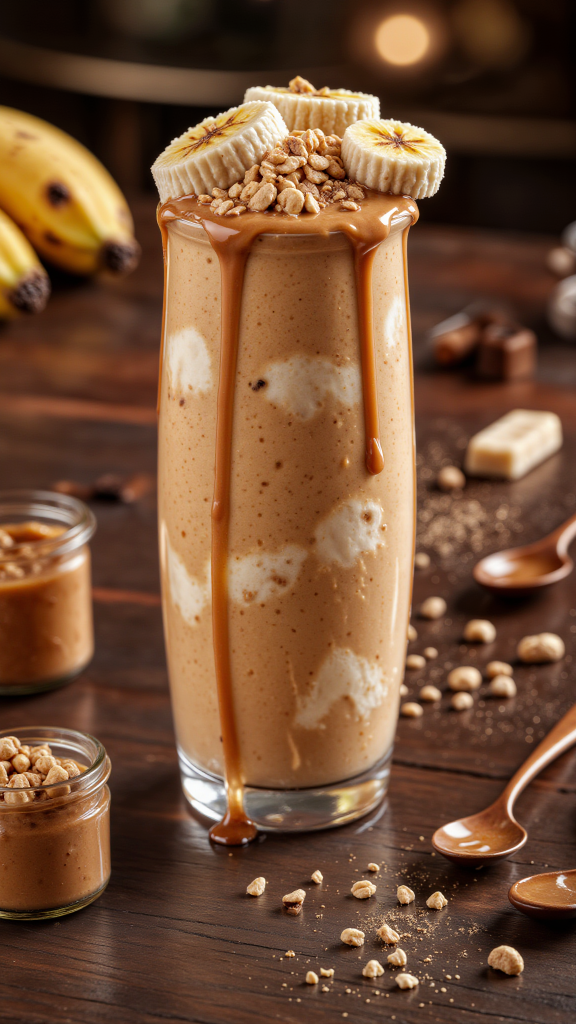
Peanut Butter Banana Protein Shake
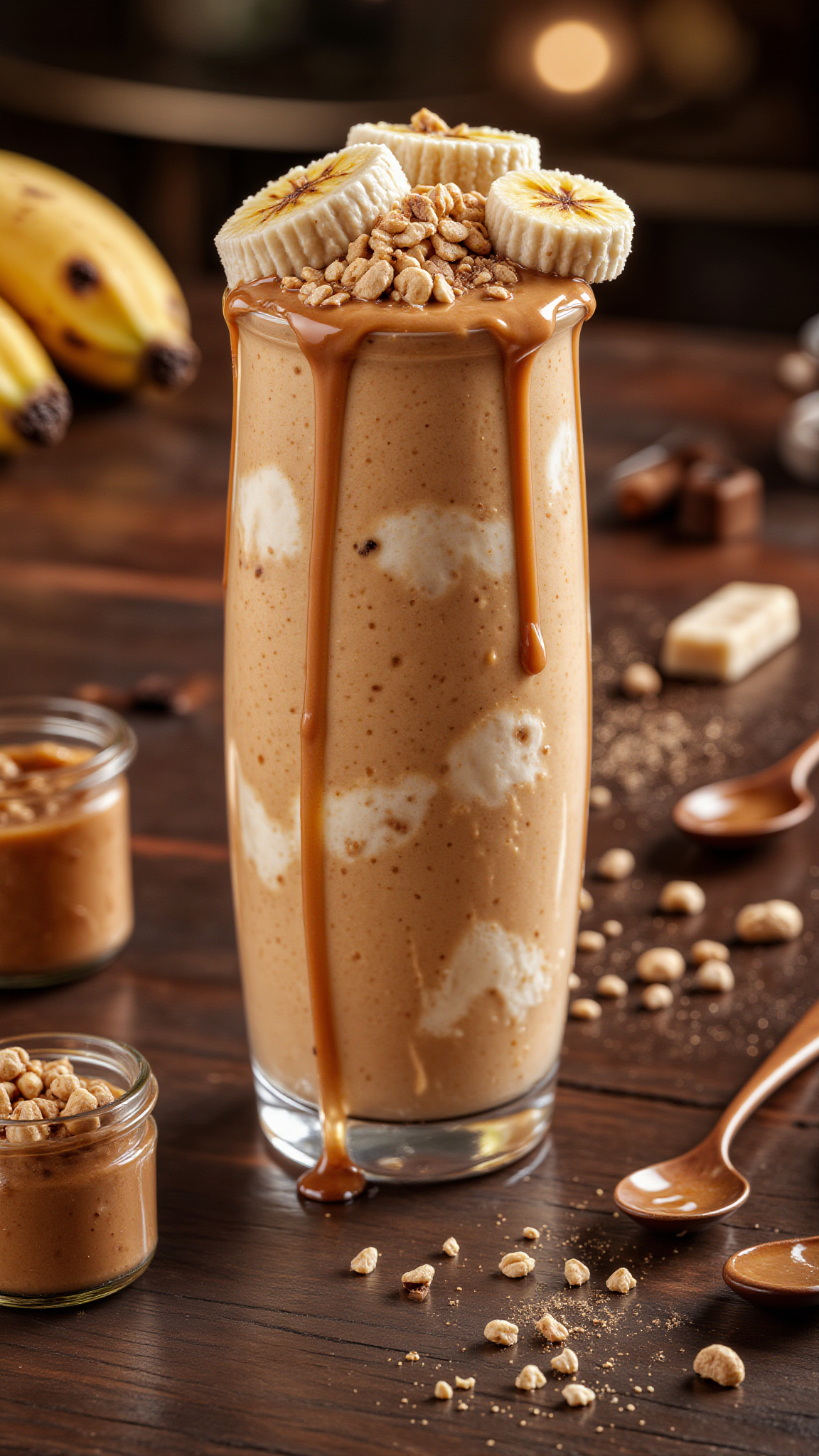
Peanut Butter Banana Protein Shake
This protein shake formula focuses on optimal nutrient absorption through precise ingredient order and blending technique. The method ensures protein powder fully incorporates without clumping, peanut butter emulsifies properly for creamy texture, and frozen banana provides natural sweetness and thickness without dilution. The ratios balance macros for sustained energy while maintaining shake-like drinkability rather than pudding consistency.
Why this recipe works
Ingredient order science. Adding liquid first creates a vortex that pulls dry ingredients down into the blades, preventing protein powder from sticking to container sides and clumping. This specific sequence—liquid, then protein powder, then heavier ingredients—ensures even distribution and smooth incorporation without over-blending, which can denature proteins and create foam.
Frozen banana function. Using frozen rather than fresh banana provides natural thickness without diluting flavor with excess ice. The frozen fruit creates creamy texture through ice crystal structure while contributing natural sweetness that reduces need for added sugars. The starch in ripe bananas also helps emulsify the peanut butter fats into the liquid base.
Peanut butter emulsification. Natural peanut butter contains oils that need proper blending to incorporate rather than separate. Adding it after the initial liquid-powder mix allows the protein to act as an emulsifier, creating stable suspension that prevents oil separation and gritty texture. The timing ensures creamy rather than greasy mouthfeel.
Macro nutrient timing. The 2:1:1 ratio of protein to complex carbs to healthy fats creates optimal nutrient delivery for muscle recovery and sustained energy. The banana provides fast-digesting carbohydrates for immediate energy, peanut butter offers sustained-release fats, and protein powder supports muscle repair—all working together for maximum nutritional benefit.
Flavor layering. The cinnamon enhances natural sweetness without adding sugar, while the vanilla protein provides flavor foundation that complements rather than overwhelms the peanut butter and banana. The optional maple syrup sits at the end of the ingredient list—only added if needed after tasting, preventing over-sweetening.
Ingredients (cups & tablespoons only)
Base Ingredients
- 1 cupunsweetened almond milk
- 1 largeripe banana, frozen
- 2 tbspnatural peanut butter
- 1 scoopvanilla protein powder
Add-ins & Options
- 1 tbspchia seeds
- 1/2 tspcinnamon
- 1 cupice cubes
- 1-2 tspmaple syrup
- —pinch of salt (optional)
Recipe
- Prepare blender: Ensure blender container is dry before adding ingredients. Moisture causes protein powder to stick to sides. Use at least 48-ounce capacity for proper vortex formation.
- Add liquid base: Pour 1 cup almond milk into blender first. The liquid creates necessary vortex for proper incorporation. Cold liquid helps maintain temperature but isn’t essential.
- Incorporate protein: Add 1 scoop protein powder directly into liquid. Add 1 tablespoon chia seeds and 1/2 teaspoon cinnamon at this stage. The dry ingredients will hydrate properly when blended with liquid first.
- Initial blend: Blend on low speed for 10-15 seconds until protein powder is incorporated and no dry spots remain. This prevents clumping and ensures even distribution before adding heavier ingredients.
- Add peanut butter: Add 2 tablespoons natural peanut butter. If using refrigerated peanut butter, measure then let sit briefly to soften for easier blending. Scrape measuring spoon clean.
- Add frozen banana: Break frozen banana into 2-3 chunks if whole frozen. Add to blender. The frozen fruit will thicken the shake and help emulsify the peanut butter.
- Final blend: Blend on high speed for 45-60 seconds until completely smooth and creamy. The shake should have uniform texture with no peanut butter streaks or banana chunks.
- Adjust consistency: If thicker shake desired, add 1 cup ice cubes and blend 30 seconds more. For thinner shake, add 2-4 tablespoons additional milk and blend briefly.
- Taste and sweeten: Taste before adding sweetener. If needed, add 1-2 teaspoons maple syrup or honey. Blend 5 seconds to incorporate.
- Serve immediately: Pour into glass and consume within 10 minutes for optimal texture and nutrient availability. The shake thickens as it sits.
The total blend time should not exceed 2 minutes to prevent protein denaturation and excessive oxidation. The shake is ready when it pours smoothly but coats the back of a spoon.
Nutrition (estimated)
| Nutrient | Amount |
|---|---|
| Calories | ~480 kcal |
| Total Fat | 18 g |
| Saturated Fat | 4 g |
| Trans Fat | 0 g |
| Cholesterol | 25 mg |
| Sodium | 320 mg |
| Total Carbohydrates | 45 g |
| Dietary Fiber | 6 g |
| Total Sugars | 24 g |
| Added Sugars | 4 g |
| Protein | 35 g |
| Vitamin D | 0 mcg |
| Calcium | 380 mg |
| Iron | 2 mg |
| Potassium | 680 mg |
Nutrition calculated with unsweetened almond milk, natural peanut butter, and whey protein powder. Values are estimates and will vary based on specific brands and exact measurements used.
Blending science & ingredient order
Vortex creation
Liquid first allows blades to create proper vortex that pulls ingredients downward. This circulation pattern ensures even incorporation and prevents air pockets that cause inconsistent texture.
Protein hydration
Protein powder needs immediate liquid contact to hydrate properly. Adding it dry to other ingredients causes clumping. The brief initial blend ensures complete dissolution before emulsification begins.
Emulsification timing
Peanut butter added after protein hydration allows the proteins to act as emulsifiers. The fat droplets become evenly distributed throughout the liquid base rather than separating or creating greasy texture.
Texture control & consistency adjustments
Perfect shake texture balances drinkability with substantial mouthfeel. The goal is creamy but pourable—thick enough to feel satisfying but thin enough to drink easily without a spoon.
Texture troubleshooting
- Too thick: Add 1-2 tablespoons liquid at a time and blend briefly. Over-blending thickens shakes through aeration.
- Too thin: Add 1/4 banana (frozen) or 2-3 ice cubes. Additional protein powder also thickens but changes nutritional balance.
- Gritty texture: Under-blended or low-quality protein powder. Blend longer or strain through fine mesh sieve.
- Separating: Insufficient emulsification. Blend longer at high speed or add 1/2 teaspoon lecithin as emulsifier.
- Foamy: Over-blending incorporates too much air. Blend shorter time or let sit 2 minutes before drinking.
The ideal shake should pour smoothly but leave a coating on the blender walls. It should drink easily through a straw but feel substantial in the mouth.
Timing & usage recommendations
Post-workout
Consume within 45 minutes of exercise. The 2:1 carb-to-protein ratio optimizes muscle recovery and glycogen replenishment during the anabolic window.
Meal replacement
Effective breakfast or lunch substitute. The balanced macros provide 4-5 hours satiety. Add 1 tablespoon oats for extended energy.
Pre-workout
Consume 60-90 minutes before exercise. Reduce peanut butter to 1 tablespoon for faster digestion. Provides sustained energy without stomach discomfort.
Common mistakes (and quick fixes)
- Clumpy protein: Added at wrong time or insufficient blending. Always add to liquid first and blend briefly before other ingredients.
- Separated peanut butter: Natural peanut butter not properly emulsified. Blend longer at high speed or add 1/2 teaspoon honey as stabilizer.
- Watery texture: Too much liquid or not enough frozen ingredients. Use frozen banana and reduce milk by 2 tablespoons.
- Too sweet: Overripe banana plus protein powder plus sweetener. Taste before adding sweetener—ripe banana often provides enough sweetness.
- Gummy texture: Over-blending or too much chia seeds. Blend maximum 90 seconds and measure chia seeds accurately.
- Bitter aftertaste: Low-quality protein powder or spoiled banana. Use reputable protein brands and check banana freshness.
- Foam overflow: Overfilled blender or too much protein powder. Leave 2-inch headspace and don’t exceed recommended protein amounts.
Substitutions & variations
Different liquids
- Dairy milk: creamier, more protein
- Oat milk: naturally sweeter, creamier
- Coconut milk: tropical flavor, higher fat
- Water: neutral, lower calorie
Different spreads
- Almond butter: lighter flavor
- Cashew butter: creamier, milder
- Sunflower butter: nut-free option
- Tahini: unique savory note
Different proteins
- Whey: fast absorption
- Casein: slow digestion
- Plant-based: vegan option
- Collagen: gut/joint support
Different profiles
- Chocolate: add 1 tbsp cocoa powder
- Coffee: add 1 tsp instant espresso
- Berry: add 1/2 cup frozen berries
- Tropical: use coconut milk + pineapple
Special diets
- Vegan: plant protein + plant milk
- Keto: reduce banana, add MCT oil
- Paleo: omit protein powder, add egg
- Low-carb: half banana, extra nut butter
Nutrition enhancers
- Greens: 1 tsp spirulina or matcha
- Fiber: 1 tbsp psyllium or oats
- Omega-3: 1 tbsp flax or hemp seeds
- Adaptogens: 1 tsp maca or ashwagandha
Any substitution may affect texture, nutritional balance, and flavor. When making multiple substitutions, adjust liquid amounts accordingly and taste before adding sweeteners.
Equipment notes
- Blender types: High-speed blenders (Vitamix, Blendtec) create smoothest texture. Personal blenders (Nutribullet) work well for single servings. Standard blenders may require longer blending and occasional shaking.
- Container size: Use at least 48-ounce capacity for proper vortex formation. Overfilling prevents proper circulation and causes uneven blending.
- Blade maintenance: Sharp blades create smoother texture. Dull blades crush rather than shear ingredients, creating gritty texture. Replace blades if shake quality declines.
- Measuring tools: Use liquid measuring cups for milk, dry measuring cups for powders. Tablespoon measures for peanut butter and seeds. Digital scale most accurate for protein powder.
- Storage containers: Wide-mouth jars or shaker bottles for storage. Avoid narrow containers that make cleaning difficult. Glass preferred over plastic for flavor neutrality.
- Cleaning: Rinse immediately after use to prevent protein hardening. Use warm soapy water and bottle brush for thorough cleaning. Protein residue causes off-flavors in future blends.
Storage & meal prep
- Immediate consumption: Best consumed within 10 minutes of blending. Texture and nutrient availability peak immediately after preparation.
- Short-term storage: Store in airtight container in refrigerator up to 24 hours. Shake well before drinking as separation occurs.
- Freezing: Freeze in airtight containers up to 1 month. Thaw in refrigerator overnight and shake vigorously before drinking.
- Meal prep: Pre-portion dry ingredients in containers. Add liquid and blend when ready. Pre-frozen banana chunks save time.
- Travel: Use insulated shaker bottles for transport. Consume within 2 hours if unrefrigerated. Ice packs extend safe window.
- Texture restoration: Add 1-2 tablespoons liquid and shake vigorously if stored shake becomes too thick. Brief re-blending improves texture.
FAQ
Can I use fresh banana instead of frozen?
Yes, but add 1 cup ice cubes to achieve proper thickness. Frozen banana provides creamier texture and eliminates need for additional ice that can dilute flavor.
My protein shake is too thick—what happened?
Over-blending, too little liquid, or chia seeds over-absorbing. Add 2 tablespoons liquid and shake rather than re-blending. Next time, measure chia seeds accurately and blend less.
Can I make this without protein powder?
Yes, but protein content drops significantly. Add 1/2 cup Greek yogurt or 1/4 cup oats for thickness and some protein. Flavor will be different but still delicious.
How do I prevent the shake from separating?
Ensure proper emulsification by blending longer at high speed. Adding 1/2 teaspoon lecithin or 1 teaspoon honey helps stabilize the mixture. Shake well before drinking if stored.
Can I use a different nut butter?
Yes, almond butter, cashew butter, or sunflower butter all work well. Adjust sweetness as needed—some nut butters are naturally sweeter or more bitter than peanut butter.
Is this shake good for weight loss?
Yes, as meal replacement providing balanced nutrition and satiety. For lower calorie version, reduce peanut butter to 1 tablespoon and use half banana (saves ~150 calories).
Can I make multiple servings ahead?
Yes, but blend fresh for best texture. Pre-measure dry ingredients and freeze banana portions. The shake stores 24 hours refrigerated but thickens over time.
Recipe notes
- Ingredient order matters. Liquid first prevents clumping and ensures smooth incorporation of dry ingredients.
- Frozen banana is non-negotiable for proper texture. Keep peeled bananas in freezer-ready chunks.
- Blend time affects texture. 45-60 seconds optimal—too short causes grittiness, too long creates foam.
- Taste before sweetening. Ripe banana and vanilla protein often provide enough sweetness without added sugars.
- Consume promptly for optimal nutrient availability and best texture experience.
- Adjust liquid gradually. Start with less, add more as needed. Over-thinning is difficult to correct.
- Clean equipment immediately to prevent protein residue that affects future blends and causes off-flavors.