Maple Roasted Carrots
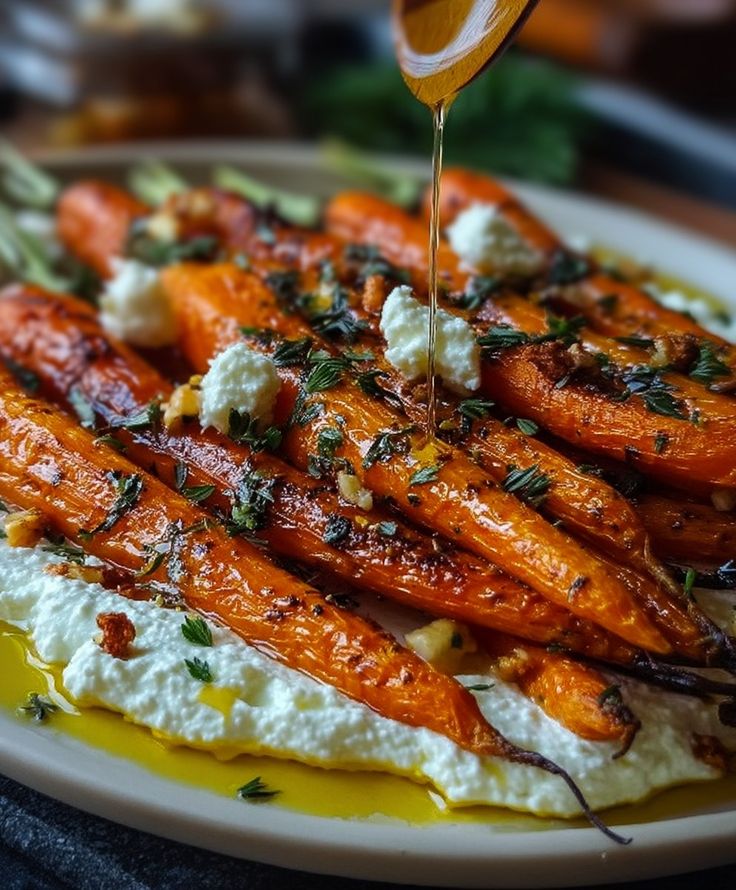
Maple Roasted Carrots with Crispy Chickpeas and Yogurt Sauce
This vegetarian main balances sweet roasted carrots against crispy, spiced chickpeas, all pulled together by a tangy yogurt sauce. The method focuses on achieving proper caramelization without burning the maple glaze, creating truly crispy chickpeas (not just baked beans), and building a sauce that complements without overwhelming. Roasting temperatures, spice ratios, and textural contrasts are precisely calibrated. Everything works for a weeknight but presents like restaurant plating.
Why this recipe works
High-heat caramelization. 425°F is hot enough to create Maillard reaction on the carrot surfaces while cooking them through. The maple syrup burns below 400°F; above 450°F it scorches before carrots tenderize. This temperature gives blistered edges and deep flavor without bitterness.
Dry chickpeas = crisp chickpeas. The most common error is insufficient drying. Rinsed chickpeas hold surface water that steams instead of crisping. Patting thoroughly dry and using enough oil creates a cracker-like texture, not leathery beans.
Spice layering. Smoked paprika on chickpeas complements the carrots’ sweetness without competing. Cumin adds earthiness; a hint of cayenne (optional) provides subtle heat that cuts through the richness. Applying spices before roasting toasts them, deepening their flavor.
Sauce as foundation. The yogurt sauce serves multiple purposes: cooling contrast to warm vegetables, tangy balance to sweet maple, and visual base for plating. Thinning it slightly lets it spread without pooling.
Textural contrast. Soft carrots, crispy chickpeas, creamy sauce, and crunchy seeds create multiple sensations in each bite. This transforms simple ingredients into a composed dish.
Ingredients (cups & tablespoons only)
Roasted Vegetables
- 2 lbsmedium carrots, peeled & halved
- 1 canchickpeas (15 oz), rinsed & dried
- 3 tbspolive oil, divided
- 3 tbsppure maple syrup
- 1 tspsmoked paprika
- 1/2 tspground cumin
- 1/4 tspcayenne (optional)
- 1 tspkosher salt, divided
- 1/2 tspblack pepper, divided
Yogurt Sauce & Toppings
- 1 cupplain Greek yogurt (whole milk)
- 1 clovegarlic, minced
- 2 tbsplemon juice, divided
- 2 tbspfresh dill or parsley, chopped
- 1/4 cuptoasted pumpkin seeds or walnuts
- 1-2 tbspwater (to thin sauce)
Recipe
- Prep oven & pans: Preheat to 425°F with racks in upper and lower thirds. Line two baking sheets with parchment paper.
- Prepare carrots: Peel carrots and halve lengthwise. If very thick, quarter lengthwise. Toss with 2 tbsp olive oil, maple syrup, 1/2 tsp salt, and 1/4 tsp black pepper until evenly coated.
- Prepare chickpeas: Rinse and drain chickpeas. Spread on clean kitchen towel and pat thoroughly dry—this is crucial for crispness. Transfer to bowl and toss with remaining 1 tbsp oil, smoked paprika, cumin, cayenne (if using), 1/4 tsp salt, and 1/8 tsp pepper.
- Arrange for roasting: Spread carrots in single layer on one prepared sheet. Spread chickpeas in single layer on second sheet. Don’t overcrowd—use additional sheets if necessary.
- Roast: Place both sheets in oven. Roast 25-35 minutes, swapping pan positions and rotating halfway through, until carrots are tender and caramelized at edges, and chickpeas are crispy.
- Make sauce: While vegetables roast, combine yogurt, garlic, 1 tbsp lemon juice, remaining 1/4 tsp salt, and 1/8 tsp pepper. Whisk in 1-2 tbsp water until sauce is pourable but still thick.
- Assemble: Spread yogurt sauce on serving platter. Arrange roasted carrots over sauce. Top with crispy chickpeas, fresh herbs, remaining 1 tbsp lemon juice, and toasted seeds or nuts.
- Serve: Serve immediately while carrots and chickpeas are warm and crispy.
Chickpeas will soften as they sit—add them just before serving to maintain texture.
Visual cues & temperature control
Carrot doneness
Look for deeply caramelized edges and blistered spots. A paring knife should slide through thickest part with slight resistance—fully soft means overcooked. Some wrinkling is desirable.
Chickpea crispness
Properly crispy chickpeas will sound hollow when shaken on the pan. They should be lightly browned and firm, not soft in the center. If still soft, roast 5 more minutes.
Oven hot spots
Rotate pans front-to-back and swap positions top-to-bottom halfway through. If your oven runs hot, reduce to 400°F after 20 minutes to prevent burning.
Texture control (crispy chickpeas)
The drying step is non-negotiable. After rinsing, spread chickpeas on a clean kitchen towel and rub gently with another towel or paper towels. They should feel completely dry to the touch—any moisture will steam during roasting.
Oil distribution. Use enough oil to coat each chickpea lightly but completely. The oil conducts heat and creates crispness. Too little oil = tough; too much = greasy.
Single layer spacing. Crowded chickpeas steam instead of roast. They shouldn’t touch each other on the baking sheet. Use two sheets if necessary.
Roast until truly crispy. Chickpeas go through stages: wet → drying → leathery → crispy. Don’t stop at leathery—continue roasting until they’re light brown and firm throughout.
Yogurt sauce balance
The sauce should be tangy but not sharp, creamy but not thick. Whole-milk Greek yogurt provides the best texture and richness.
Adjusting consistency & flavor
- Too thick: Whisk in water 1 tbsp at a time until pourable but still coats the back of a spoon.
- Too tangy: Add a pinch of sugar or drizzle of honey to balance acidity.
- Garlic too strong: Let sauce sit 10 minutes—the flavor will mellow. For immediate serving, use garlic powder instead of fresh.
- Bland: Add more salt and lemon juice in small increments, tasting as you go.
Make the sauce while vegetables roast to allow flavors to meld.
Common mistakes (and quick fixes)
- Burnt maple syrup: Oven too hot or carrots too crowded. Reduce temperature to 400°F and ensure space between carrots.
- Soft chickpeas: Insufficient drying or overcrowding. Pat completely dry next time; spread in single layer with space between.
- Undercooked carrots: Cut pieces too thick or oven temperature too low. Halve or quarter thicker carrots; verify oven temperature with thermometer.
- Sauce too runny: Added too much water. Thicken by stirring in additional yogurt or a tablespoon of tahini.
- Spices burning: Cayenne and paprika can burn at high heat. If using a convection oven, reduce temperature by 25°F.
- Soggy leftovers: Components stored together. Store carrots, chickpeas, and sauce separately; reheat carrots and chickpeas before serving.
Substitutions & variations
Dairy-free sauce
- Use plain coconut yogurt or cashew cream.
- Maple syrup stays vegan; verify brand.
Different flavor profiles
- Harissa + coriander for North African
- Garam masala + turmeric for Indian
- Za’atar + sumac for Middle Eastern
Beyond carrots
- Sweet potatoes (cut smaller)
- Parsnips or rainbow carrots
- Butternut squash cubes
Seed toppings
- Sunflower seeds instead of walnuts
- Hemp hearts or sesame seeds
- Toasted coconut flakes
Reduced sweetness
- Use 1 tbsp maple syrup + 1 tbsp oil
- Add 1 tsp balsamic vinegar for depth
More substantial meal
- Add 1 cup cooked quinoa or farro
- Top with fried halloumi or feta
When substituting root vegetables, adjust roasting times based on density and moisture content.
Pairing & plating
- As a vegetarian main: Serve with crusty bread or over a grain like farro, quinoa, or couscous.
- As a side dish: Excellent with roast chicken, grilled fish, or lamb.
- Plating style: Swirl sauce on plate, arrange carrots artistically, scatter chickpeas, then finish with herbs and seeds.
- Garnish options: Fresh mint, microgreens, pomegranate seeds, or crumbled feta cheese.
- Sauce variations: Add 1 tbsp tahini to yogurt sauce; mix with harissa for spicy version; or add fresh herbs directly to sauce.
Scaling & make-ahead
Half batch (serves 2)
- Carrots: 1 lb
- Chickpeas: 3/4 cup cooked
- Oil: 1.5 tbsp total
- Maple: 1.5 tbsp
- Spices: halve all
- Yogurt: 1/2 cup
Double batch
Use 3-4 baking sheets and rotate more frequently. Consider roasting in consecutive batches if oven space is limited—keep first batch warm in 200°F oven.
Make-ahead strategy
Roast carrots and chickpeas up to 2 days ahead; re-crisp in 400°F oven for 5-7 minutes. Make sauce up to 3 days ahead. Store components separately; assemble just before serving.
Equipment notes
- Baking sheets: Light-colored, heavy-duty sheets prevent burning. Dark sheets may require reducing temperature by 25°F.
- Parchment vs. foil: Parchment prevents sticking without affecting browning. Foil can create hot spots.
- Oven thermometer: Crucial for accuracy. Home ovens often run 25-50°F hot or cold.
- Vegetable peeler: A Y-peeler removes carrot skin efficiently with less waste.
- Kitchen towels: Clean, lint-free towels are essential for drying chickpeas thoroughly.
Nutrition (estimated)
| Nutrient | Amount |
|---|---|
| Calories | ~380 kcal |
| Total Fat | 14 g |
| Saturated Fat | 2 g |
| Carbohydrates | 58 g |
| Total Sugars | 32 g |
| Fiber | 11 g |
| Protein | 10 g |
| Sodium | ~520 mg |
| Serving Size | 1/4 recipe |
Numbers are estimates and will vary based on specific ingredients, especially maple syrup sweetness and yogurt fat content.
Storage & reheating
- Refrigeration: Store components separately for up to 3 days. Carrots and chickpeas in airtight containers; sauce in separate container.
- Freezing: Not recommended for assembled dish. Roasted carrots freeze poorly (become mushy). Chickpeas can be frozen for up to 1 month.
- Reheating carrots: Spread on baking sheet; warm at 400°F for 5-7 minutes until heated through.
- Re-crisping chickpeas: Same method as carrots—400°F for 5-7 minutes until crispy again.
- Sauce: Serve cold or at room temperature; do not heat.
- Assembled leftovers: Best within 1 day; chickpeas will soften but flavor remains good.
FAQ
Can I use honey instead of maple syrup?
Yes, but honey burns at a lower temperature. Reduce oven to 400°F and watch carefully during the last 10 minutes of roasting.
My chickpeas are still soft after 35 minutes—what happened?
They were likely not dried thoroughly enough or were overcrowded on the pan. Continue roasting 5-10 more minutes, checking frequently.
Can I use regular yogurt instead of Greek?
Yes, but strain it through a cheesecloth for 30 minutes first to thicken, or the sauce will be too runny.
What if my carrots are burning before they’re cooked through?
Your oven is too hot or your carrot pieces are too thick. Reduce temperature to 400°F and tent with foil for the first 20 minutes, then remove to caramelize.
Can I make this with canned carrots?
Not recommended—canned carrots are already cooked and will become mushy. The texture and caramelization won’t develop properly.
How do I prevent the spices from burning on the chickpeas?
Make sure chickpeas are completely coated in oil before adding spices—this creates a protective layer. Also, don’t use ground spices that are old as they burn more easily.