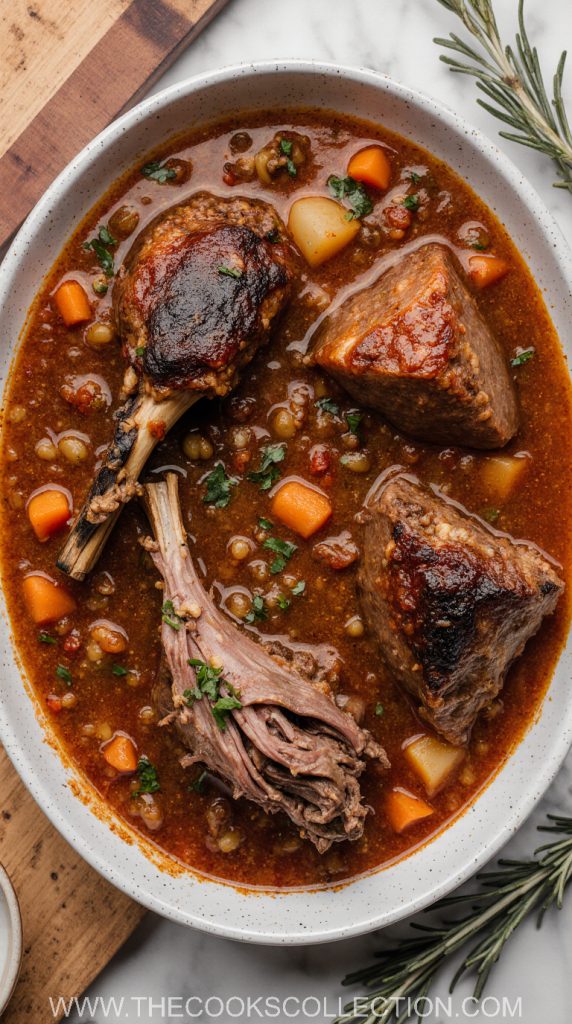
Red Wine Braised Beef Shanks
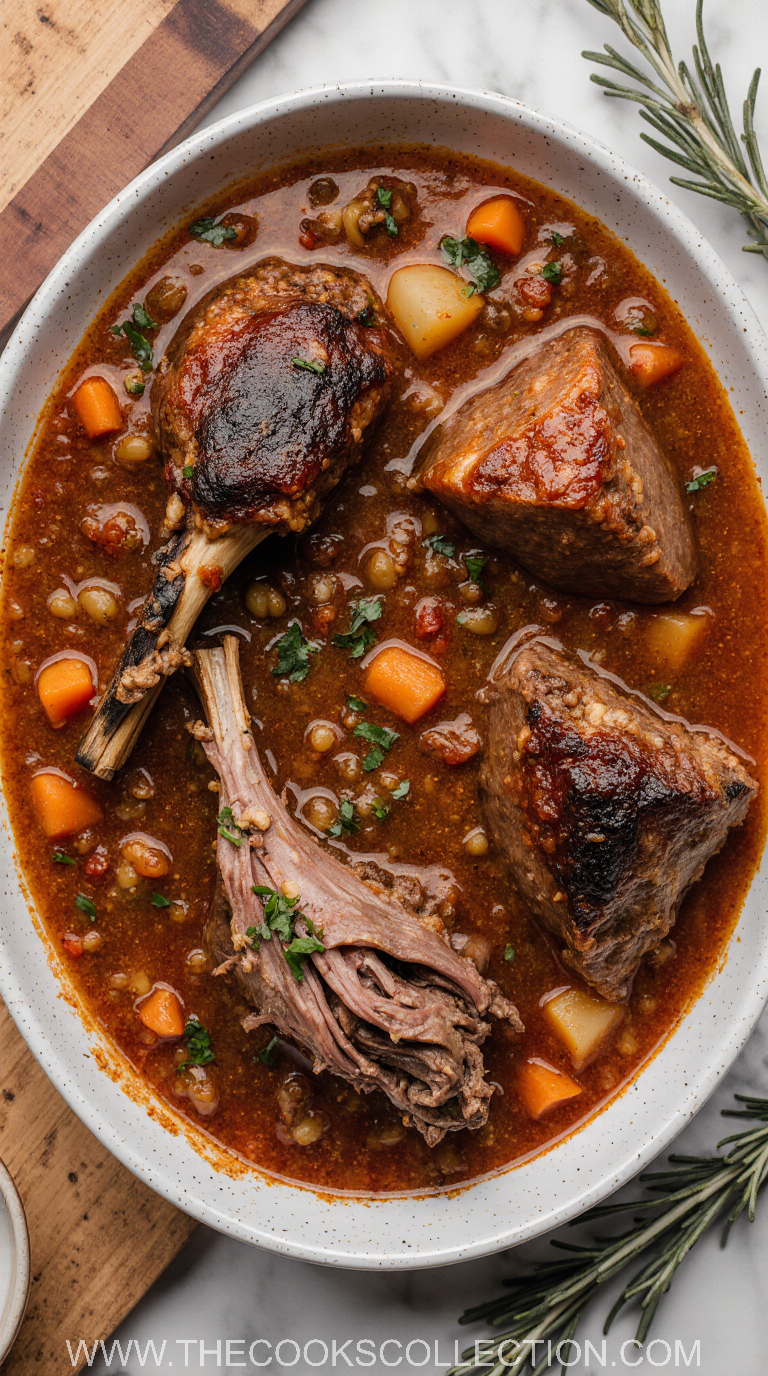
Red Wine Braised Beef Shanks with Root Vegetables
This is a classic low-and-slow braise tuned for reliability. We brown thick beef shanks hard, build a concentrated base with tomato paste and wine, then add stock and herbs for a clean, savory jus that turns glossy as the collagen melts. Vegetables go in late so they keep structure and don’t dissolve into mush. Finish with a small knob of butter and a shot of acid and the whole thing tastes like it simmered in a restaurant pot all day.
Why this recipe works
Shank choice = built-in gelatin. Beef shank sits around the leg bone with loads of collagen. Low heat transforms that collagen into gelatin, which thickens the braising liquid naturally without floury heaviness. That’s why the finished sauce reads glossy and savory, not starchy.
Two-stage braise for texture. We cook meat alone first to get a head start on tenderness, then add vegetables for the final stretch. That keeps carrots and potatoes intact. If you dump everything in at once for a long braise, the veg shred and the starch muddies the sauce.
Tomato paste + wine reduced correctly. Browning the paste until brick red concentrates flavor and kills raw acidity. Reducing the wine by ~half drives off harsh alcohol and sets the sauce’s backbone before stock goes in. Skipping either = thin and sour.
Small acid at the end. A teaspoon of vinegar or lemon at the finish sharpens the jus after hours of heat. The butter emulsifies and softens the edges. Together they turn “stew” into a restaurant glaze.
Ingredients (cups & tablespoons only)
Beef & Base
- 4–5beef shanks, 1 1/2–2 in thick (4 1/2–5 lb)
- 2 tspkosher salt, plus more to finish
- 1 tspblack pepper
- 1/4 cupflour for light dredge (optional)
- 2 tbspolive oil
- 1 tbspbutter
- 1 cupdiced onion
- 1/2 cupdiced celery
- 1 cupdiced carrot
- 4garlic cloves, minced
- 2 tbsptomato paste
Braising Liquid & Finish
- 1 1/2 cupsdry red wine
- 3 cupslow-sodium beef broth
- 1 tbspWorcestershire sauce
- 1 tspsoy sauce, optional (umami)
- 2bay leaves
- 4 sprigsthyme
- 1 sprigrosemary
- 1 striporange peel (1×3 in), optional
- 2 cupspeeled potatoes, 1/2-in cubes
- 1 1/2 cupscarrot chunks
- 1 cupparsnip chunks (or more carrot)
- 1/2 cupsliced celery
- 1 tbspred wine vinegar or lemon juice
- 1 tbspcold butter
- 1 tbspcornstarch + 1 tbsp water (optional thickener)
- 2 tbspchopped parsley
Recipe
- Prep meat: Pat shanks dry. Tie kitchen twine around the outside of each piece (belt the meat so it stays attached to the bone). Season all sides with salt and pepper. Optional: light flour dust for a slightly thicker jus; tap off excess.
- Sear: Heat a 6–7 qt Dutch oven over medium-high. Add olive oil and butter. Brown shanks in two batches, 4–5 minutes per side, until deep brown. Transfer to a tray. Don’t crowd or you’ll steam.
- Aromatics: Lower heat to medium. Add onion, diced carrot, and celery with a pinch of salt; cook 5–6 minutes, scraping fond. Stir in garlic and tomato paste; cook 60–90 seconds until the paste turns darker and sticks lightly to the bottom.
- Deglaze: Pour in red wine. Scrape the bottom clean. Simmer 3–4 minutes to reduce by roughly half (no sharp alcohol smell). Stir in broth, Worcestershire, soy (optional), bay, thyme, rosemary, and orange peel.
- Braise: Return shanks and their juices. Liquid should come ~2/3 up the sides; top up with a splash of broth or water if needed. Bring to a gentle simmer.
- Cook (choose one): Oven: Cover and bake at 325°F for 1 hour 45 minutes. Stovetop: Cover and simmer on low (bare bubble) 1 hour 45 minutes, turning shanks once.
- Vegetables: Add potatoes, carrot chunks, parsnip, and celery. Return to the oven or continue on the stovetop 35–45 minutes until shanks are spoon-tender and vegetables are just soft but not falling apart.
- Finish sauce: Transfer shanks and vegetables to a warm platter; tent. Discard herb stems and peel. Skim fat. If you want a lightly thicker sauce, whisk in cornstarch slurry and simmer 1–2 minutes. Off heat, stir in cold butter and vinegar (or lemon). Taste; add salt if needed.
- Serve: Cut away twine. Spoon vegetables and glossy jus over the shanks; finish with parsley. Serve with crusty bread, buttered noodles, mashed potatoes, or polenta.
Target for doneness: the meat pulls from the bone with light pressure and strands separate when pressed with a spoon.
Browning cues (what you should see and smell)
Color
You’re chasing deep brown with a few nearly black edges—not gray. If the pan looks dry or starts to smoke, drop heat slightly and add 1 teaspoon oil.
Fond
The pan bottom should collect a dark, sticky layer. That’s flavor. Don’t burn it. If it goes past mahogany to black, splash a tablespoon water and scrape immediately.
Space
Shanks need air. Crowding drops pan temp and you lose sear. Two batches are normal for a 12-inch surface.
Liquid ratio & reduction logic
Why 1 1/2 cups wine + 3 cups stock? That splits acidity and savor while leaving room for reduction without turning syrupy early. The meat’s collagen will thicken the sauce as it melts; you don’t need much flour (or any).
Wine reduction timing. If the wine still smells boozy when you add stock, the finished sauce tastes sharp. Give it a focused 3–4 minute simmer—watch for steam to slow and surface bubbles to go from big and loose to tighter and glossier.
Depth boosters. A spoon of Worcestershire and a dash of soy push umami without tasting like either ingredient. They replace hours of stock reduction.
Vegetable timing (no mush, no crunch)
Potatoes and carrots soften fast in a salty, simmering liquid. Add them for only the final 35–45 minutes, depending on cut size. Keep pieces around 1/2-inch for potatoes and 3/4-inch for carrots/parsnips. Smaller cubes turn gravy; larger chunks fight the spoon.
Want ultra-clean jus? Braise meat completely without vegetables. Simmer them separately in lightly salted water until just tender, then fold into the finished sauce. It’s one more pot but pristine.
Substitutions & variations
Balsamic & stock
- Replace wine with 1 cup beef stock + 1/2 cup water + 2 tbsp balsamic.
- Reduce balsamic by 1 tbsp if your brand is very sweet.
Chuck roast
- Use 3 1/2–4 lb chuck, cut into 3-inch chunks. Same method/time.
- Skip twine, obviously.
Osso buco vibe
- Add 1 tsp lemon zest + 2 tbsp chopped parsley + 1 small garlic clove minced at the end (gremolata).
- Swap some potatoes for 1 cup diced tomatoes (with juices).
No flour
- Skip the dredge. If you want a slightly thicker finish, use the cornstarch slurry or reduce longer.
Forest add-on
- Sauté 8 oz sliced cremini in 1 tbsp butter until brown; add with the vegetables.
Beer braise
- Use 1 1/2 cups dark lager or brown ale in place of wine; keep the rest the same.
Any swap changes salt balance. Taste the finished jus and adjust with a pinch of salt and a small acid shot.
Sides & plating
- Starch: Creamy polenta, buttered egg noodles, or mashed potatoes catch every drop.
- Green: A sharp salad (arugula + lemon) or garlicky green beans to cut richness.
- Bread: A warm baguette or sourdough slab for dunking.
- Wine pairing: Whatever you cooked with. If you used beer, pour the same one.
Make-ahead, freezing, pressure cooker
Make-ahead overnight
Like most braises, this gets even better the next day. Cool, refrigerate covered. Next day, lift off the chilled fat, rewarm gently, and finish with butter + vinegar right before serving.
Freeze
Cool fully. Portion meat with some jus and vegetables in freezer bags or containers. Freeze up to 3 months. Thaw overnight and reheat covered over low with a splash of stock.
Pressure cooker (Instant Pot)
- Sear on Sauté. Build sauce as written.
- Pressure cook 45 minutes at High, natural release 15 minutes.
- Add vegetables and simmer on Sauté 10–12 minutes until tender.
- Finish with butter + vinegar.
Troubleshooting
- Meat is tough after 2 1/2 hours: It’s undercooked. Collagen hasn’t melted yet. Keep going 20–30 minutes and check again.
- Jus tastes thin: Reduce uncovered 5–10 minutes until it lightly coats a spoon; finish with butter. A pinch of salt at the end often fixes “thin” flavor.
- Jus is too acidic: Whisk in 1 tsp honey or a small knob of butter and simmer 1 minute.
- Vegetables too soft: Cut larger next time and add later. For now, strain them out, reduce the sauce, and gently fold them back to avoid breakup.
- Sauce greasy: Chill briefly and spoon off fat, or drag folded paper towels lightly across the surface to absorb.
Nutrition (estimated)
| Nutrient | Amount |
|---|---|
| Calories | ~640 kcal |
| Total Fat | 33 g |
| Saturated Fat | 12 g |
| Carbohydrates | 28 g |
| Sugars | 6 g |
| Fiber | 4 g |
| Protein | 54 g |
| Sodium | ~980 mg |
| Serving Size | ~10 oz cooked beef + vegetables + 1/3 cup jus |
Numbers vary by shank size, trim, and how far you reduce. Use as a guide.
FAQ
Can I skip tying the shanks?
You can, but the meat will often slough off the bone during the first hour and shred. The twine keeps a clean presentation and makes flipping easier.
Which pot works best?
A heavy Dutch oven with tight lid. Thin pots scorch around the edges and reduce unevenly.
Can I add peas or green beans?
Yes. Stir blanched peas in during the last 5 minutes off heat. For green beans, simmer separately until tender-crisp and fold in at the end.
What if I don’t have tomato paste?
Use 1/2 cup crushed tomatoes cooked down a few minutes. You lose some concentration; reduce the liquid a bit longer.
Bone marrow: scoop or serve?
Both. The marrow is buttery and excellent on toast. If some escapes into the sauce, that’s flavor—leave it.
Cook notes
- Salt in layers. Season meat at the start and taste the jus at the end. Don’t chase “restaurant” flavor with too much early salt; reduction concentrates it.
- Gentle simmer only. Vigorous boil tightens meat. Bubbles should be lazy.
- Flip once mid-braise. That evens exposure and prevents the top from drying.
- Acid & butter at the end. The smallest knob of butter + vinegar is the difference between “good stew” and “polished braise.”
- Rest before serving. Five minutes on the platter lets juices relax and surface fat rise for skimming.