Crispy Salmon Bites with Lemon-Dijon Cream
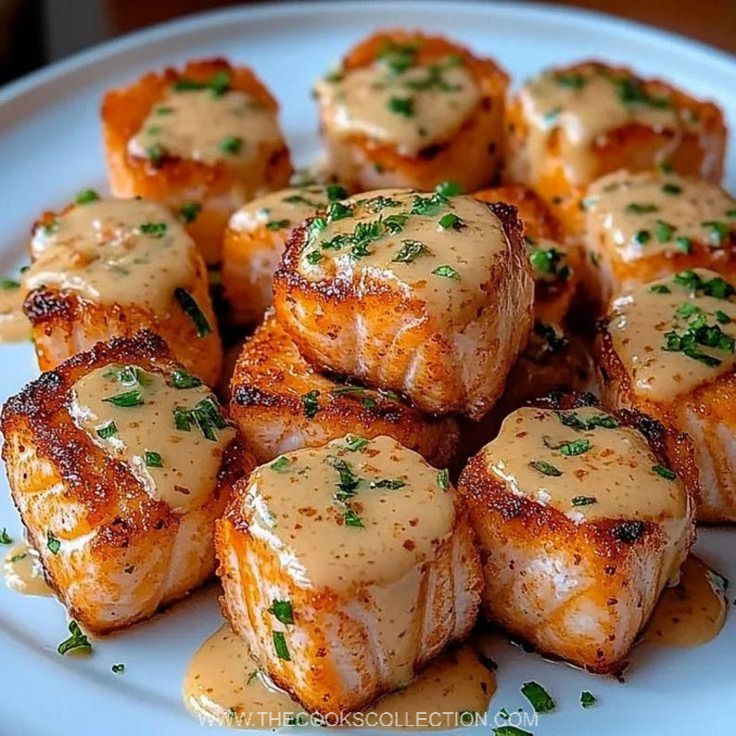
Crispy Salmon Bites with Lemon-Dijon Cream (Skillet or Air Fryer)
You want hard sear and buttery centers—fast. The play is simple: dry-brine the cubes so the surface dehydrates, season with a light rub that won’t burn, hit a hot pan with oil plus a little butter for flavor, and stop the cook as soon as the sides turn opaque. The pan sauce borrows the fond, stays glossy, and doesn’t fight the fish. Works as a weeknight dinner over rice or as cocktail bites on toothpicks.
Why this recipe works
Dry-brine first. A short, light salting pulls a little surface moisture and seasons the interior. The outside dries so the cubes brown on contact instead of steaming. Fifteen to thirty minutes is enough; you’re not curing—just improving sear and seasoning.
Right cube size. Salmon is delicate. At 1 1/4-inch cubes, the outside browns before the center overcooks. Smaller cubes dry out; larger ones need lower heat and lose crust. Keep sizes uniform for even timing.
Oil + butter. Oil handles the heat; butter brings browned-milk-solid flavor and helps crust formation. Use them together and you get color without burnt flavor.
Move, don’t stir. You’re cooking multiple faces quickly. Turn with tongs every 45–60 seconds rather than tossing; that preserves the crust and keeps the interior medium.
Pan sauce uses fond, not fish juices. Deglaze with wine (or broth). The reduction plus cream and Dijon emulsify into a glossy spoonable sauce that sticks to the cubes instead of sliding off.
Ingredients (cups & tablespoons only)
Salmon Bites
- 1 3/4–2 lbskinless salmon, center-cut, cubed 1 1/4 inches
- 1 1/4 tspkosher salt (Diamond Crystal) for dry-brine
- 1 tsppaprika
- 1/2 tspgarlic powder
- 1/2 tsponion powder
- 1/4 tspblack pepper
- pinchcayenne, optional
- 1 1/2 tbspneutral oil (avocado, canola)
- 1 tbspunsalted butter
- 1 tsplemon zest, fine
- 2 tspminced parsley
Lemon-Dijon Cream
- 2 tbspunsalted butter
- 2 tbspminced shallot (or 1 tbsp red onion)
- 1/2 cupdry white wine (or low-sodium chicken broth)
- 3/4 cupheavy cream
- 1 tbspDijon mustard
- 1 tbspfresh lemon juice
- 1/4 tspfine salt + pinch pepper, to taste
Recipe
- Dry-brine: Pat cubes dry. Sprinkle evenly with kosher salt and set on a rack over a tray. Refrigerate uncovered 15–30 minutes (up to 2 hours for extra seasoning). Blot surface again—lightly.
- Season: Mix paprika, garlic powder, onion powder, pepper, and cayenne. Toss salmon gently to coat. Keep cold while you heat the pan.
- Sear—skillet method: Heat a large heavy skillet (12-inch cast-iron or stainless) over medium-high until hot. Add oil; when shimmering, add butter. Lay in salmon without crowding. Cook 60–90 seconds until the first side is deeply golden and releases easily. Turn and sear 45–60 seconds per additional face—3 to 4 sides total—until the middle looks just opaque. Total time: 3–4 minutes depending on thickness. Move to a warm plate; sprinkle lemon zest and parsley.
- Pan sauce: Reduce heat to medium. Add 2 tbsp butter and shallot; cook until fragrant, 60–90 seconds. Deglaze with wine; boil until reduced by about half, scraping up browned bits. Stir in cream and Dijon; simmer 1–2 minutes until the spoon leaves a light trail. Off heat, add lemon juice, taste for salt and pepper.
- Serve: Spoon sauce over salmon bites or serve as a dip. Add extra parsley if you want color.
- Air-fryer method: Toss seasoned salmon with 1 tbsp oil. Air-fry at 400°F for 6–8 minutes, shaking once, until edges are crisp and centers opaque. Make the sauce on the stove while the salmon cooks.
Aim for medium doneness. Salmon keeps cooking off heat; pull earlier rather than later.
Visual cues
Surface dryness
Before searing, the cubes should look matte, not wet. If they glisten, blot. Wet fish = steam = no crust.
Right pan temp
Oil should shimmer and loosen; a corner of salmon placed on the pan should sizzle instantly. If it smokes hard, lower the heat for 20–30 seconds.
Doneness
Look at the side: color changes from translucent to opaque from the bottom up. Pull when the center band is still slightly rosy; it finishes on the plate.
Skillet vs. air fryer
Skillet (best crust)
Direct contact equals deeper Maillard and buttery flavor from the pan fats. Use a wide pan for space; two smaller pans beat one crowded pan.
Air fryer (hands-off)
Clean and consistent. The crust is good but a shade lighter. Preheat the basket and don’t forget oil; dry fish in a dry basket goes leathery.
Hybrid
Air-fry to almost done, then kiss a hot pan with a pat of butter 30–40 seconds for flavor and sheen. Works when cooking for a crowd.
Lemon-Dijon cream that doesn’t split
Fat + water balance. You’re reducing wine (water + acid) and finishing with cream and butter (fat). Bring the wine to a quick boil to drive off harsh alcohol and concentrate flavor, then add cream and simmer gently. Don’t blast it—hard boiling can separate cream.
Dijon after reduction. Mustard is an emulsifier and brings heat. Stir it in with the cream so it integrates instead of seizing in a hot, thin liquid.
Acid at the end. Lemon juice goes in off heat so the emulsion stays stable. If you need more tartness, add a splash more at the table.
Adjustments
- Too thin: Simmer 30–60 seconds more. Sauce should lightly coat a spoon.
- Too thick: Whisk in 1–2 tbsp warm water or broth.
- Looks broken: Take off heat and whisk in 1 tsp cold cream or a small pat of butter.
Troubleshooting (fast fixes)
- No browning: Pan too cool or fish too wet. Blot and increase heat; give the cubes space.
- Burnt spices: Heat too high or sugary rub. Use the rub listed; it’s low sugar and color-forward. Lower the heat and add a touch more oil between batches.
- Dry fish: Overcooked. Cut the cubes to uniform size and stop at medium. Next round, shave 30–45 seconds off the cook and rest the fish.
- Sauce dull or flat: Needs salt and acid. Add a pinch of salt and another 1/2 tsp lemon juice until it pops.
Substitutions & variations
Coconut-lemon
- Swap cream with 3/4 cup full-fat coconut milk.
- Skip butter; cook in oil. Finish sauce with extra lemon and a pinch of salt.
Lemon-tarragon
- Stir 1 tsp chopped tarragon into the finished sauce.
- Grate in 1/2 tsp lemon zest for perfume.
Cajun honey
- Add 1/2 tsp Cajun seasoning to the rub.
- Whisk 1 tsp honey into the sauce to balance heat.
Broth + capers
- Use chicken broth. Add 1 tsp capers (rinsed) for briny lift.
Cobia, halibut, or cod
- Use firm, thick fillets. Cube to the same size. Cook time may increase 1–2 minutes.
Already is
- Recipe is naturally GF—just confirm your Dijon and broth are GF.
Any swap shifts salt, fat, and acidity. Taste and adjust at the end.
Pairings & sides
- Green rice: Toss hot jasmine rice with chopped herbs, lemon zest, and olive oil.
- Shaved asparagus salad: Thin asparagus ribbons + arugula + lemon + Parmesan.
- Roasted potatoes: Small cubes, high heat, finish with parsley and a squeeze of lemon.
- Vegetable option: Blistered green beans with garlic and a touch of soy (or tamari).
- Appetizer mode: Skewer a bite, drizzle a dot of sauce, finish with chive. Done.
Batching & service
Half batch (serves 2)
- Salmon 1 lb; Salt 3/4 tsp (Diamond)
- Oil 2 tsp; Butter 2 tsp
- Sauce: Wine 1/4 cup; Cream 1/3 cup; Dijon 1 1/2 tsp; Lemon 2 tsp
Holding
Cook bites and hold on a rack in a 250°F oven up to 20 minutes. Sauce stays warm on the lowest burner, covered; stir every few minutes.
Service tempo
Work in two pans or cook two waves: while the first wave rests on the rack, sear the second. Sauce in the middle, not at the very end.
Equipment notes
- Pan: A 12-inch cast-iron or heavy stainless pan holds heat and builds fond. Nonstick works but browning will be lighter.
- Fish spatula or tongs: You want gentle handling with thin edges for clean flips.
- Instant-read thermometer (optional): Pull around 120–125°F for medium; carryover takes it to ~130°F.
Nutrition (estimated)
| Nutrient | Amount |
|---|---|
| Calories | ~420 kcal |
| Total Fat | 29 g |
| Saturated Fat | 9 g |
| Carbohydrates | 4 g |
| Total Sugars | ~1 g |
| Fiber | 0 g |
| Protein | 34 g |
| Sodium | ~520 mg |
| Serving Size | 8–9 bites + 2 tbsp sauce |
Numbers vary with salmon fat content and how much sauce you use. Treat as a guide.
Storage & reheating
- Fridge: Salmon bites keep 2 days. Store sauce separately.
- Reheat: Air-fryer 350°F for 2–3 minutes or skillet on medium with a film of oil 60–90 seconds. Warm sauce gently; don’t boil.
- Freeze: Not ideal for texture, but possible: freeze cooked, un-sauced bites up to 1 month. Reheat from frozen in a 375°F oven 8–10 minutes.
FAQ
Skin on or off?
Off for cubes—it’s hard to keep skin attached on all faces. If yours has skin, cube, then trim skin from each piece with a sharp knife.
Can I use frozen salmon?
Yes. Thaw overnight in the fridge, then pat very dry. Frozen fish sheds more water—dry-brine and thorough blotting are critical.
Is the wine necessary?
No. Use broth plus 1 tsp lemon juice added with the cream. You’ll lose some depth but it’s still solid.
How spicy is it?
Only a whisper from cayenne. Skip it or double it—your call.
Can I cook the sauce first?
Yes. Make the sauce in a small pan while the salmon cooks in a separate skillet. Keep the sauce on low.
Cook notes
- Uniform cubes = uniform doneness. Trim thin tail sections and save for salmon cakes; use the thicker center for cubes.
- Don’t chase color on every side. Three good faces are enough. Overflipping kills moisture.
- Season lightly. Fish is delicate. Salt in the dry-brine plus a restrained rub tastes clean; heavy seasoning tastes muddy.
- Use the rack. Resting on a rack instead of a plate keeps bottoms from steaming soft while you sauce.
- Taste the sauce at the end. The correct finish is lemony-savory, not sharp; add a pinch of salt or a few drops of lemon until it pops.