Creamy Basil–Pea Pesto Rigatoni
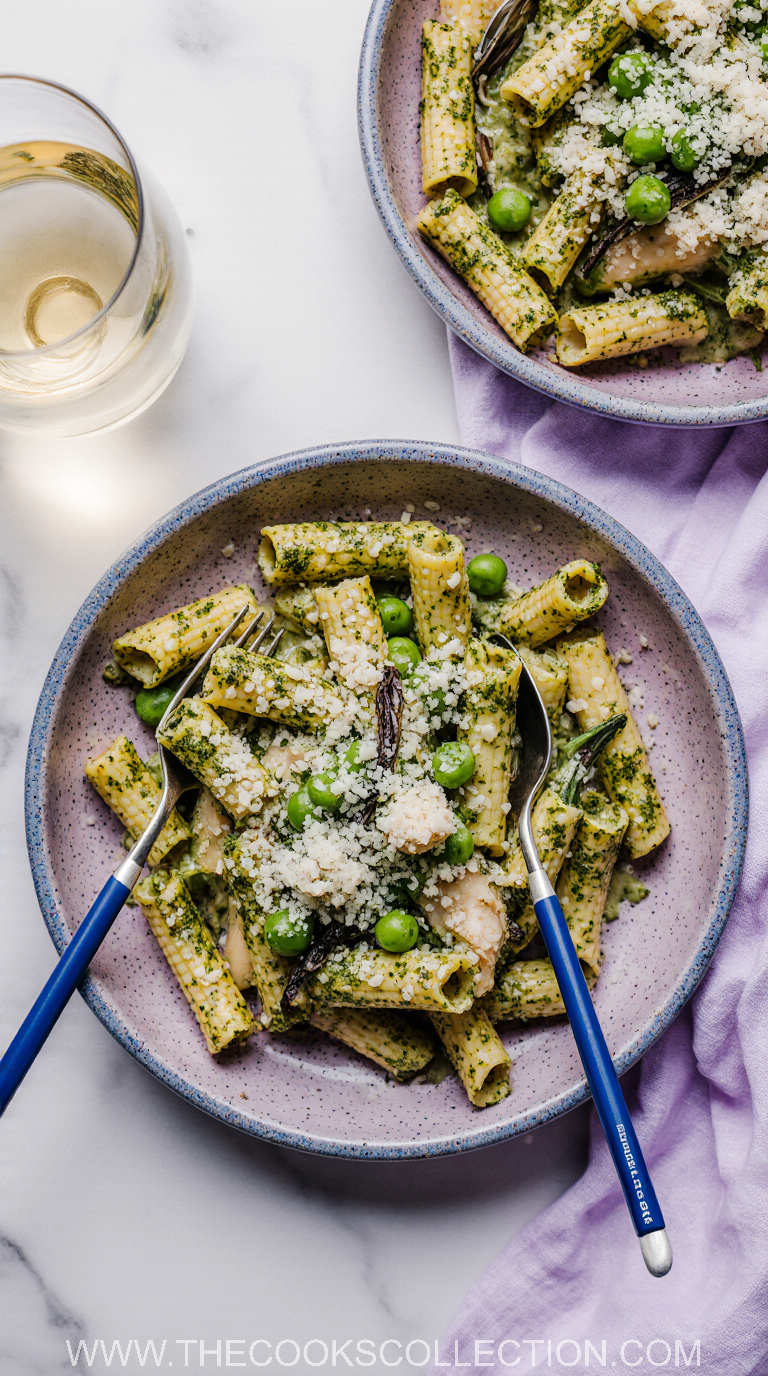
Creamy Basil–Pea Pesto Rigatoni with Charred Scallions
This bowl is bright, green, and incredibly creamy without drowning in heavy cream. The pesto starts classic—basil, nuts, cheese, garlic—but half the basil is replaced with sweet peas, which turn the color luminous and give the sauce body. Ricotta smooths everything so it coats rigatoni in a sheen instead of a paste. Lemon keeps it lifted; charred scallions add a smoky line through the richness; and a final shower of Parmesan ties it to the plate. You can make the pesto while the water heats, char the scallions in the same time, and have dinner on the table in under forty minutes.
Why this recipe works
Peas replace part of the basil. Classic basil pesto can taste sharp and oily when thinned to coat pasta. Folding in peas adds natural sweetness and starch, which rounds the garlic and suspends the oil so the sauce hugs the noodles instead of slipping off.
Ricotta for silk, not weight. Two or three spoonfuls turn a punchy pesto into a sauce. You still get basil and Parmesan first, but the ricotta smooths the edges and keeps leftovers from clumping.
Char brings contrast. Scallions cooked hard and fast pick up smokiness that plays against the sweet peas. They also add texture threads through the rigatoni so every bite isn’t the same.
Hot pasta water = built-in emulsifier. The salty starch in the water connects olive oil and cheese with the pasta. It lets you choose your texture—drippy or thick—without guessing.
Lemon at the end. Acid tightens flavors and counters richness, but too early and it dulls the basil’s green. Adding it after processing keeps the perfume up front.
Ingredients (cups & tablespoons only)
Pasta & Vegetables
- 12 ozrigatoni
- 1 tbspkosher salt (for boiling water)
- 1 cuppeas, divided (1/2 cup for pesto, 1/2 cup to fold in)
- 1 bunchscallions, trimmed
- 1 tbspolive oil + pinch salt (for scallions)
Basil–Pea Pesto (creamy finish)
- 2 packed cupsfresh basil leaves
- 1/2 cuppeas
- 1/3 cuptoasted pine nuts (or walnuts)
- 1/2 cupgrated Parmesan
- 1 smallgarlic clove, minced
- 1/2 tspkosher salt + 1/4 tsp pepper
- 1/2 cupextra-virgin olive oil
- 1/2 cupwhole-milk ricotta
- 2 tbsplemon juice + 1 tsp zest
- 1/2–3/4 cuphot pasta water, as needed
Recipe
- Boil pasta: Bring a large pot of water to a boil. Salt with 1 tablespoon kosher salt. Cook rigatoni until just shy of al dente. Scoop out 1 cup pasta water. Drain.
- Char scallions: While the water heats, toss scallions with 1 tablespoon oil and a pinch of salt. Sear in a hot skillet 2–3 minutes per side until blistered and tender. Slice into 2-inch pieces.
- Process pesto: In a food processor, pulse basil, 1/2 cup peas, pine nuts, Parmesan, garlic, salt, and pepper to a fine, even chop. With the motor running, stream in olive oil to form a thick paste.
- Make it creamy: Scrape pesto into a wide bowl. Stir in ricotta, lemon juice, and zest. Whisk in 1/2 cup hot pasta water until glossy and spoonable.
- Toss: Add drained rigatoni, remaining 1/2 cup peas, and charred scallions. Toss vigorously, splashing in extra pasta water in small amounts until every tube is coated and the sauce clings.
- Finish & serve: Taste for salt, pepper, and lemon. Plate with extra Parmesan. Serve immediately.
Sauce should be shiny and loose enough to flow back into the bowl if you drag a spoon through it, not stodgy.
Visual cues & texture
Pesto paste
After processing, the basil–pea mixture should look like damp sand, not leafy. If you pinch it between fingers, it should hold shape. That structure keeps the sauce from separating later.
Gloss test
When the hot water hits the pesto-ricotta base, the color jumps brighter and the surface goes shiny. If it looks dull or clumpy, add a tablespoon more hot water and whisk again.
Charred edges
Scallions should show dark spots and bend easily. The char smells sweet, not burnt. If they smoke hard immediately, lower the heat and give them another minute.
Emulsion & pasta water (why the order matters)
Cheese before oil. Grinding Parmesan with basil, peas, and nuts first breaks the cheese into tiny bits that melt faster. Adding oil afterwards coats each piece, so when the hot water hits, you get a stable sauce rather than oily streaks.
Ricotta as a bridge. Dairy proteins in ricotta link fat and water. It acts like a gentle emulsifier and mutes any harsh raw garlic notes. Because it is mild, you still taste basil.
Starch controls thickness. The starchy pasta water turns a thick pesto into a pourable sauce that clings to rigatoni’s ridges. Add it gradually and toss aggressively—motion is part of the emulsion.
Lemon last. Acid can tighten dairy and turn the basil olive. Stirring it in near the end keeps the aroma fresh and the color vivid.
Common mistakes (and quick fixes)
- Oily separation: Not enough pasta water or not tossed vigorously. Add 2 tablespoons hot water, toss hard for 20 seconds. Repeat until glossy.
- Pesto tastes bitter: Garlic too large or basil bruised. Add 1 tablespoon ricotta and a pinch of sugar; squeeze in a few extra drops of lemon.
- Color is dull: Pasta sat too long. Splash more hot water and toss; the heat will loosen the sauce and bring back shine.
- Undersalted pasta: Water wasn’t salty enough. Finish with an extra pinch of kosher salt and a heavier shower of Parmesan.
- Pine nuts too rich: Swap half for walnuts or almonds next time; for now, add more lemon and a handful of peas to lighten.
Substitutions & variations
Walnut or almond pesto
- Replace pine nuts with 1/3 cup walnuts or sliced almonds. Toast lightly for the same aroma; walnuts give deeper flavor, almonds are clean and sweet.
Spinach–basil
- Use 1 packed cup basil + 1 packed cup baby spinach. Color stays vibrant even if you hold the sauce warm.
Chicken, shrimp, or beans
- Stir in 2 cups warm rotisserie chicken, 12 oz sautéed shrimp, or 1 can rinsed cannellini beans. Fold at the end to avoid breaking the sauce.
Coconut-free vegan
- Swap ricotta for 1/3 cup unsweetened oat milk yogurt and add 1 tablespoon nutritional yeast with the Parmesan (or use a vegan hard cheese).
Calabrian kick
- Whisk 1 teaspoon Calabrian chili paste into the pesto base or finish with red pepper flakes at the table.
GF pasta
- Use gluten-free rigatoni or penne. Reserve extra pasta water; GF shapes often need a bit more to loosen the emulsion.
Any swap changes salt perception. Taste at the end and adjust with a pinch of salt and a few drops of lemon until it sings.
Serving & wine
- Plate hot. Pesto dulls as it cools. Warm bowls if possible.
- Crunch option: Top with toasted breadcrumbs mixed with Parmesan and lemon zest.
- Wine: A chilled glass of Sauvignon Blanc or a light, lemony Pinot Grigio mirrors the brightness without stomping on the basil.
- Salad: Bitter greens with a simple lemon–olive oil dressing balance the sweetness of the peas.
Batching & make-ahead
Pesto in advance
Process the pesto base (through olive oil) up to 2 days ahead. Press plastic wrap directly on the surface and refrigerate. Stir in ricotta and lemon just before serving so the color stays bright.
Freezer option
Freeze the pesto base in a thin layer in a zip bag (no ricotta, no lemon). Thaw under cool water, then whisk in ricotta, lemon, and hot pasta water.
Cook for a crowd
Scale to 2 lb pasta by mixing in a large roasting pan. Loosen the sauce with 1 to 1 1/2 cups hot pasta water and keep it glossy over very low heat while guests arrive.
Equipment notes
- Food processor: Fast and consistent. A blender works but needs more liquid; pulse and scrape.
- Large mixing bowl: Tossing in a bowl, not the pot, protects the emulsion and keeps the pasta from tearing.
- Tongs or two spoons: Rigatoni tosses better with grip. The more you move it, the creamier the sauce becomes.
Nutrition (estimated)
| Nutrient | Amount |
|---|---|
| Calories | ~690 kcal |
| Total Fat | 32 g |
| Saturated Fat | 11 g |
| Carbohydrates | 80 g |
| Total Sugars | 7 g |
| Fiber | 7 g |
| Protein | 23 g |
| Sodium | ~780 mg |
| Serving Size | 1/4 of recipe |
Values change with pasta brand, cheese salinity, and how much pasta water you use. Use as a guide.
Storage & reheating
- Fridge: 2 days in a covered container. The sauce will thicken; save a little pasta water or add a splash of hot tap water before reheating.
- Reheat: Low heat in a skillet with 2–3 tablespoons water, tossing until the sauce loosens and turns glossy again. Avoid microwaving on high; it dulls the basil and can split the ricotta.
- Not ideal to freeze: Ricotta loses texture. Freeze only the pesto base if you must and finish fresh as noted above.
FAQ
Can I use store-bought pesto?
You can, but it’s usually dense and salty. Stir 1/2 cup pesto with 1/2 cup ricotta and 1/4 cup hot pasta water, then adjust lemon and Parmesan. Fold in peas and charred scallions as written.
Do I need to blanch the basil?
No. The peas stabilize color. If you want hyper-green, dip basil leaves in boiling water for 5 seconds, shock in ice water, and pat dry before processing.
What other pasta shapes work?
Penne rigate, casarecce, or short ziti. Anything with ridges or twists that hold sauce.
Can I skip garlic?
Yes. Use a pinch of garlic powder or 1 tablespoon finely minced shallot for aroma without bite.
How do I keep leftover pesto from browning?
Press plastic wrap directly on the surface and drizzle a thin film of olive oil over the top before sealing the container.
Cook notes
- Salt the water properly. The pesto is moderate on salt because Parmesan varies. Salty water is your base seasoning—skip it and the dish reads flat.
- Use hot water, not cold. Cold water stiffens the cheese and oil; hot water makes the sauce emulsify instantly.
- Toss more than you think. Friction plus starch equals creaminess. The extra ten seconds of tossing is where the magic happens.
- Serve immediately. Pesto’s perfume fades. Have bowls ready before you drain the pasta.
- Lemon is adjustable. Add until the flavors pop and the richness retreats. If you can’t taste the lemon, it’s probably missing a few drops.