Creamy Lobster Fettuccine with Charred Asparagus
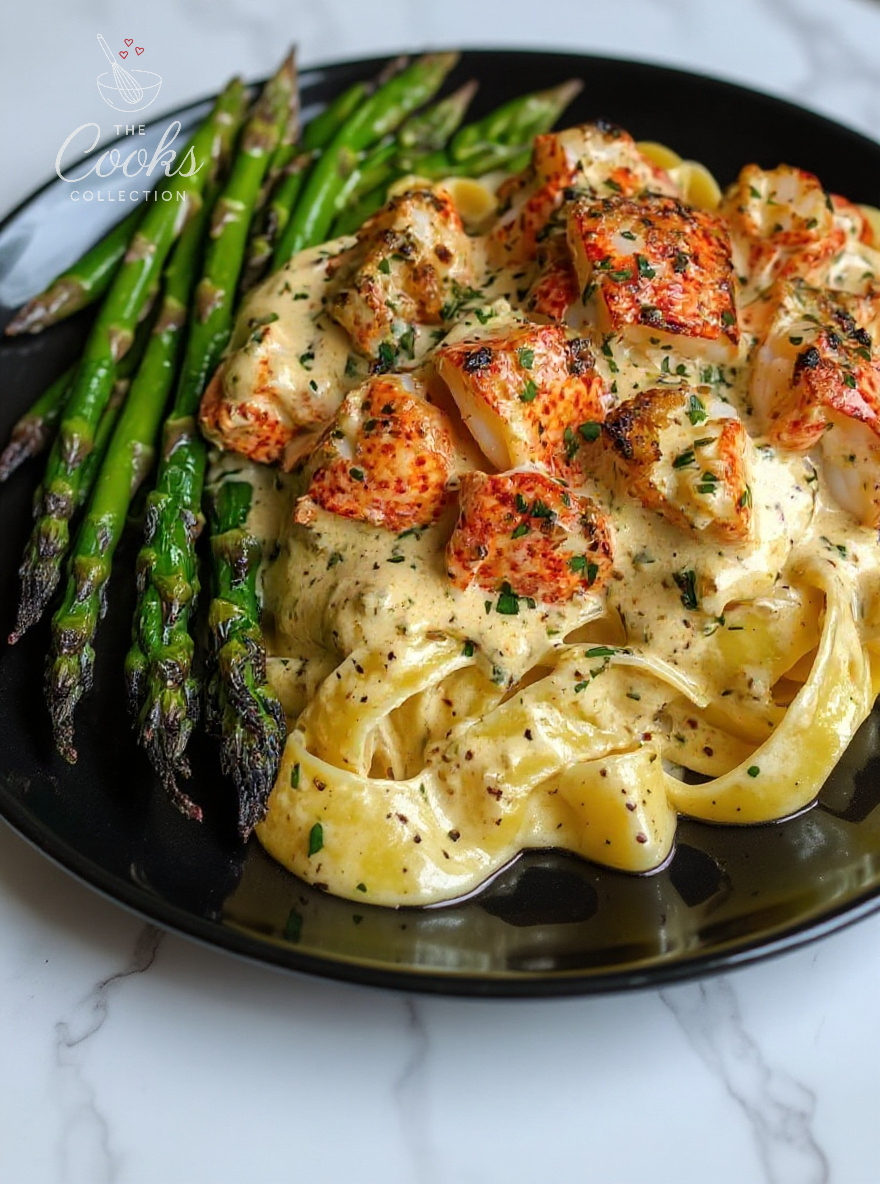
Creamy Lobster Fettuccine with Charred Asparagus
October 27, 2025 • by The Cooks Collection
When you want a dinner that truly feels special but doesn’t demand complicated techniques or equipment, this Creamy Lobster Fettuccine with Charred Asparagus is the move. Tender lobster bathed in a silky, Parmesan-kissed cream sauce is folded with ribbons of fettuccine and served alongside blistered asparagus. The flavors are clean and focused: sweet lobster, buttery sauce, lemon lifted aromatics, and peppery asparagus for brightness and snap. It’s the sort of plate that looks restaurant-worthy yet comes together with pantry staples and a single skillet.
To keep the lobster delicate and juicy, we gently poach it in seasoned butter (a quick, controlled stovetop method). The pan becomes liquid gold for building the sauce: shallot, garlic, a whisper of white wine (optional but lovely), cream, and freshly grated Parmesan emulsify into a glossy coating that clings to every strand of pasta. A squeeze of lemon and a shower of herbs sharpen the finish without masking the natural sweetness of the lobster. Serve it piled high with charred asparagus spears for contrast and color, and you’ve got an elegant dinner that’s effortless to love.
Why This Recipe Works
- Butter-poached lobster stays tender: Gentle heat prevents rubbery, overcooked seafood.
- Build the sauce in stages: Aromatics in butter, then cream and Parmesan for a lush, stable emulsion.
- Bright finish: Lemon zest and juice balance richness, so every bite tastes focused and clean.
- One pan for protein and sauce: Fewer dishes, deeper flavor — the fond from lobster seasons the whole dish.
- Charred asparagus on the side: Adds texture and a lightly smoky note that plays perfectly with cream.
Ingredients (Serves 4)
Lobster & Pasta
- 12 ounces dried fettuccine
- 1 to 1 1/4 pounds lobster meat (from 4–5 small tails or pre-cooked claw/knuckle meat), cut into 1 1/2-inch chunks
- 1 teaspoon Old Bay or sweet paprika (optional, for subtle color as pictured)
- 3 tablespoons unsalted butter
- 1 tablespoon olive oil
- 1 medium shallot, very finely minced
- 3 cloves garlic, minced
- 1/4 cup dry white wine or seafood stock (optional, recommended)
- 1 1/4 cups heavy cream
- 3/4 cup very finely grated Parmesan (plus more for serving)
- 1 teaspoon lemon zest (from 1 lemon)
- 1 to 2 tablespoons fresh lemon juice, to taste
- 1/2 teaspoon kosher salt (plus more to taste)
- 1/2 teaspoon freshly ground black pepper
- 2 tablespoons chopped parsley or chives, plus extra for garnish
- 1/2 to 3/4 cup reserved pasta water (you won’t need all of it)
Charred Asparagus
- 1 pound asparagus, ends trimmed
- 1 tablespoon olive oil
- 1/4 teaspoon kosher salt
- 1/4 teaspoon black pepper
- Lemon wedges, for serving
Equipment
- Large pot for boiling pasta
- 12-inch skillet or sauté pan
- Tongs and a wooden spoon
- Microplane or zester for the lemon
- Fine grater for Parmesan
Instructions
1) Cook the Pasta
Bring a large pot of well-salted water to a rolling boil. Add fettuccine and cook until just shy of al dente (1 minute less than package time). Scoop out 3/4 cup pasta water and set aside. Drain pasta but do not rinse. You’ll finish it in the sauce for perfect texture and sheen.
2) Char the Asparagus
While the pasta cooks, heat a grill pan or a large skillet over medium-high heat. Toss asparagus with olive oil, salt, and pepper. Cook 4–6 minutes, turning once or twice, until blistered in spots but still crisp-tender. Transfer to a warm plate and tent loosely with foil. (If your skillet is large enough, you can char the asparagus first, wipe the pan, and reuse it for the lobster and sauce.)
3) Butter-Poach the Lobster
Pat lobster dry and season lightly with a pinch of salt, pepper, and Old Bay or paprika if using (this echoes the golden edges in the photo). In a large skillet, melt 3 tablespoons butter with 1 tablespoon olive oil over medium heat until the butter is foamy. Add lobster pieces in a single layer. Cook gently, turning once, 3–5 minutes total, just until opaque and barely firm; avoid browning. Transfer lobster to a plate; tent with foil. You should have flavorful butter and light fond remaining in the pan — this is the base of your sauce.
4) Build the Cream Sauce
Lower the heat to medium-low. Add minced shallot to the pan and cook 1–2 minutes until translucent. Stir in garlic and cook 30 seconds until fragrant. If using wine (recommended), pour it in and simmer 30–60 seconds, scraping up any bits on the pan with a wooden spoon; reduce by half. Pour in heavy cream and bring to a very gentle simmer. Stir in Parmesan gradually, allowing it to melt smoothly. Season with lemon zest, 1 tablespoon lemon juice, 1/2 teaspoon salt, and 1/2 teaspoon pepper. The sauce should be glossy and thick enough to coat a spoon, but still fluid. If it tightens, loosen with a splash of pasta water.
5) Combine Pasta & Lobster
Add the drained fettuccine directly into the skillet and toss to coat, adding reserved pasta water a little at a time until the sauce clings silkily. Fold in the lobster and any resting juices just long enough to warm through (about 30–60 seconds). Taste and adjust with more salt, pepper, or lemon juice as needed. Finish with chopped parsley or chives.
6) Plate
Twirl generous nests of fettuccine onto warm plates, spooning lobster over the top with extra sauce. Arrange the charred asparagus on the side. Add more Parmesan and a sprinkle of herbs, then serve with lemon wedges for squeezing.
What to Expect in Every Bite
This plate balances richness with clarity. The sauce is lush yet not heavy — the mix of Parmesan and cream emulsified with starchy pasta water creates a velvety gloss that coats without overwhelming. Sweet lobster is the star: butter-poaching protects its delicate texture so it flakes easily and tastes clean. Lemon keeps everything bright, while cracked pepper and a hint of paprika echo the lightly caramelized edges you see on the lobster pieces. The asparagus brings crunch and grassy freshness, turning a creamy pasta into a complete, satisfying meal.
Chef’s Notes & Best Practices
- Use freshly grated Parmesan: Pre-shredded cheese contains anti-caking agents that prevent a smooth sauce.
- Keep the simmer gentle: Boiling cream can break or feel greasy. Low and slow is the secret to silk.
- Finish with pasta water: That starchy liquid is your insurance policy for a glossy, restaurant-style sauce.
- Don’t overcook the lobster: Remove it as soon as it turns opaque; it will warm through in the sauce.
- Salt in layers: Season the pasta water generously and taste the sauce before adding more salt (Parmesan is salty).
- Control lemon carefully: Add juice at the end to taste — you want brightness without edging into sour.
Make-Ahead, Storage & Reheating
- Make-ahead: You can shell the lobster and prep aromatics up to 1 day ahead. Cook pasta and finish the sauce just before serving.
- Storage: Refrigerate leftovers in an airtight container up to 2 days.
- Reheating: Warm gently in a skillet over low heat with a splash of water or cream, stirring until glossy. Avoid microwaving at high heat, which can toughen the lobster.
- Freezing: Not recommended — cream sauces can separate and lobster texture suffers once frozen.
Variations
- Lemon-Herb: Swap parsley for tarragon or chives for a softer, aromatic finish.
- With Heat: Add 1/4 to 1/2 teaspoon crushed red pepper flakes to the butter when sautéing the garlic.
- Cognac Finish: Stir in 1 tablespoon cognac in place of wine for a classic seafood note (cook off for 30 seconds).
- Meyer Lemon: Use Meyer zest/juice for a sweeter citrus profile that pairs beautifully with lobster.
- Greens Fold-In: Toss in a handful of baby spinach during the last 30 seconds for color and nutrients.
- Pasta Swap: Tagliatelle, pappardelle, or linguine all work. Choose broad ribbons to carry the sauce.
Ingredient FAQ
Fresh or frozen lobster? Frozen claw/knuckle meat is a smart, reliable choice; thaw overnight in the fridge and pat very dry. If using tails, steam or par-cook just until opaque, then finish in butter as directed. Can I skip the wine? Yes — use seafood stock or even a splash of pasta water. The acidity and aroma of wine add depth, but the dish remains fantastic without it. Is Parmesan the only cheese that works? For the classic profile, yes. Pecorino adds more salinity; if you use it, reduce added salt.
Quick Recipe Card
- Prep Time: 15 minutes
- Cook Time: 25 minutes
- Total Time: 40 minutes
- Serves: 4
- Cook fettuccine to just shy of al dente; reserve pasta water.
- Char asparagus in a hot pan with oil, salt, and pepper; set aside.
- Butter-poach lobster gently; remove to a plate.
- Sauté shallot and garlic; deglaze with wine (optional). Add cream and Parmesan to make sauce.
- Toss pasta in sauce, loosen with pasta water, then fold in lobster.
- Finish with lemon, herbs, and black pepper. Plate with asparagus and serve.
Serving Suggestions
Keep the sides simple so the lobster shines. A crisp green salad with a lemony vinaigrette mirrors the citrus notes in the pasta, while warm, lightly buttered bread is perfect for swiping the extra sauce. For wine, pour a chilled Chardonnay with restrained oak, a mineral-driven Chablis, or a bright Pinot Grigio. Sparkling water with lemon is a refreshing non-alcoholic pairing.
Behind the Recipe
This dish takes cues from coastal classics — think lobster rolls’ sweet meat and lemon, married with cream-sauced pastas you’d find at a seaside trattoria. The technique keeps steps streamlined: poach lobster in butter to lock in tenderness, then build the sauce right in the same pan so nothing is wasted. Starchy pasta water brings everything together, turning simple ingredients into something that feels luxurious without being fussy.
Troubleshooting
- My sauce seems thin: Simmer a minute longer, then add a touch more Parmesan to tighten. Remember it thickens further as it cools.
- My sauce seized: Take the pan off heat and whisk in warm pasta water, a splash at a time, until it relaxes and turns glossy again.
- Lobster looks tough: It likely cooked too long. Next time, pull it as soon as it turns opaque; gentle heat is key.
Final Thoughts
Creamy Lobster Fettuccine with Charred Asparagus is the definition of a special-occasion plate you can make any night of the week. It celebrates lobster without hiding it, keeping the flavors bright, clean, and incredibly satisfying. From the first forkful of silk-coated pasta to the snap of asparagus and the sweet, buttery lobster, this is a dish that feels both comforting and memorable. Keep it in your rotation for anniversaries, dinner parties, or the best kind of quiet night in.